N 5th Street Home
in Downtown Core / Northside, San Jose
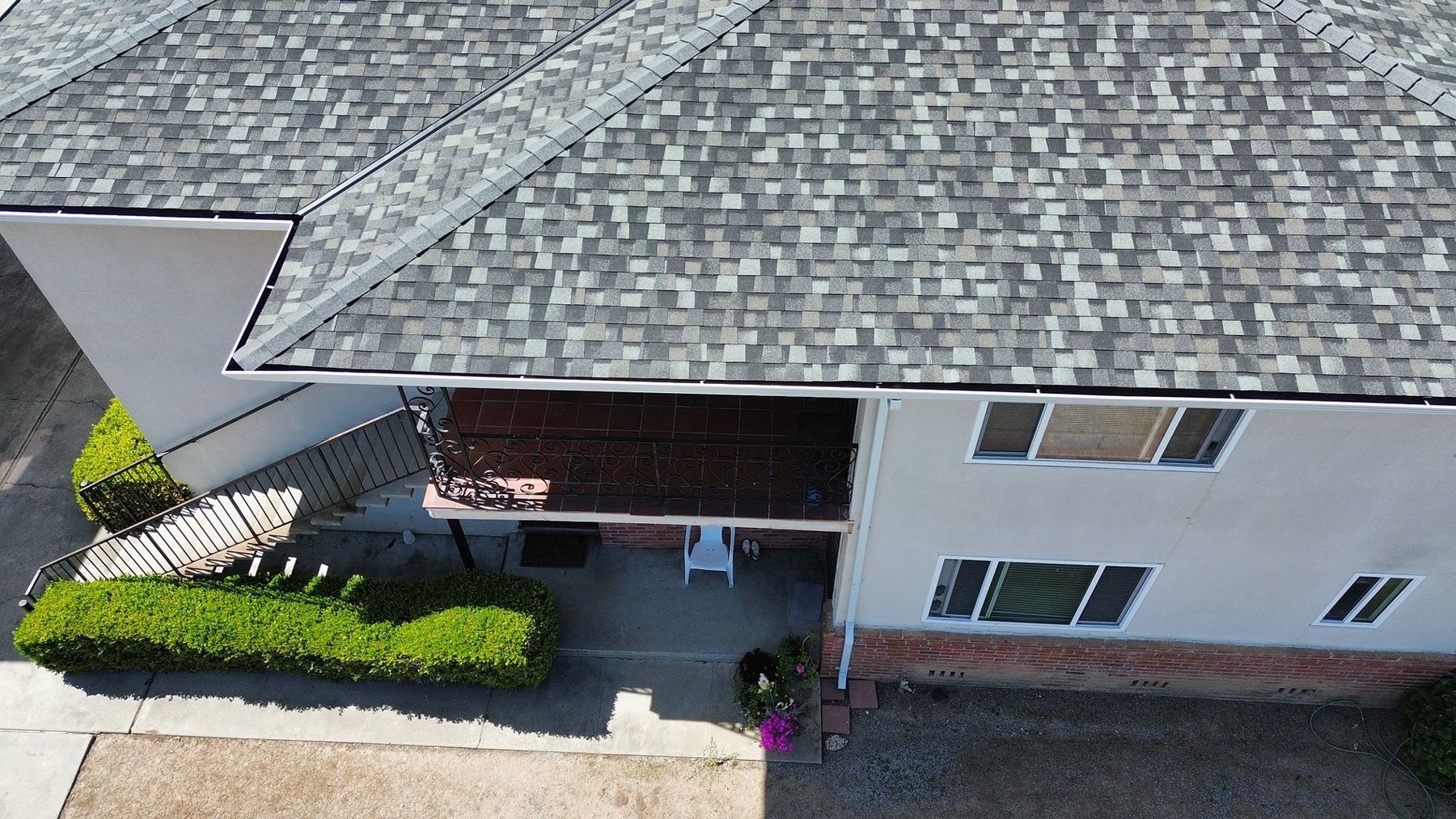
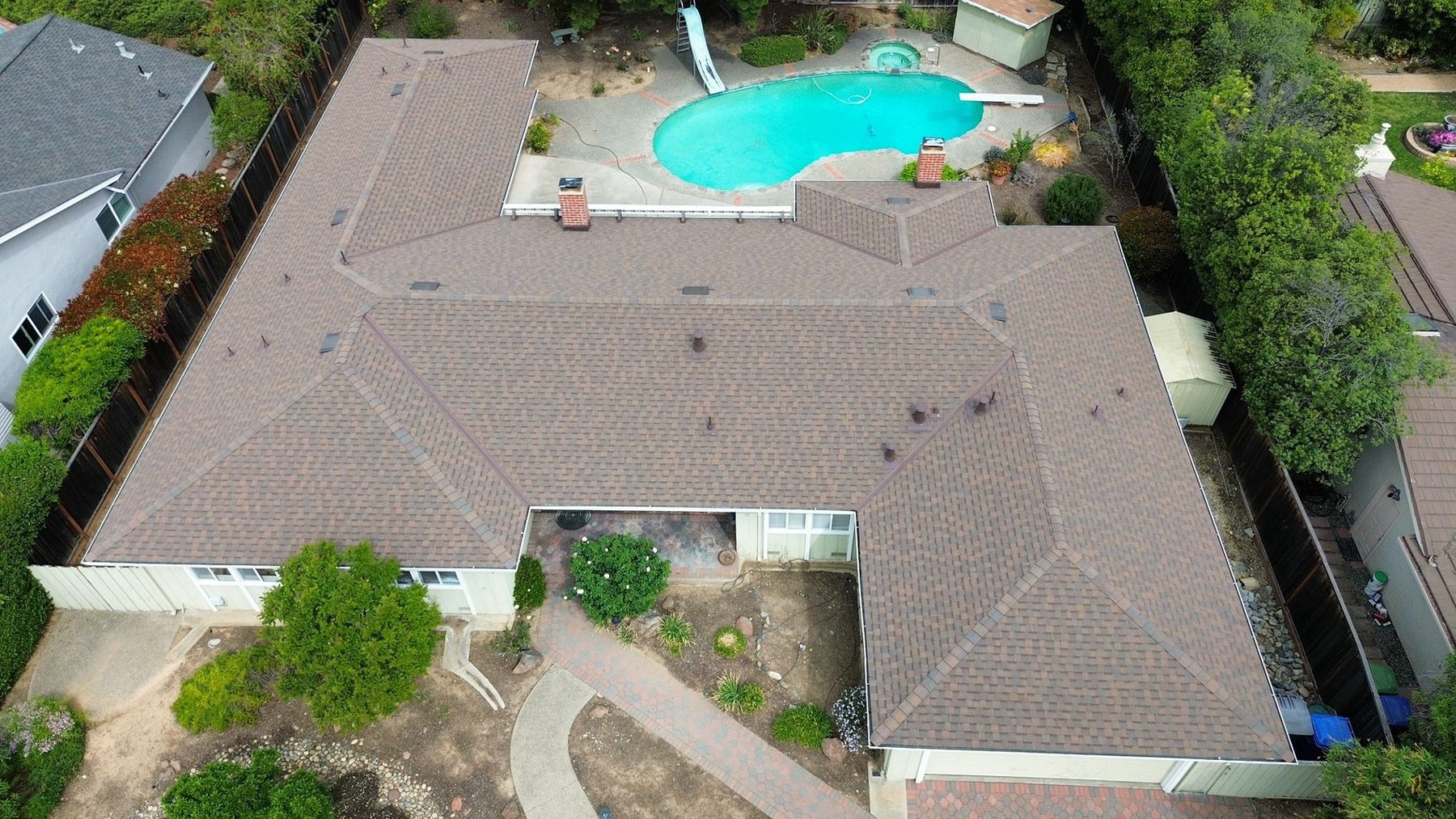
Re-roofing a historic house on North 5th Street in downtown San Jose: two old layers stripped, the chimney leaks fixed at the flashing, and an architectural shingle chosen to fit in with the neighbors. The city permit was checked against the older-neighborhood rules, and the work took 3 on-site days.
Two Leaks and
a Color That Never Fit
The N 5th Street home was a 1920s-era residence in San Jose's historic Northside district — one of the oldest residential areas in the city, with homes that reflect early 20th-century Craftsman and revival architecture. The existing asphalt shingle roof was 28 years old (installed in 1996 during the home's previous renovation) and showing end-of-service-life signals: curled shingles, heavy granule loss in the gutters, and two active leak spots around the original brick chimney.
The complexity wasn't the roofing work itself — it was the aesthetic and neighborhood context. N 5th Street homes in this section of downtown are part of a visually-coherent block, and the homeowner wanted a replacement roof that would honor the surrounding block's character without looking out of place. The original 1996 replacement had used a generic 3-tab shingle in a color that never really fit the home — the homeowner specifically wanted this replacement to do better.
Starting on the Sidewalk
Before choosing any product, we spent time on the sidewalk with the homeowner, looking at the neighboring roofs and what suited a house of this style. We landed together on a good architectural shingle in a soft weathered-gray, one that would flatter the house without fighting the homes on either side. Instead of picking from a screen, we held real samples up against the house at several times of day, and the homeowner made the final color call from those.
Technical scope: full tear-off (the 1996 shingle plus an older underlying layer we discovered during the initial assessment — this home had two existing layers of roofing, a detail the homeowner hadn't known about), deck inspection, new synthetic underlayment, updated flashing at the chimney (source of both existing leaks), and architectural shingle installation with proper ventilation.
From Tear-Off
to Final Inspection
Permit & Existing-Condition Photos
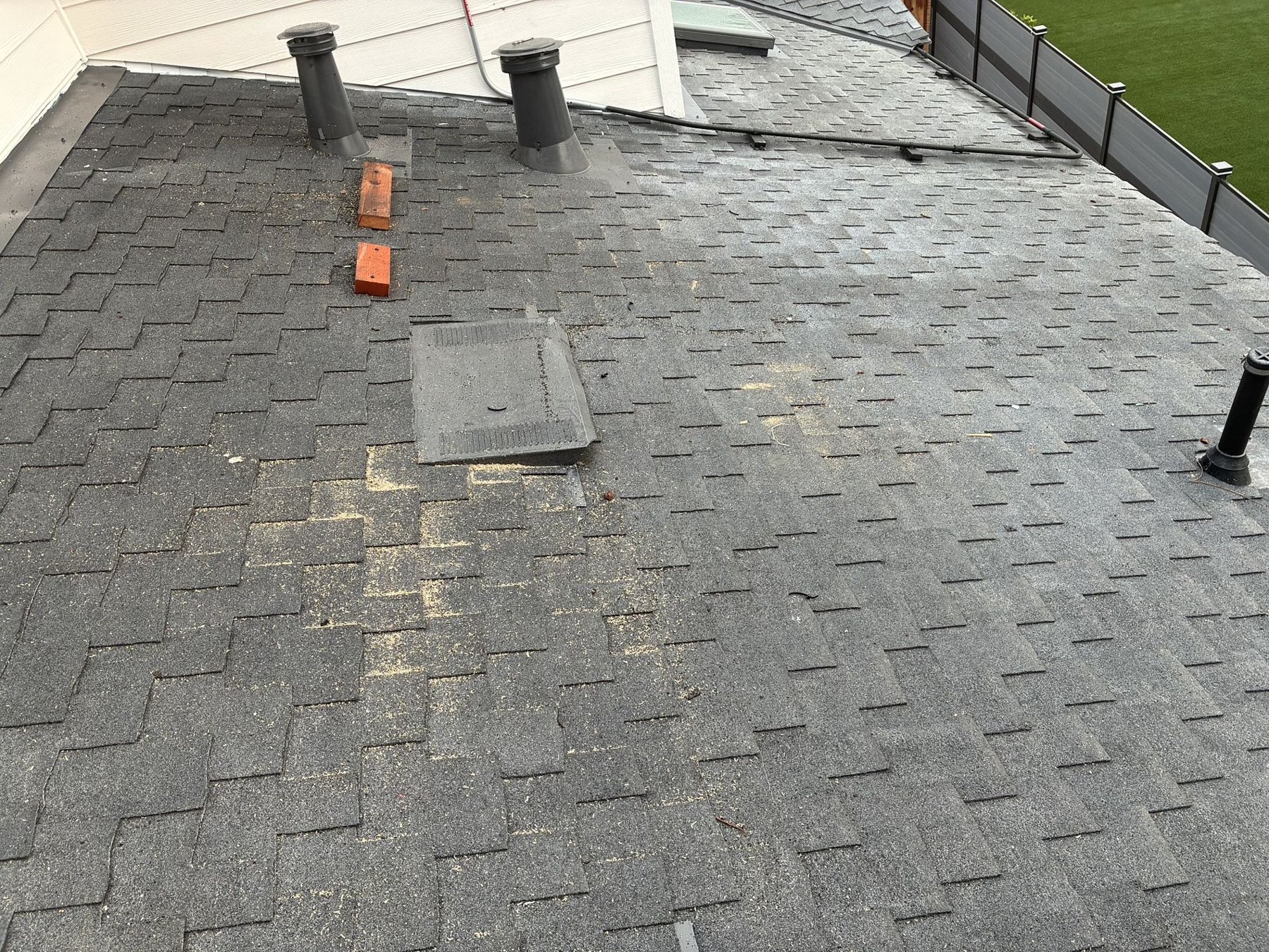
We pulled the San Jose building permit, photographed the existing 2-layer roof and went over the scope with the homeowner. Some downtown addresses sit inside historic context areas that need an added review, so we looked this one up and confirmed it didn't.
Stripping Both Layers (Day 1)
Off came the 1996 3-tab shingle and, under it, an older 1970s-era layer nobody had known about. Two layers take longer to remove than one and fill more dumpsters, and all of it was hauled away for proper disposal.
Deck Repairs (Day 1-2)
With the deck bare we checked every slope. About 12 sq ft had rotted at the base of the chimney, right where the leaks had been, and we replaced it. Patches of old skip sheathing, normal for a house this age, got new solid sheathing so the shingles would have a continuous surface to nail into.
Underlayment & Chimney Flashing (Day 2)
The deck was covered in CertainTeed DiamondDeck synthetic underlayment, lapped to spec, with ice-and-water membrane around the chimney and down the valleys. The rusted galvanized counter-flashing at the chimney gave way to copper, and the drip edge and pipe flashings were renewed.
Architectural Shingle Installation (Day 2-3)
Landmark Pro in the weathered-gray the homeowner picked went on over a starter course, nailed in a 6-nail pattern for the local wind zone and finished with matching hip-and-ridge caps. A ridge vent took over from the undersized box vents.
Inspection & Handover
The city inspector passed the work. We handed over the 50-year SureStart PLUS registration, our 10-year workmanship warranty and a folder of job records with before/after photos.
What's on
the Roof Now
CertainTeed Landmark Pro Architectural Shingles
An architectural asphalt shingle with StreakFighter's 30-year algae warranty, backed by a 50-year limited warranty through our SureStart PLUS contractor certification. Its wide color range is what let us match this house to its block.
CertainTeed DiamondDeck Synthetic Underlayment
Swapped in for the felt that earlier roofers had used here. A synthetic sheet like this is much harder to tear, copes with weather far better while the roof is open, and carries a 30-year warranty.
CertainTeed WinterGuard Ice & Water Shield
Laid at the chimney base, through each valley and around the pipe penetrations, the very places this house had leaked before.
Copper Chimney Counter-Flashing
Took the place of the corroded galvanized flashing. Copper lasts 50+ years and weathers to a soft patina that suits an older house.
CertainTeed CertaShake Ridge Ventilation
A continuous vent along the ridge where the box vents used to be. More airflow through the attic means less heat under the shingles and a longer life for them.
How It Turned Out
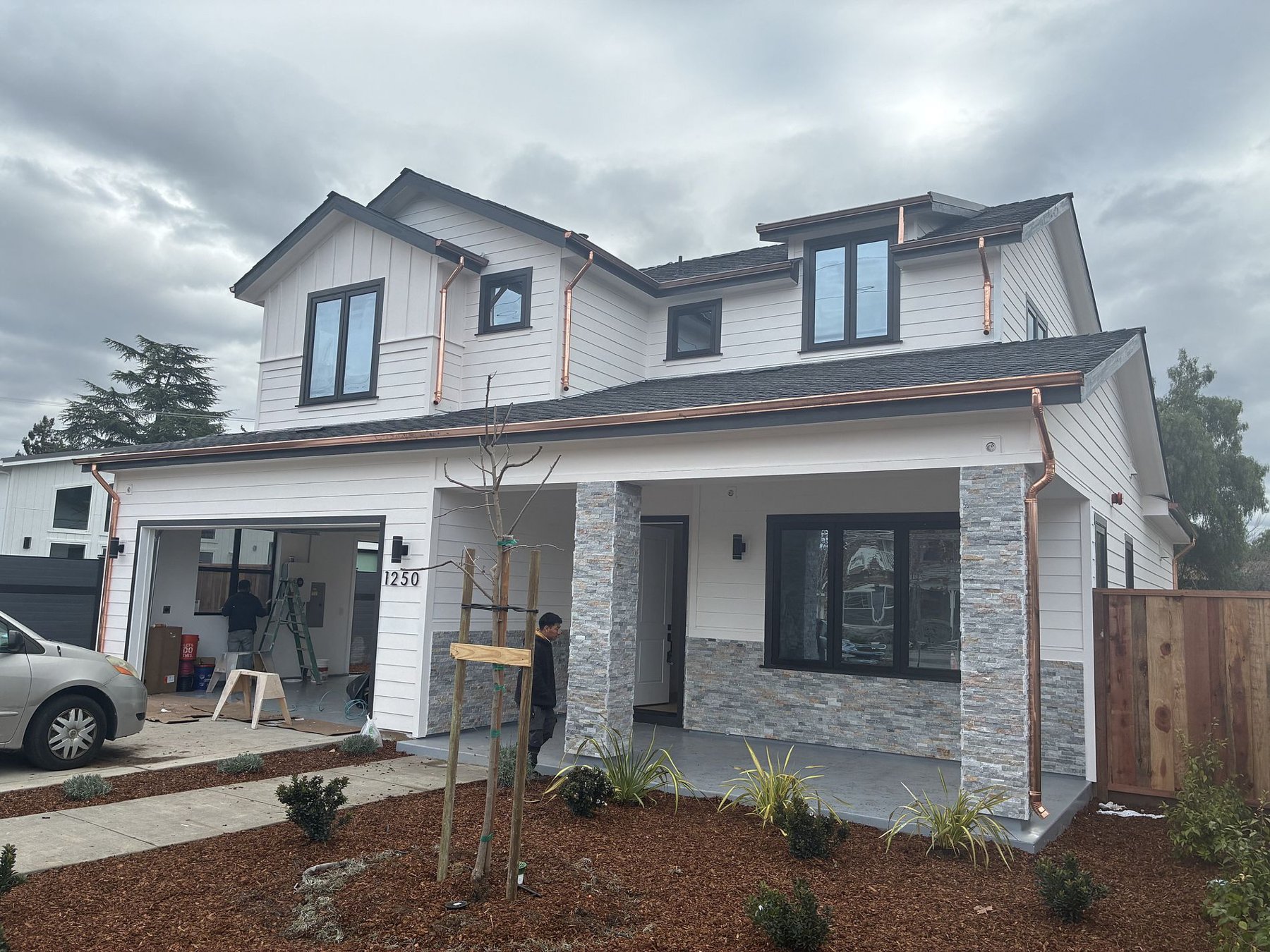
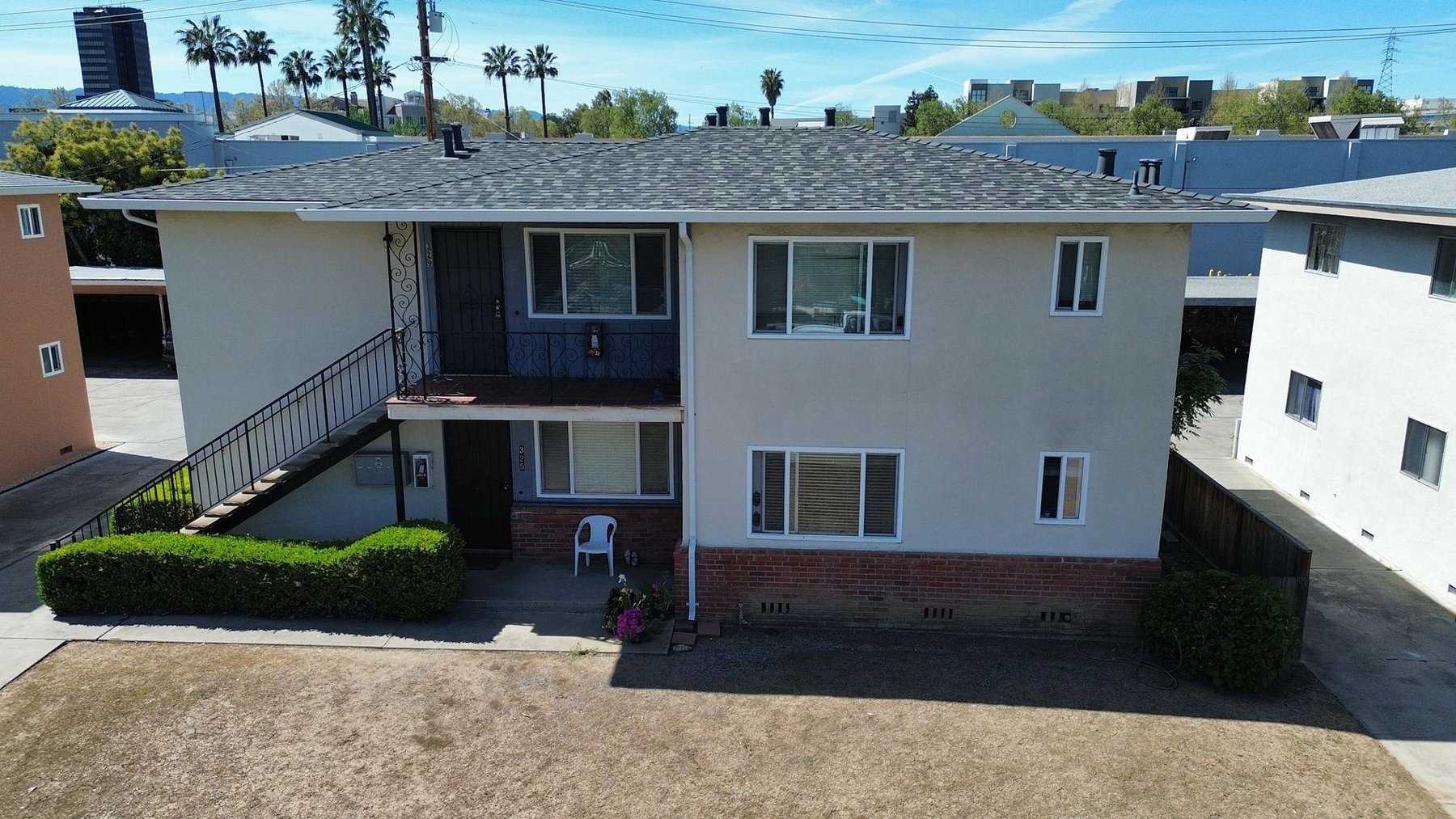
The homeowner now has a well-documented new roof, covered by a 50-year SureStart PLUS manufacturer warranty and our 10-year workmanship warranty. The color and shingle profile finally suit a 1920s house and sit comfortably with the rest of the block, which the old roof never managed. Properly detailed copper flashing has ended the chimney leaks. We finished in 3 days against a 3-4 day estimate, ahead of schedule, and the deck repair was the only change order.
N 5th Street Home
Pictures
Old Houses in
Downtown Core / Northside
Downtown San Jose's Northside neighborhood is one of the oldest residential areas in the city — the 5th Street corridor between San Carlos and St. John Streets contains homes dating from the early 1900s through the 1940s, representing the city's early residential growth. Craftsman bungalows, Queen Anne Victorians, and early revival-style homes are all present on these blocks.
For roofing, that age matters: most houses here are 80-120 years old and on their second, third or fourth roof. The original cedar shake on many of them came off in the 1950s-70s in favor of composition shingle, and plenty of those composition roofs are due again. Stacked layers turn up often, two or even three of them, left by past roofers who covered over instead of tearing off. They can change the scope of a job in ways an owner won't know about until the old roof comes off.
Looks count for more on a historic street. The houses along 5th Street read as a set, so a roof color affects the whole block as well as the one house. That's why we stand out front with owners, put real samples against the house, and suggest products that make sense both on the roof and from the street. What suits an old downtown home is often different from what suits a suburban tract house.
Questions About
Older Downtown Roofs
Other Re-Roofs
Castlemont Avenue
A Cambrian Park ranch re-roof that added a ridge vent and algae-resistant shingles for the neighborhood's foggy north slopes.
Willow Glen Re-Roof
A 1928 Craftsman-style bungalow with a chimney that kept leaking and skip sheathing that needed covering.