Roof Repair
San Jose & the South Bay
Not every roof problem requires replacement.
Roof Repair
Done Right Since 1952
Not every roof problem requires replacement. Most leaks come from specific, localized failure points — worn flashing at a chimney, a cracked tile, a popped nail, a clogged valley, a deteriorated pipe boot — that a skilled repair crew can diagnose and fix in a single visit. Keith Roofing has been doing San Jose roof repair for over seven decades. We've seen every failure mode there is, we know which ones are genuinely repairable and which ones are symptoms of larger issues, and we'll tell you honestly which applies to your roof.
The core challenge of roof repair is accurate diagnosis. Water enters a roof in one place and often travels significant distances before appearing as a ceiling stain or attic drip. The visible leak location is rarely the source. Effective repair requires tracing the water path back to its actual entry point, which means understanding roof geometry, roof system detailing, and the specific failure modes common to different materials and installations. Seven decades of repair work in the Bay Area has built that pattern recognition.
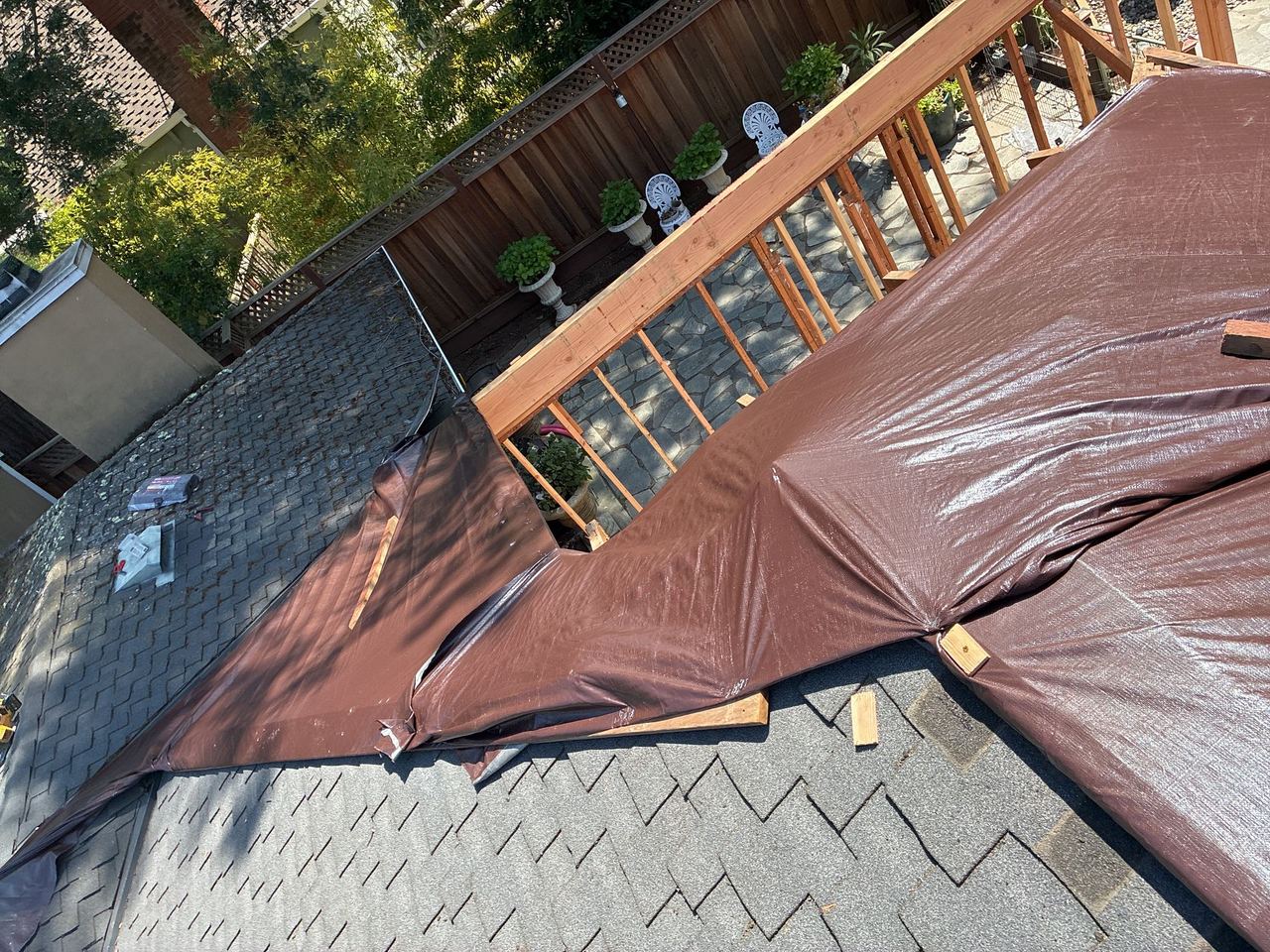
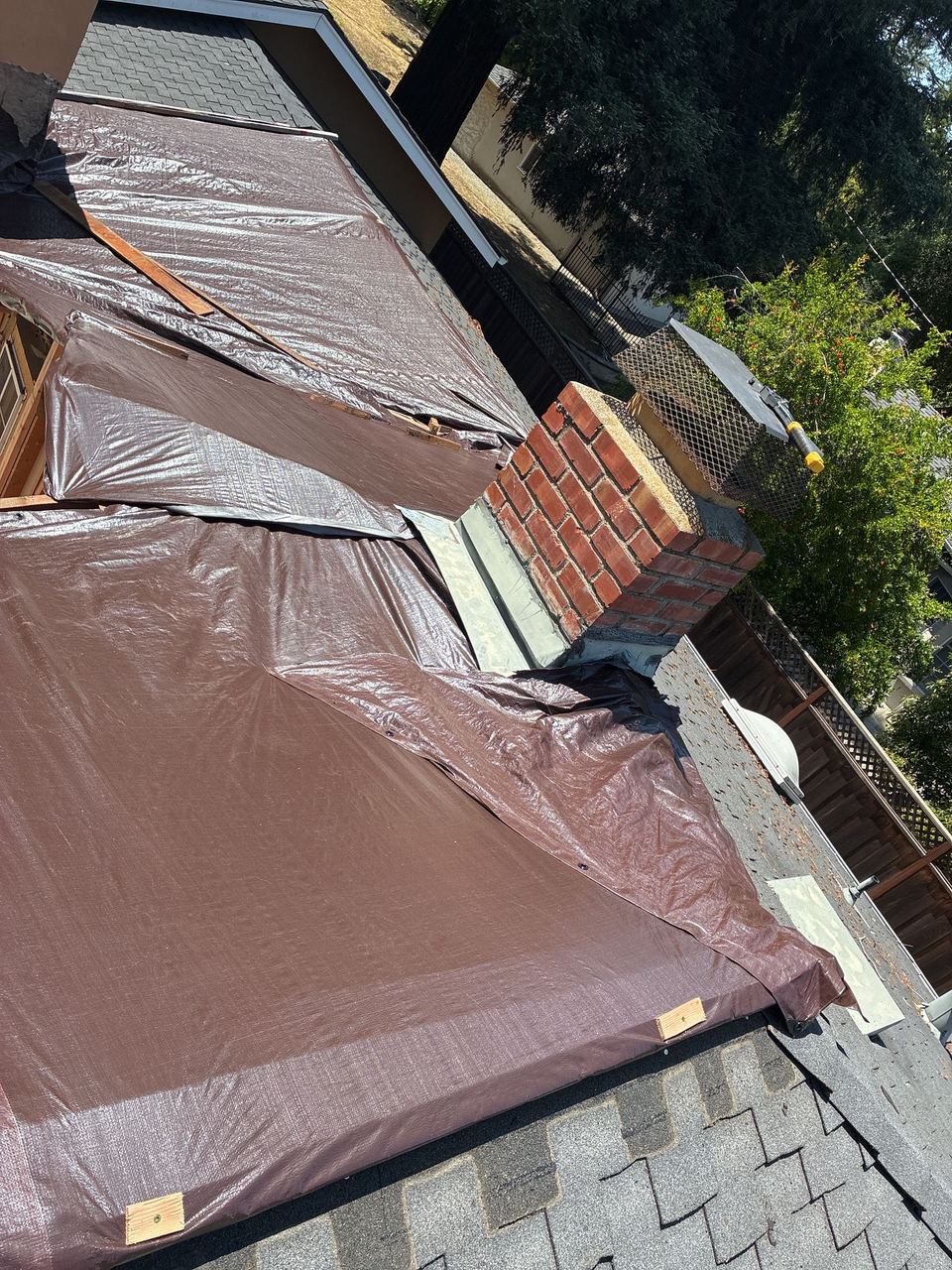
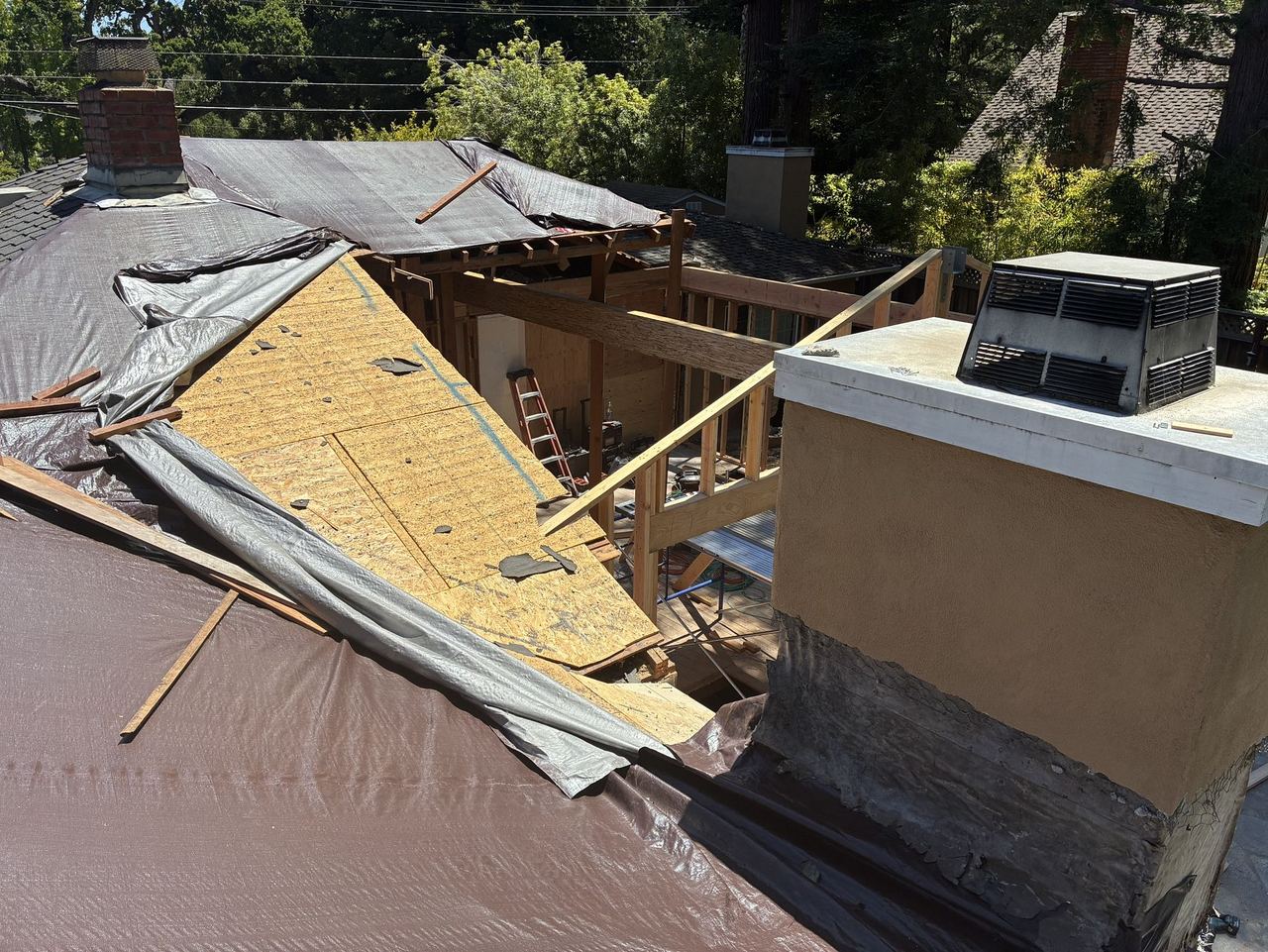
Our repair work covers the full range of residential roof systems: asphalt shingle leak repairs, tile roof broken-tile replacement and underlayment spot repairs, flat-roof membrane patching and seam renewal, flashing renewal at chimneys and skylights, pipe boot replacement, ridge and hip repairs, and emergency tarping for active storm damage. We respond fast, fix it right, and when repair isn't the right answer we tell you that before you spend money on a temporary solution.
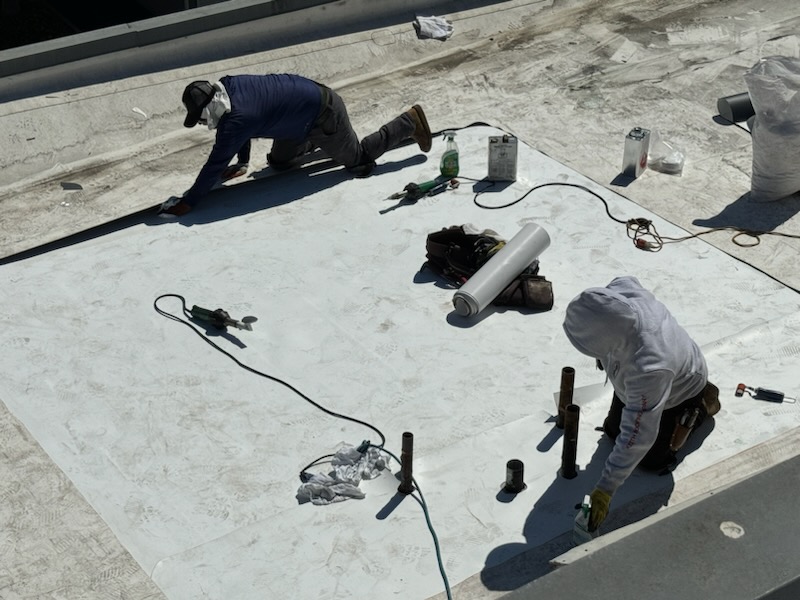
Understanding Roof Repair in San Jose
Why Most Leaks Are Repairable (and Which Ones Aren't)
The vast majority of residential roof leaks — probably 80%+ of the calls we respond to — are repairable through targeted, localized work. The common failure points are well-known: flashing around chimneys (counter-flashing corrodes or pulls away from mortar joints), skylight perimeters (neoprene gaskets and metal flashings deteriorate over 15-25 years), plumbing vent boots (neoprene gaskets crack from UV exposure, usually at 10-15 years), valley detailing (debris accumulation, flashing corrosion, or improperly installed shingles), ridge vent installation (improper sealing or wind-driven rain penetration), and sidewall transitions (step flashing separation or corrosion).
When one of these specific failure points is the leak source, a targeted repair addresses the root cause and typically delivers years of reliable service. Done properly, a chimney flashing repair can last decades. A pipe boot replacement is similarly durable. These aren't temporary Band-Aids — they're actual fixes to specific failed components.
The leaks that aren't easily repairable fall into a few categories. Widespread material failure — multiple shingle sections curling, extensive granule loss, multiple leak locations across the roof — indicates the overall roof system has reached end-of-service life. Individual repairs on a failing roof are throwing money at symptoms. Deck damage from prolonged water intrusion can undermine the substrate to the point where shingle repair alone won't hold. Structural issues (deflection, rafter damage) require engineering evaluation, not just roofing work.
The Diagnosis Process
Our repair diagnosis starts with understanding what the homeowner is seeing: the visible symptom (ceiling stain, attic drip, exterior streak), when it started, whether it correlates with specific weather events, and whether it's gotten worse over time. We then inspect the attic when accessible — water stains on rafters, sheathing, and insulation help locate the actual entry point. We walk the roof systematically, examining all suspect areas: flashings, penetrations, valleys, damaged shingles or tiles, and any obvious points of concern.
For difficult-to-trace leaks, we sometimes use a water test — running controlled water from a garden hose to different roof areas while an observer watches the interior point of entry — to isolate the actual leak source. This takes time but ensures we're addressing the real problem, not guessing based on visible symptoms.
What We Fix
A partial list of common repair scopes: chimney flashing repair (remove old counter-flashing, clean masonry joint, install new flashing, seal with high-grade sealant, typically $400-$900 depending on complexity); pipe vent boot replacement (remove old boot, install new rubber or metal boot, $200-$400 per boot); skylight re-flashing (remove surrounding shingles, install new flashing kit, replace shingles, $600-$1,500 depending on skylight type); tile replacement with color-matched stock ($15-$40 per tile plus labor, depending on tile availability); valley re-detailing (remove old flashing, install new, reinstall shingles properly, $800-$2,000 depending on valley length).
Roof Repair Across San Jose Neighborhoods
San Jose grew from a farm town into a city of hundreds of thousands between the 1950s and the 1970s, and most of that growth was single-story ranch and split-level tract housing. Those houses are now on their second or third roof, and the repairs they need are remarkably predictable once you know where a house sits and when it went up. A 1920s bungalow near Lincoln Avenue and a 1990s tile house above Silver Creek fail in completely different places, so the first thing we ask on a repair call is the neighborhood and the year the home was built.
The other constant is the calendar. San Jose goes roughly five months each summer with almost no rain while the sun bakes pipe boots, sealant and plastic vents. The damage stays invisible until the first real storm of October or November, and that week the leak calls arrive from every part of the city at once. Booking a repair in August or September is how you avoid being in that queue.
Willow Glen
1910s–1940s bungalows and revivalsMany Willow Glen homes were built for cedar shake and later converted to composition shingle, sometimes over the original skip sheathing, which leaves gaps under the new roof. Brick chimneys from that era are the most common leak source we trace here: the counter-flashing has usually been patched with surface sealant rather than set into the mortar joint. Tall street trees fill valleys and gutters every fall. See our Willow Glen roofing page for more on the neighborhood.
Cambrian
1950s–1960s single-story ranchesCambrian's long, low ranch roofs are mostly composition shingle, and many still depend on the original box vents. A hot, under-ventilated attic ages shingles early, so we often find curling and granule loss on the south and west slopes while the north side looks fine. Low-slope patio covers and room additions tied into the main roof are the other repeat offender, because the transition between the two roof types is where water gets in. More on roofing in Cambrian Park.
Almaden
1970s–1980s homes, much of it concrete tileAlmaden Valley has a lot of concrete tile, and tile hides its age well. The tile often has decades left, but the felt underlayment beneath it is typically spent after 25 to 30 years, so a roof that looks perfect from the street leaks at the eaves and valleys. Cracked tiles from foot traffic, such as a satellite install, a solar crew or a gutter cleaner, are the other common call. Our Almaden Valley roofing page covers the area.
Evergreen
Foothill subdivisions, tile and solarEvergreen's newer foothill tracts combine tile roofs, rooftop solar and wind on the more exposed slopes. Solar mounts drilled through tile, and tiles cracked while panels were installed or serviced, account for a steady share of repairs. Parts of the foothills also carry a fire hazard designation, which affects the materials a larger repair or re-roof can use. Our Evergreen tile fire damage repair shows what heat from a neighboring fire did to one roof here.
Berryessa
1960s–1970s tract homesBy now, most of Berryessa's tract homes have been re-roofed at least once, and the repairs they need are typical of houses that age. Pipe boots harden and split, valley metal rusts through, and step flashing that an earlier crew reused instead of replacing starts to fail. On a roof with good years left, each of these is a targeted repair and not a reason to replace the roof.
South San Jose Hills
Santa Teresa, Blossom Valley and the ridgelinesHouses on the slopes above Santa Teresa and Blossom Valley catch more wind than the valley floor. Wind lifts ridge and hip caps and loosens shingle tabs on the exposed side, and on tile roofs it can shift hip tiles whose mortar or fasteners have let go. Oak litter builds up in valleys faster on hillside lots. Steep driveways and sloped yards also affect how we stage ladders and material, which is part of why a hillside repair takes longer to set up.
If you are not sure which of these fits your house, or whether a problem is a repair or a sign the whole roof is due, start with a roof inspection in San Jose. We check the attic as well as the roof surface, photograph what we find, and tell you plainly whether the fix is a single component or something larger.
Signs You Need
Roof Repair
Ceiling Water Stain
A visible water stain on an interior ceiling is a classic leak indicator. The stain location is rarely the exact leak location — water travels along roof structure before appearing inside. But the stain confirms a roof issue that needs diagnosis.
Active Drip During Rain
An active drip during rain is the most urgent scenario. Call immediately so we can tarp or temp-patch before damage spreads. Even one rain event can cause significant interior damage if water is entering the home.
Missing or Cracked Shingles/Tiles
Wind damage, storm impact, or foot traffic can remove or crack individual shingles or tiles. Prompt replacement prevents moisture intrusion through the exposed area. Cracks in tiles may be repairable or require tile replacement.
Damaged Flashing
Rust, corrosion, separation, or visible gaps in metal flashing around chimneys, skylights, or wall transitions are leak waiting to happen. Flashing is often the most common failure point on otherwise-sound roofs.
Shingle Granules in Gutters
Significant granule accumulation in gutters indicates shingle deterioration. While not always requiring immediate repair, it's a signal to have the roof evaluated — sometimes targeted repair is appropriate, sometimes replacement planning should begin.
Sagging Roof Section
Visible roof deflection — a section that dips or bows visibly — indicates structural damage, typically from prolonged water intrusion. This is urgent; prompt evaluation and repair prevents catastrophic failure.
How We Approach
Roof Repair
Shingle Repair Stock
We maintain relationships with CertainTeed, GAF, and Owens Corning distributors to source color-matched replacement shingles. For older or discontinued shingles, we source the closest available match or work with the homeowner on acceptable alternatives.
Tile Replacement Inventory
Our Monier Lifetile and Eagle Roofing relationships give us access to legacy tile colors and profiles that general distributors don't stock. For unique tile, we sometimes source reclaimed stock from demolition projects.
Professional-Grade Sealants
Polyurethane sealants (Sikaflex 1a, Vulkem 116) and silicone roof sealants (Dicor, Geocel) rated for roofing applications. Not over-the-counter hardware store products — professional-grade materials with appropriate UV and temperature resistance.
Self-Adhered Membrane
Ice-and-water shield (WeatherWatch, StormGuard, or similar) for repair scenarios where underlayment needs reinforcement under replaced shingles. This self-adhering rubberized membrane creates a secondary waterproof layer at critical areas.
Metal Flashing Stock
Galvanized steel, copper, and aluminum flashing materials in standard profiles plus custom-fabricated pieces for non-standard applications. Proper flashing selection matters — galvanic corrosion can occur if dissimilar metals are combined incorrectly.
How We Handle
Your Roof Repair
Emergency Response or Scheduled Inspection
For active leaks during rain events, call (408) 295-8616 immediately — we prioritize emergency calls and often respond same-day during business hours. For non-urgent repairs, we schedule inspection visits within a few days. Emergency tarping is available to stabilize active leaks until permanent repair is scheduled.
Thorough Diagnosis & Documentation
We inspect the roof exterior and (when accessible) attic interior to identify the actual leak source. Water often travels significantly from its entry point to visible indoor symptoms. We photograph conditions and explain what we found. For complex leaks, water testing may be required.
Honest Repair vs. Replace Assessment
Not every leak is repairable. If we determine that repair is throwing money at a failing overall roof, we tell you that honestly and present replacement as the option. No one wants to pay for repair, see it fail, and have to pay for replacement anyway.
Targeted Repair Execution
Professional repair matches materials to existing installation, addresses the root cause (not just the symptom), and includes all related areas that commonly fail together. We don't cut corners — a repair we do should last many years, not just hold until the next rain.
Post-Repair Documentation
Photo documentation of completed repair, description of work performed, and written guidance on what to watch for going forward. For warranty purposes and future reference, you have a complete record of what was done.
Why Homeowners Choose Us
for Roof Repair
Accurate Leak Diagnosis
Decades of San Jose repair experience means we diagnose correctly the first time. Other roofers sometimes chase symptoms — patching visible stains without addressing root causes. Repeat leaks cost more than getting it right once.
Same-Day Emergency Response
For active leaks during rain events, we respond as fast as possible. Emergency tarping keeps water out of your home while permanent repair is scheduled. Our response time is why property managers and insurance adjusters keep us on their priority call lists.
Color-Matched Repair Materials
Our Monier Lifetile and Eagle Roofing relationships plus CertainTeed/GAF/Owens Corning distributor access means we can source matching repair materials for most roofs. Patches that disappear visually, not obvious eyesores.
Honest Scope Assessment
If repair isn't the right answer, we'll tell you. Throwing money at a failing roof is worse than confronting replacement head-on. Our honesty about scope is why homeowners trust our recommendations.
Recent Roof Repair
Projects
Projects Featuring
Our Roof Repair Service
Real Keith Roofing projects where we delivered this service. Click any case study for the full story.
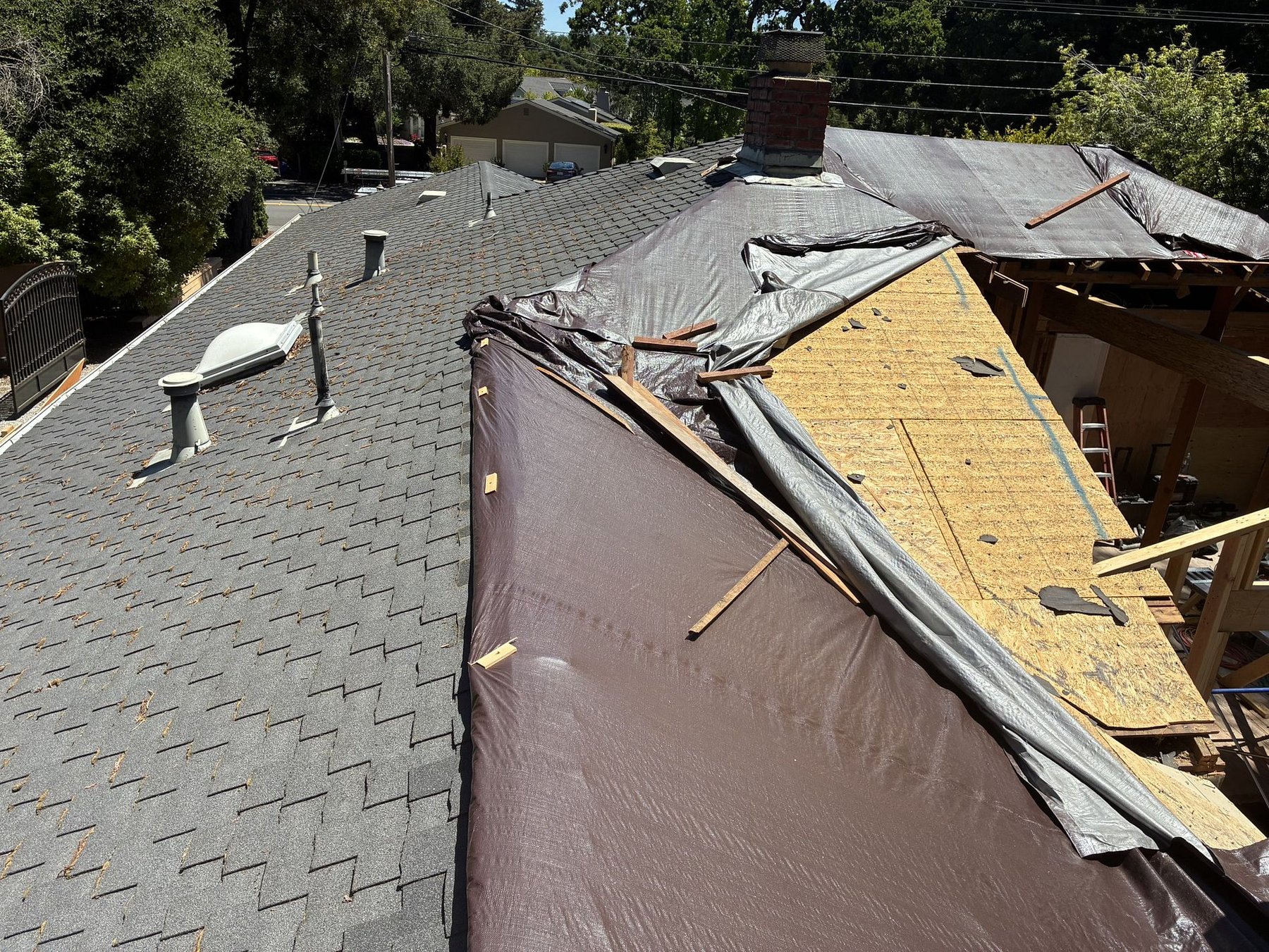
Saratoga Presidential Fire Repair
Fire-damage repair with seamless CertainTeed Presidential shingle tie-in and full gutter installation.
View Case Study →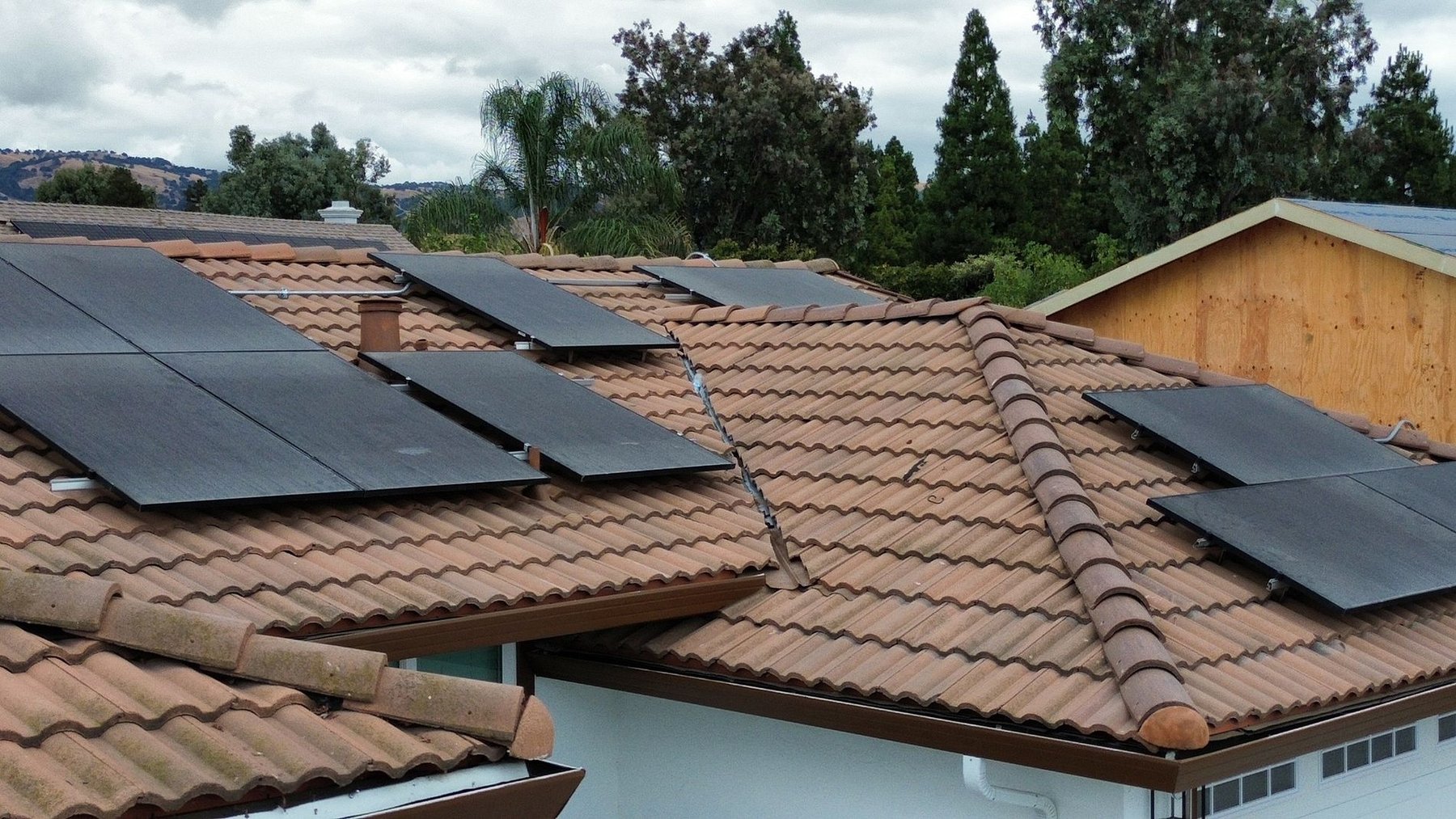
Evergreen Tile Fire Damage Repair
Fire-damage repair on a concrete tile roof with solar panel coordination and color-matched tile replacement.
View Case Study →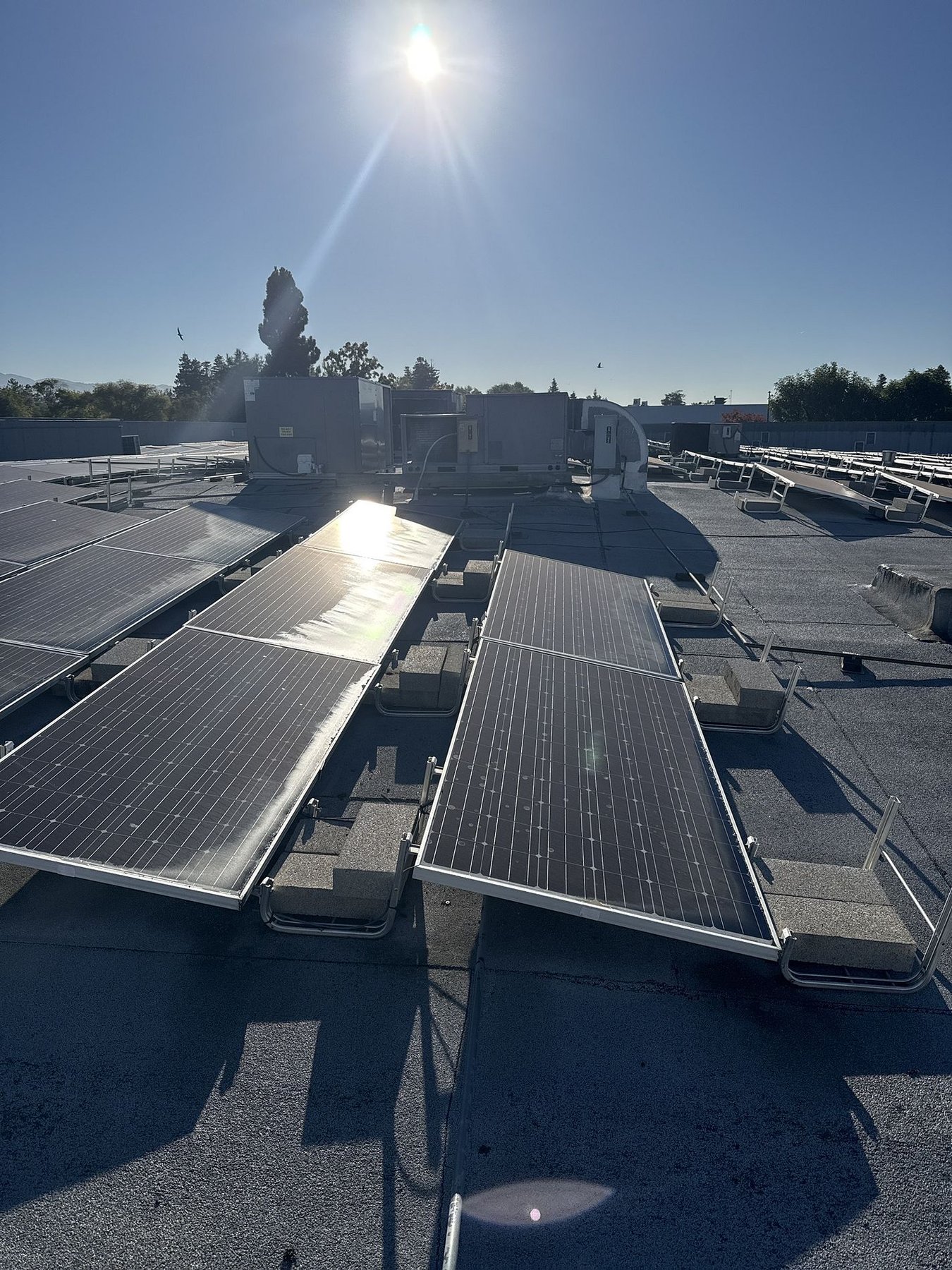
San Jose Commercial Maintenance
Ongoing commercial flat-roof maintenance with solar panel coordination, single-ply install, and active leak repair.
View Case Study →