Almaden Tile Project
in Almaden Valley, San Jose
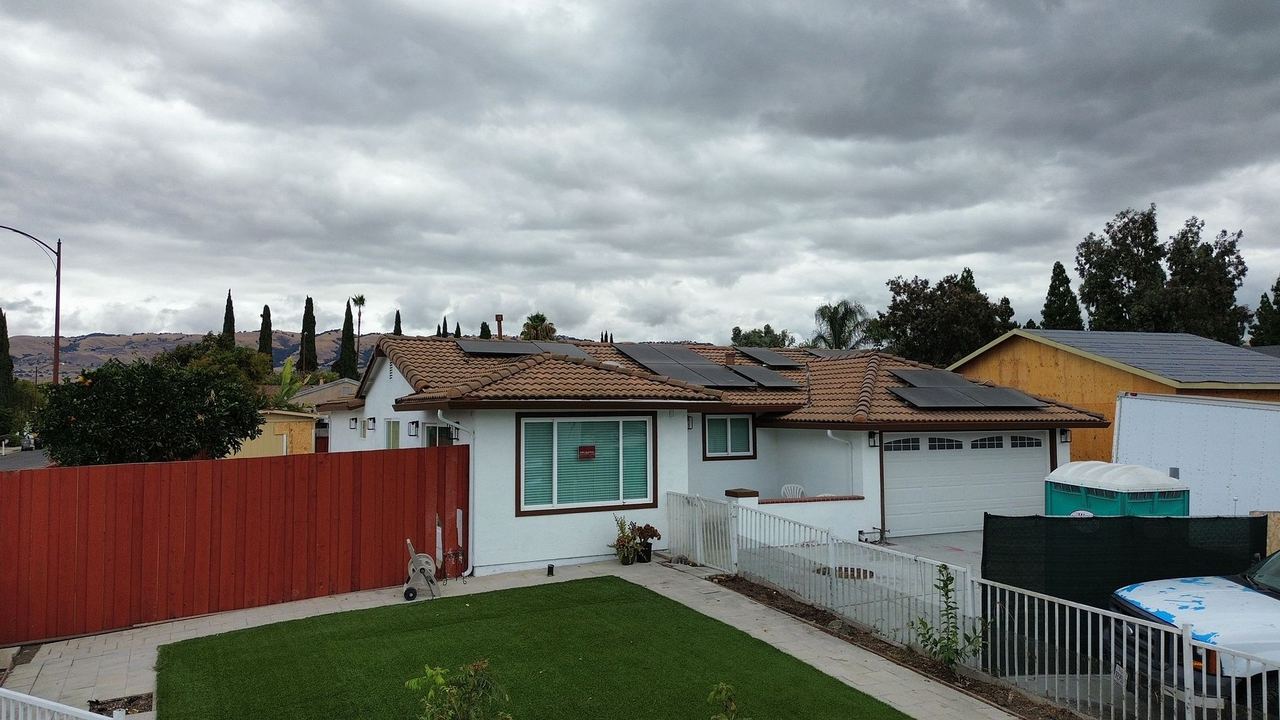
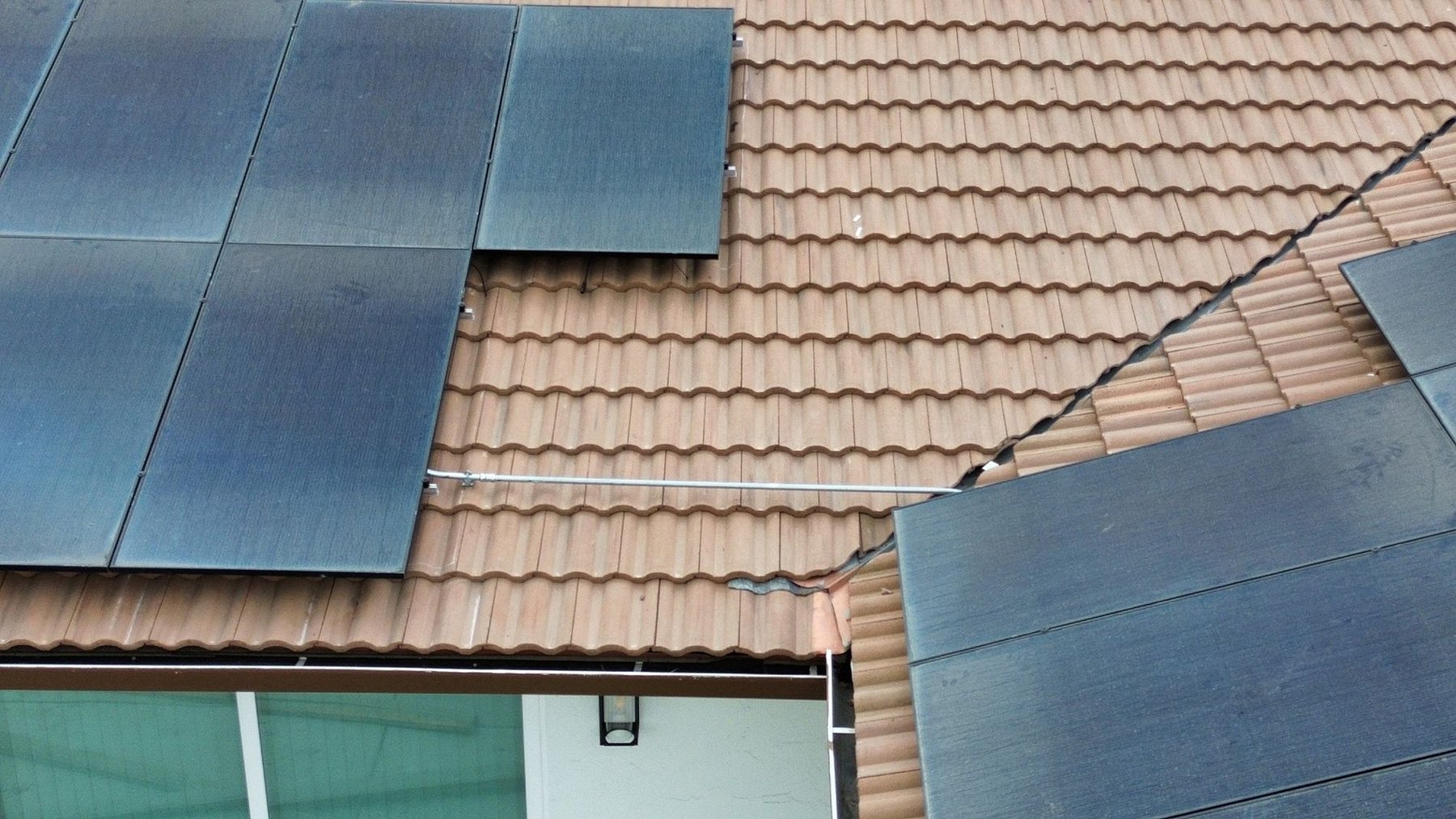
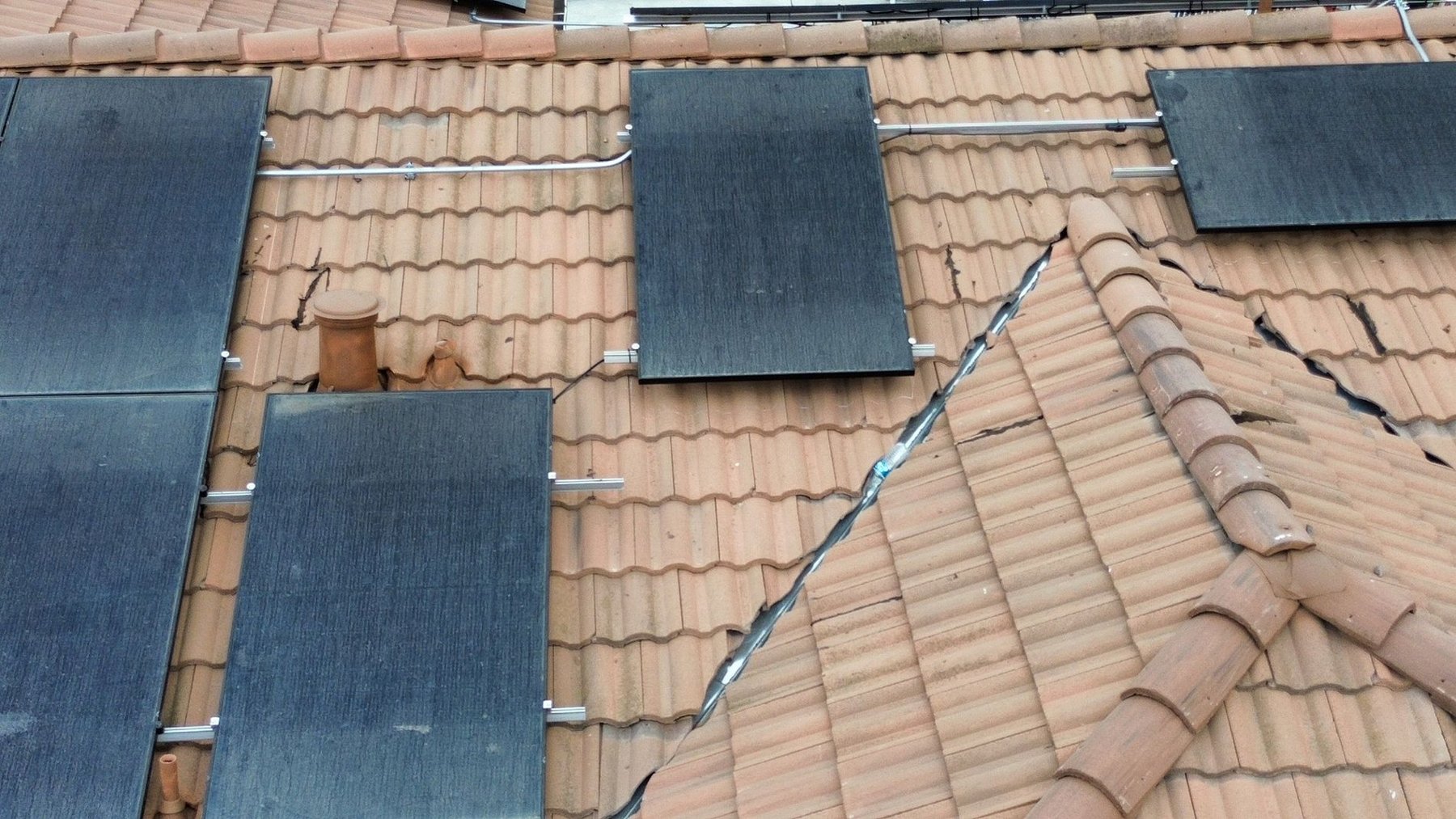
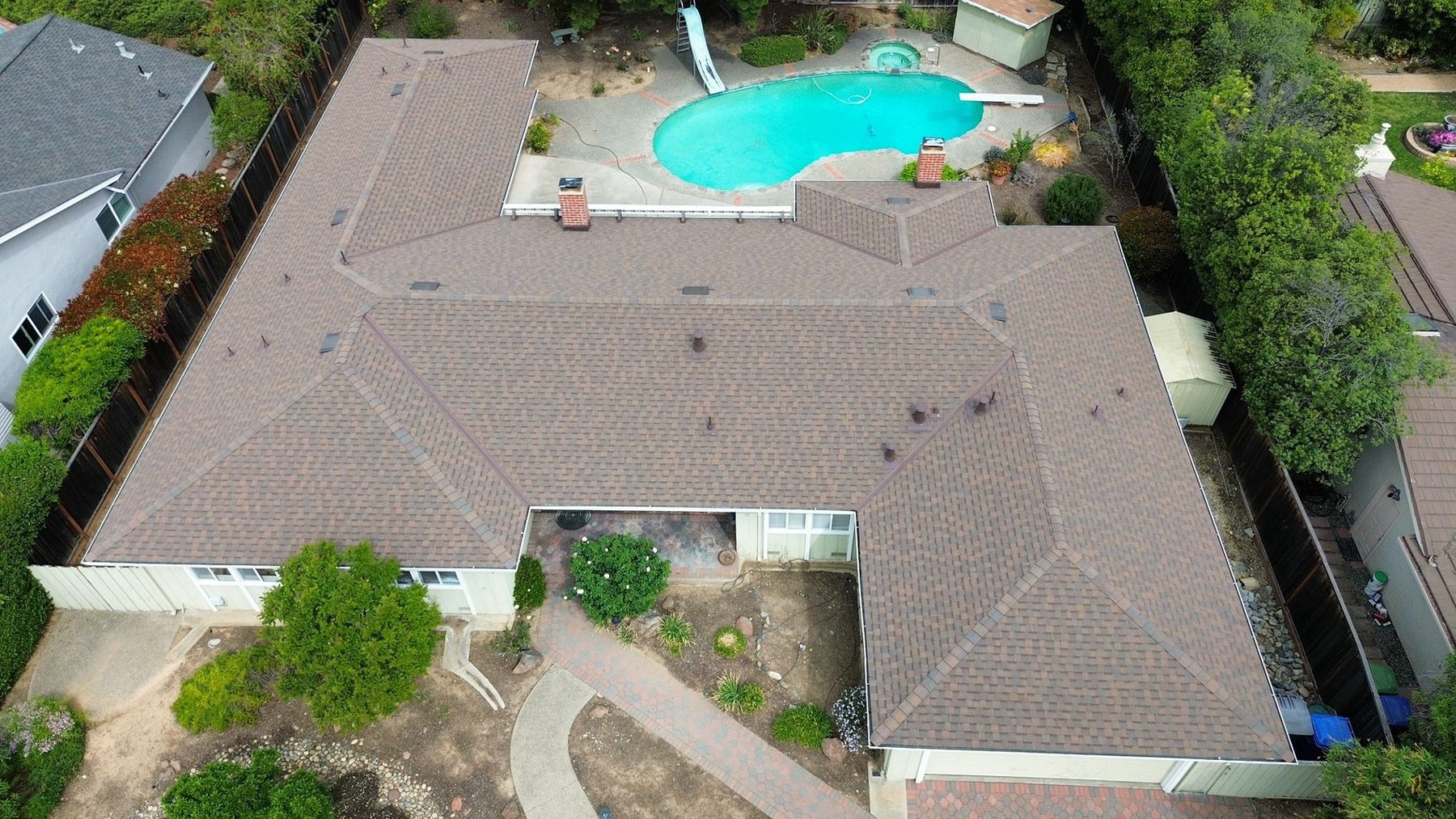
On this Almaden Valley hillside home the 1982 Monier Lifetile was still in good shape; the underlayment and flashings under it were not. We lifted the tile, rebuilt the waterproofing and laid the same tile back, which costs far less than new tile when the tile itself is still sound.
Good Tile,
Failed Underlayment
The Almaden Valley home was a 1982 custom hillside residence in one of the more upscale streets in upper Almaden. The original concrete tile roof was 42 years old and showing obvious signs of underlayment failure — water stains on the garage ceiling, visible underlayment deterioration where it showed at the eaves, and a growing leak history that had been patched with individual tile replacements three times in the past four years. The homeowner was facing the classic Almaden question: full tear-off with new tile, or lift-and-relay with the existing tile?
Our inspection found the tile itself was in excellent structural condition — breakage rate during test removal of 15 tiles was under 4%, color was still excellent, and the concrete integrity was sound. The failure was entirely in the underlayment beneath, which had aged well past its 25-30 year design life. This was a textbook lift-and-relay candidate. Full tile replacement would have cost 2-2.5x more and would have thrown away tile that had 25+ years of service life remaining.
Lifting the Tile Without Losing It
Lift-and-relay is technically more complex than full tear-off — each tile needs to be removed carefully, inventoried, and reinstalled without damage. Breakage during removal is expected (we typically see 5-8% tile breakage rate on lift-and-relay projects) and needs to be replaced with color-matched stock. For this Almaden project, we had direct supplier access to Monier Lifetile's legacy color profiles, which made color-matched replacement straightforward.
Technical scope: careful tile removal and staging, deck inspection and repair, modern synthetic underlayment installation, full flashing renewal (chimney, skylight, sidewall, valleys), batten system renewal, and careful tile reinstallation. The result is a roof that looks identical to the original from the street — but with 30+ years of new service life in the waterproofing system beneath the tile.
How the Lift-and-Relay
Was Done
Pre-Project Tile Assessment
Test removal of 15 tiles across all four roof planes to assess breakage rate. Confirmed 4% breakage rate — well within viable range for lift-and-relay. Photo documentation of existing conditions, tile color/profile identification, and supplier coordination with Monier Lifetile for legacy color replacement stock.
City Permit & Hillside Staging Plan
A normal residential re-roof permit, issued in 4 business days here. The permit noted the hillside access, since it shapes where materials can be staged and how the site is run.
Careful Tile Removal (Day 1-3)
Methodical tile removal across all slopes, tile staging in organized lots near the structure, and continuous inventory/breakage tracking. Final breakage rate of 6% — standard for this age and condition of tile.
Deck Inspection & Repair (Day 3)
Decking inspection across all slopes. We found and repaired approximately 32 sq ft of rotted decking at two locations — both around chimney and skylight penetrations (classic long-term underlayment leak impact). Repairs documented with photos and communicated transparently before we proceeded.
Underlayment, Flashing & Battens (Day 3-5)
With the deck sound, we laid CertainTeed DiamondDeck synthetic underlayment, lapped to suit a battened tile roof, and added ice-and-water membrane in the valleys and around each roof opening. Chimney, skylight and sidewall flashings were all replaced using copper and stainless steel parts, and new 1x2 treated battens went down to Monier's spec.
Tile Reinstallation (Day 5-7)
Original tile reinstalled course by course with color-matched replacement tile (6% of total) in the areas where removal breakage occurred. Hip and ridge work with new mortar bedding where appropriate. Final walk-through and photo documentation.
Old Tile,
New Everything Else
Original Monier Lifetile Concrete Tile (Preserved)
The existing 1982 Monier Lifetile concrete tile, preserved and reinstalled. This tile has 25+ years of service life remaining when protected by modern underlayment. Color and aesthetic character of the original home maintained.
Color-Matched Monier Lifetile Replacement (6%)
Replacement tile for breakage during removal, sourced through our direct Monier supplier relationship. Color-matched to the original profile. Near-invisible integration with the preserved original tile.
CertainTeed DiamondDeck Synthetic Underlayment
This synthetic sheet, with its 30-year warranty, is now what keeps water out for the next 30+ years while the tile keeps doing its job on top. Laps were set to suit the batten system.
Copper Valley & Chimney Flashing
Copper at the chimney, valleys and other key openings. It weathers to a patina that suits the house and lasts 50+ years, in step with the life the tile has left.
Treated 1x2 Tile Battens
New treated pine battens installed per Monier specification. Provides the air gap between tile and underlayment that extends underlayment service life through ventilation.
Same Look, New Waterproofing
From the street the roof looks just as it did in 1982: same color, same profile, same character. Underneath, all of the waterproofing is new. The owner has a 30-year underlayment warranty and our 10-year workmanship warranty, and the original Monier Lifetile still has 25+ years of life in it. The whole job came to roughly 45% of the price of tearing off and replacing the tile, and the house kept the look that set it apart in the first place. That is lift-and-relay working the way it should.
Almaden Tile Project
Images
Concrete Tile Country:
Almaden Valley
Almaden Valley is concrete tile country. The neighborhoods between the Almaden Expressway and the Santa Teresa foothills were built predominantly between the 1960s and 1980s, with tile roofs on thousands of custom and tract-built homes. Most of that tile came from three makers, Westlake Tile (once sold as Eaglelite), Eagle Roofing and Monier Lifetile, all quality concrete products expected to last 40-60 years. The underlayment under the tile, though, was only ever meant to last 25-35 years. Almaden's aging tile-roof inventory is now almost universally on original underlayment that's past its service life.
That leaves most Almaden owners with one decision: keep the tile and relay it, or strip everything and start over with new tile. Tile condition settles it. When the tile is in good structural shape (breakage under 8-10% in a test removal), lift-and-relay is usually the better choice: it adds 30+ years of life at 40-55% of the price of new tile and keeps the original color and character, which matched replacement tile can get close to but never quite copy. When tile is cracked, spalling or breaking badly, new tile is the better buy.
Almaden Valley's hillside topography adds project logistics considerations — material staging, access for tile staging, equipment positioning, and safety setup for steep-pitch work on hillside properties. We have decades of Almaden hillside experience and budget these logistics into project scope and pricing. Upper Almaden properties in the Graystone and Almaden Country Club areas frequently require hillside-aware installation that general roofers without Almaden experience often underprice.
What Almaden Owners
Want to Know
Similar Jobs
Robertsville Residence
A south San Jose tile roof too far gone to relay, so we replaced it with new Monier Lifetile.
Willow Glen Re-Roof
A shingle re-roof on a 1928 Willow Glen bungalow, with new solid sheathing and rebuilt chimney flashing.