The rules are sometimes confusing because enforcement varies meaningfully between cities. Cupertino and Mountain View are notably strict. San Jose enforces the code but with some flexibility. Smaller municipalities may apply less scrutiny. But the underlying requirements are state-wide, and they affect virtually every residential and commercial re-roof in our service area.
Here's what the rules actually require, what they mean practically, and how we handle compliance during projects.
What Is Title 24?
Title 24 is California's Building Standards Code — specifically Part 6, the Energy Code. It's updated every three years by the California Energy Commission and governs how buildings perform energetically. The code affects insulation levels, window specifications, HVAC efficiency, lighting, and — relevant here — roof reflectance and emittance.
The roofing portion of Title 24 is informally called the 'cool-roof' requirement. The basic idea: roofs that reflect more sunlight and re-emit more heat reduce building cooling loads, which reduces statewide energy consumption. That's good public policy. The implementation is where it gets technical.
How the Cool-Roof Rule Actually Works
Title 24 prescribes minimum values for two properties of the roof surface:
Solar Reflectance (SR): The fraction of sunlight (both visible and infrared) that the roof reflects. Higher is better. Scale is 0 (absorbs all) to 1.0 (reflects all).
Thermal Emittance (TE): The ability of the roof to release absorbed heat through radiation. Higher is better. Scale is also 0 to 1.0.
These are combined into a Solar Reflectance Index (SRI). For California Climate Zones 1–9 (which includes all of the South Bay), the prescriptive minimums for residential re-roofs are:
• Low-slope roofs (less than 2:12 pitch): minimum 3-year aged SR of 0.63 and TE of 0.75
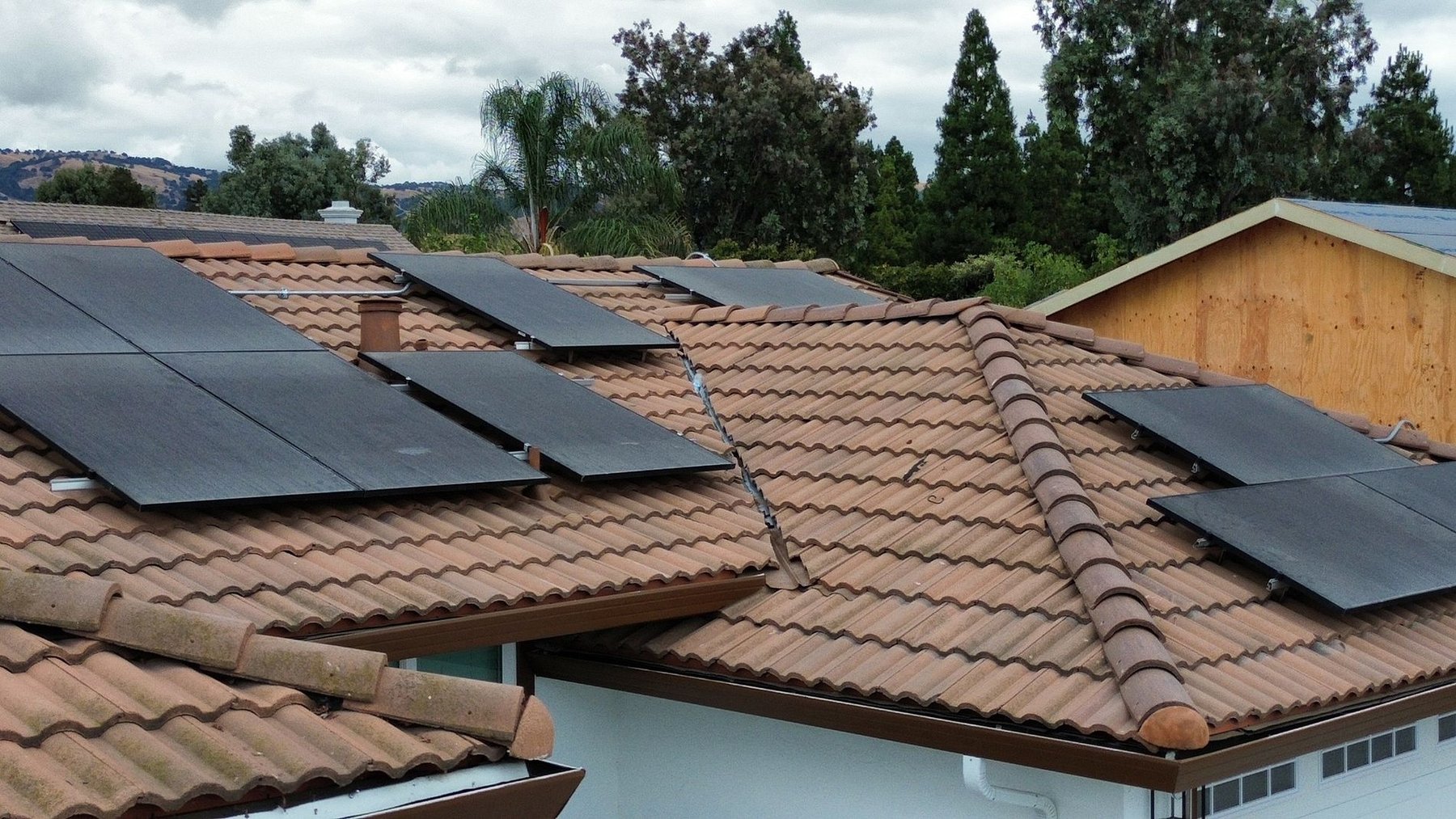
• Steep-slope roofs (2:12 or greater): minimum 3-year aged SR of 0.20 and TE of 0.75
These values aren't arbitrary. They're set based on energy modeling across California's climate zones. Meeting them typically means selecting specific product lines rather than installing whatever the homeowner likes.
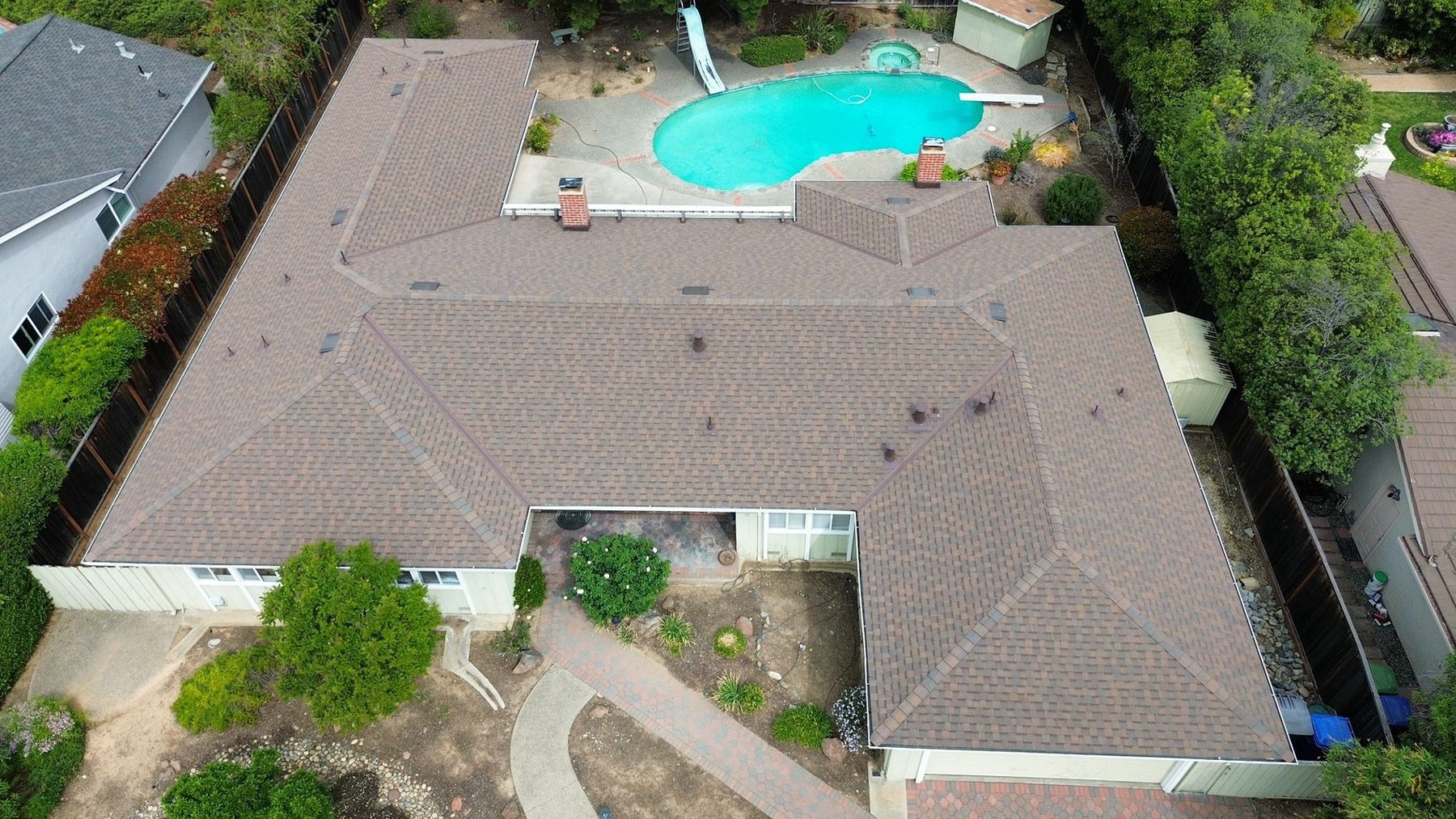
What This Means for Residential Asphalt Shingles
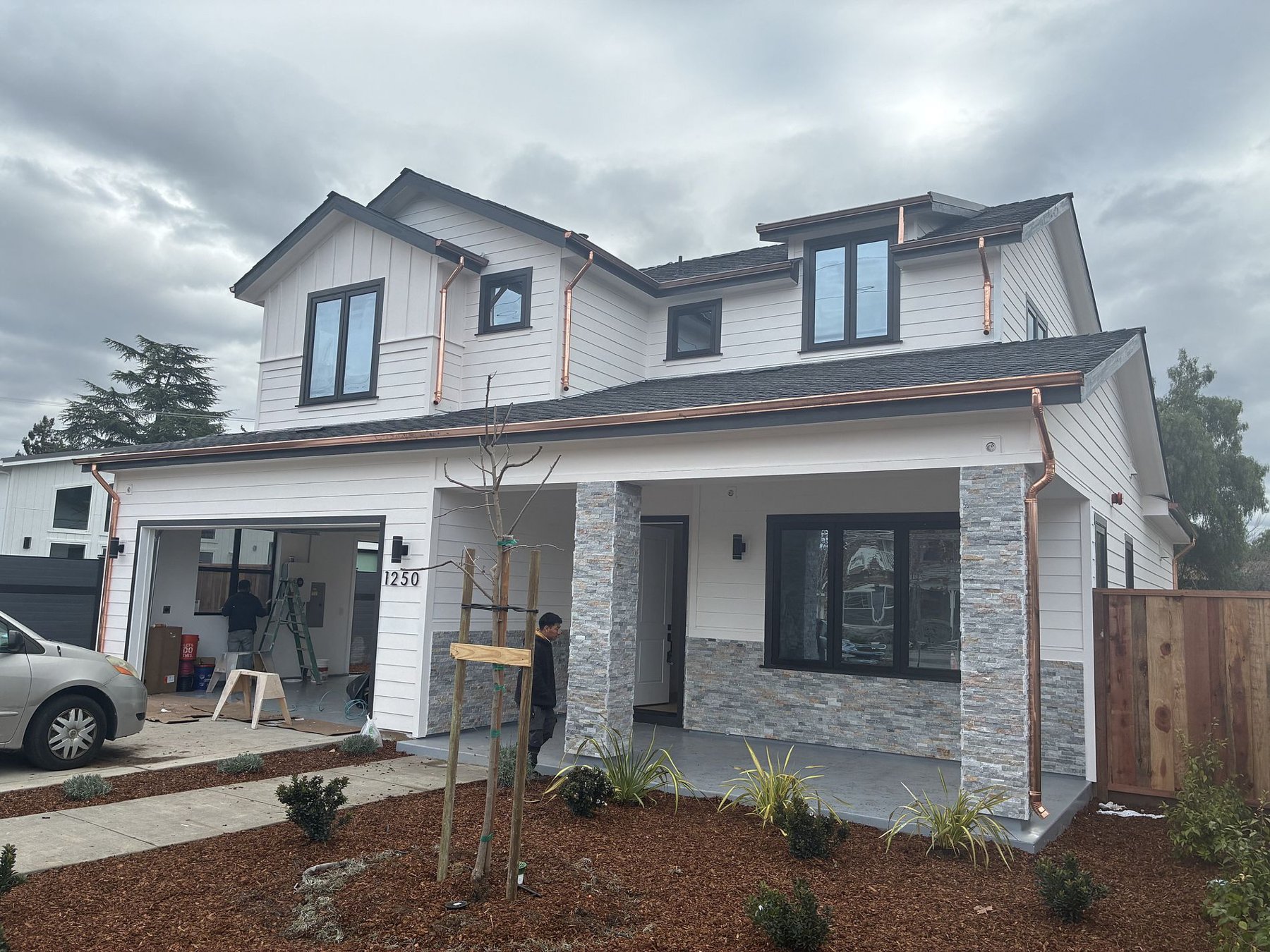
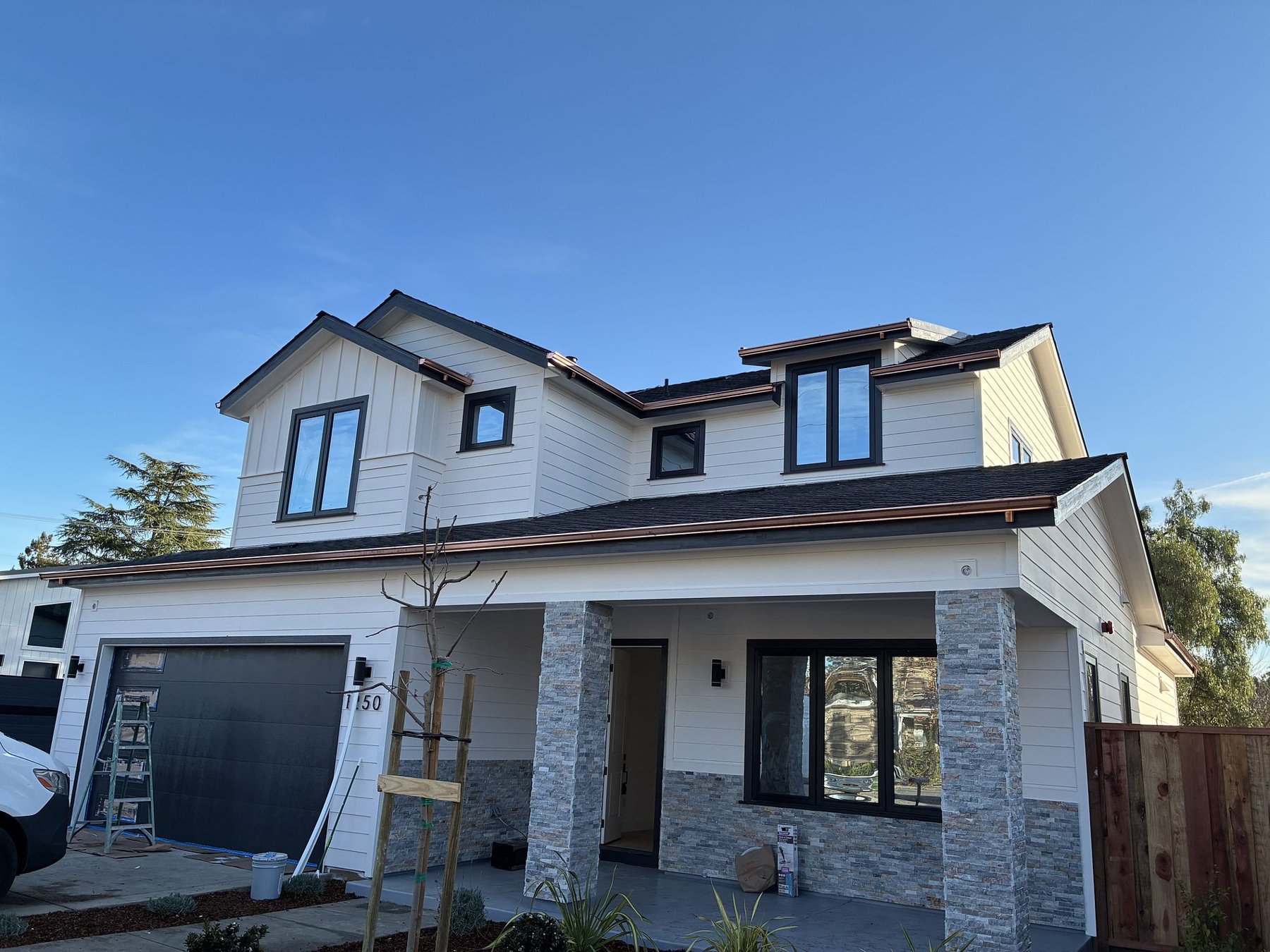
The good news: many modern architectural shingle product lines have been specifically developed to meet Title 24 residential requirements. CertainTeed Landmark Solaris, GAF Timberline CS, and Owens Corning's Duration Cool Roof all meet or exceed the SR 0.20 threshold while offering a reasonable range of colors.
The less-good news: dark shingles are harder to qualify. Traditional black, dark gray, and dark brown shingles that historically reflected only 5-15% of sunlight don't meet the 0.20 threshold without special formulation. Many dark colors now use '3M Scotchgard' or similar cool-pigment technology to meet code, but this is product-specific — not every shingle color qualifies.
Homeowners who want very dark shingles often have two options: choose a specific cool-rated dark shingle product (limited selection), or use an alternative compliance path — typically increasing attic insulation to offset the reflectance shortfall. We handle both approaches during projects.
What This Means for Commercial Flat Roofs
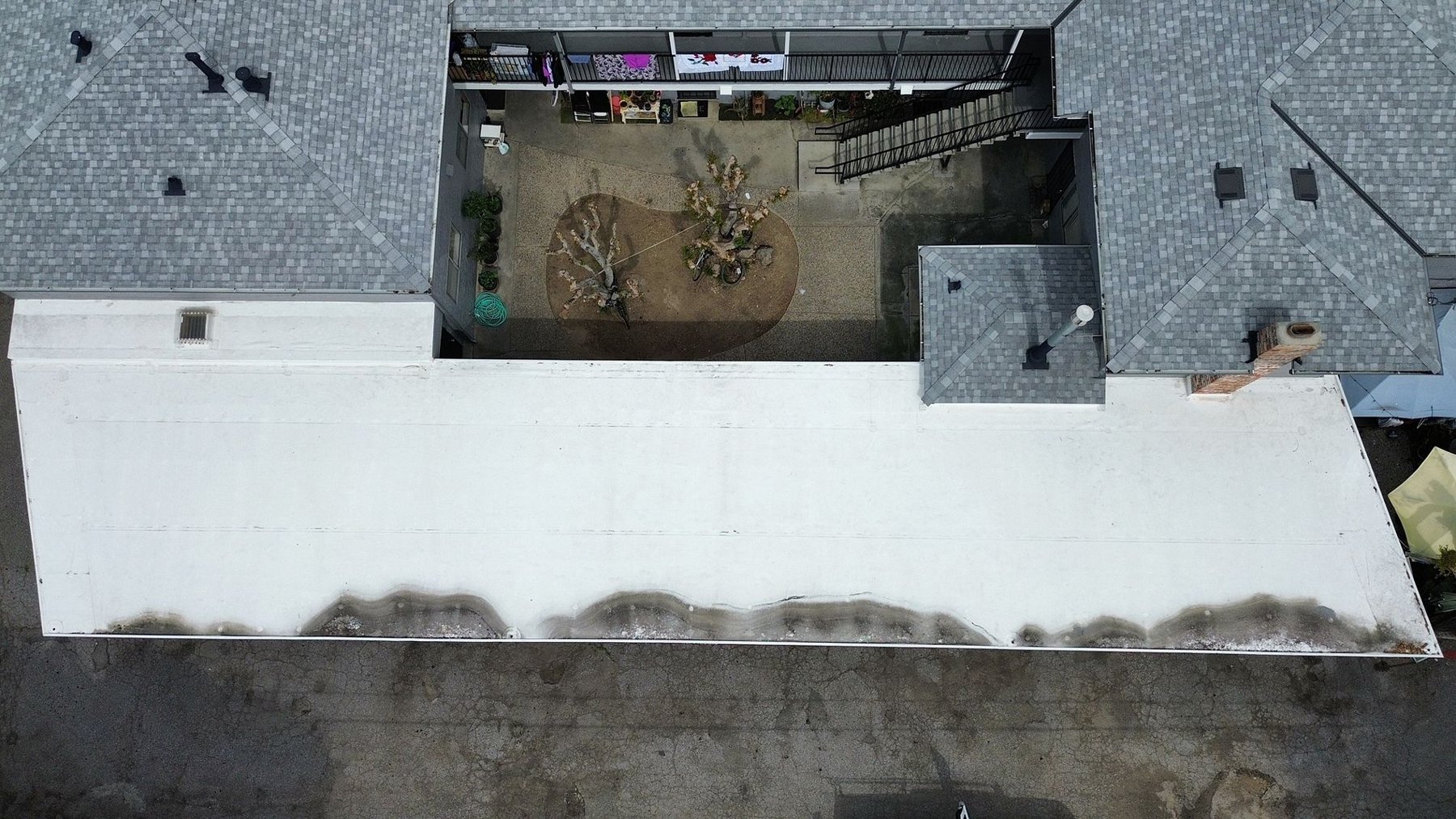
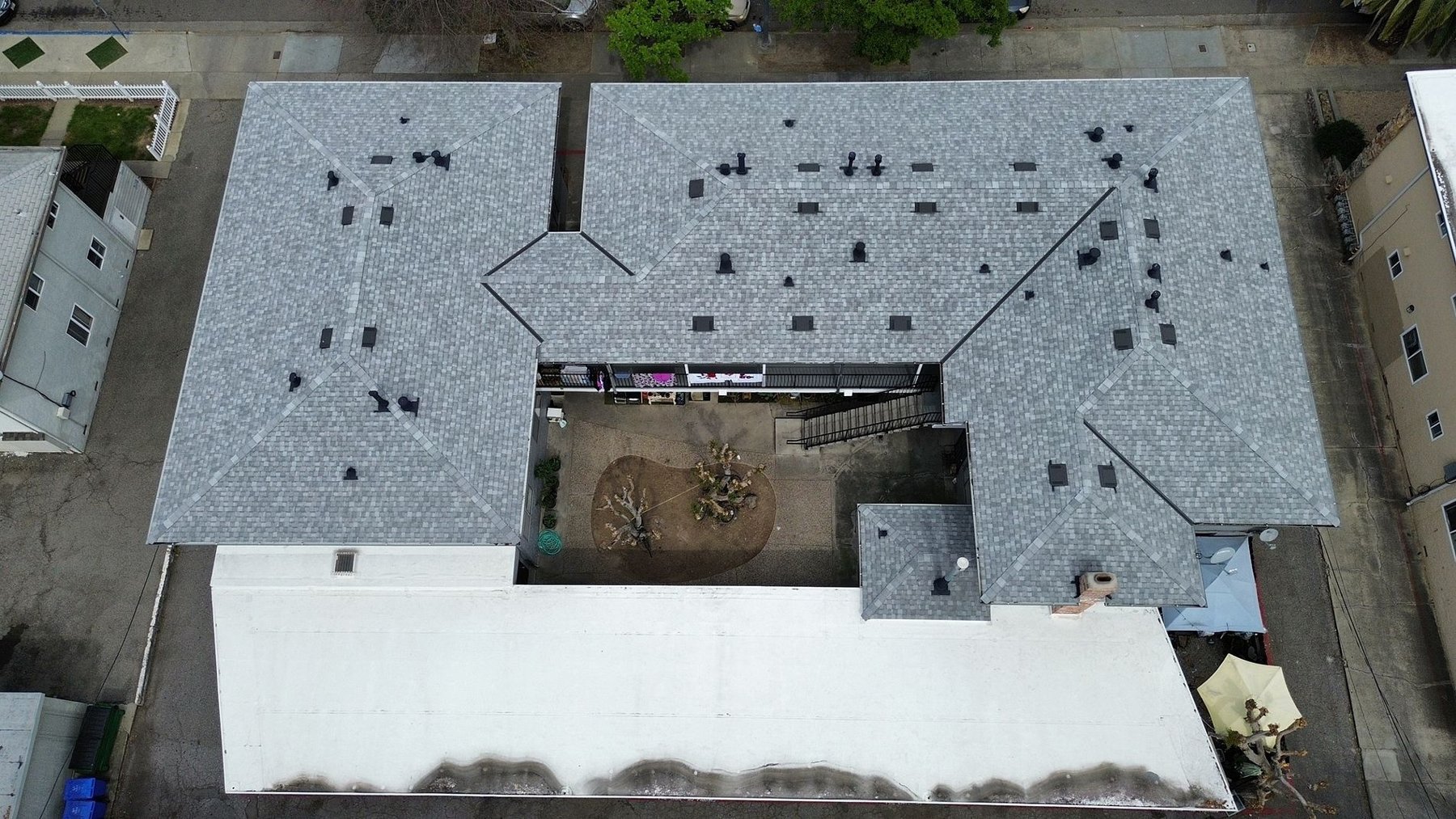
Commercial and low-slope roofs face a stricter requirement (0.63 SR) because they're mostly flat and absorb more direct sunlight. The practical consequence: most commercial flat-roof projects in the Bay Area now use white single-ply membrane. White single-ply from Carlisle SynTec, GAF EverGuard, and Firestone UltraPly all meet or exceed the 0.63 threshold easily.
Older commercial roof systems — BUR (built-up roof with gravel surface), dark modified bitumen — don't meet the current Title 24 threshold. When these systems are replaced, they're typically replaced with compliant TPO or with a silicone cool-roof coating that restores the existing substrate and achieves compliance through the reflective coating.
Local Enforcement Differences
Here's where things get practical. Title 24 is a statewide code, but enforcement happens through local building departments, and they have meaningful differences:
Strict enforcement: Cupertino, Mountain View, and Palo Alto enforce Title 24 cool-roof provisions aggressively. Permit applications typically require NFRC-rated product specification sheets and sometimes calculation worksheets for alternative compliance paths. Inspector visits check material labels. Plan to document compliance fully for projects in these cities.
Moderate enforcement: San Jose, Santa Clara, and Sunnyvale require compliance documentation but with less stringent review processes. Permit applications still need to show compliant materials, but the review is less detailed.
Variable enforcement: Smaller municipalities and some unincorporated areas apply the code with varying levels of detail. We still spec compliant materials as a default — it's good practice regardless of local review intensity.
We handle Title 24 documentation as part of standard service in every jurisdiction. You don't need to become an expert — our permit applications include the required documentation automatically.
Alternative Compliance: What If You Want a Non-Compliant Color?
California building code includes alternative compliance paths for cases where the prescriptive cool-roof rule doesn't suit. The most common alternative: increase the R-value of attic insulation above current code minimums to offset the cooling load increase from a non-compliant roof.
For a typical Bay Area home, this might mean adding R-10 of additional attic insulation as part of the project. Cost varies but is often $1,500-$3,000 depending on attic size and existing insulation. Net cost after any energy savings is usually a few hundred dollars over the roof's service life — not nothing, but often worth it for homeowners who want a specific aesthetic.
For homes with newer insulation already well above code, the alternative path is sometimes already satisfied without adding anything. We'll assess and give you clear options during the estimate.
The Bottom Line
Title 24 affects virtually every residential and commercial re-roof in the Bay Area, but it's not a reason to dread your roof replacement. Modern compliant materials come in broad color ranges, and alternative compliance paths exist for homeowners who need non-standard aesthetics.
What matters is working with a contractor who understands the code, handles the documentation, and specs compliant materials as the default. We've been navigating Title 24 since its first implementation and through every major update — it's a routine part of every project we do, not an add-on.
If you want to talk through how Title 24 affects your specific project, schedule a free estimate and we'll walk through the options for your home.
Frequently Asked Questions
Need professional help with your roof? Keith Roofing Company has been serving San Jose and the South Bay since 1952. We offer free estimates, honest recommendations, and work that's backed by BBB A+ Accreditation and CSLB License #1118418. Schedule a free estimate or call (408) 295-8616.