The first few hours matter. Taking the right steps immediately can limit a leak's damage to cosmetic ceiling staining. Taking the wrong steps — or no steps — can turn a small leak into a five-figure restoration project.
Here's the practical guide: what to do in the first hour, the first day, and the first week when your roof is leaking. If you have an active leak right now and want professional help immediately, call (408) 295-8616.
The First Hour: Contain the Damage
Your priority in the first hour is preventing water from damaging things you care about. This is triage, not repair. Five things to do immediately:
1. Move anything valuable away from the leak. Furniture, rugs, electronics, artwork. Water damage to these items is often more expensive than the roof repair itself.
2. Place containers under the drip. Buckets, trash cans, cooking pots — anything that catches water. For large leaks, use multiple containers and check them frequently.
3. Put towels or a tarp on the floor under the leak. Protects hardwood, carpet, and subflooring from water that misses the container.
4. If the ceiling is bulging with water, consider puncturing it. Sounds counterintuitive, but a small controlled puncture (with a pencil or screwdriver) and a bucket underneath is much better than the ceiling collapsing under the water weight. Bulging drywall means gallons of water are accumulating above — release it into a container before it releases itself.
5. Turn off electricity to affected areas if water is near fixtures. Water in electrical systems is a fire and shock hazard. Err on the side of caution.
The First Day: Stabilize the Situation
Once you've protected your interior from active water damage, the next step is preventing continued water entry. This typically means temporary exterior protection until a permanent repair can be scheduled.
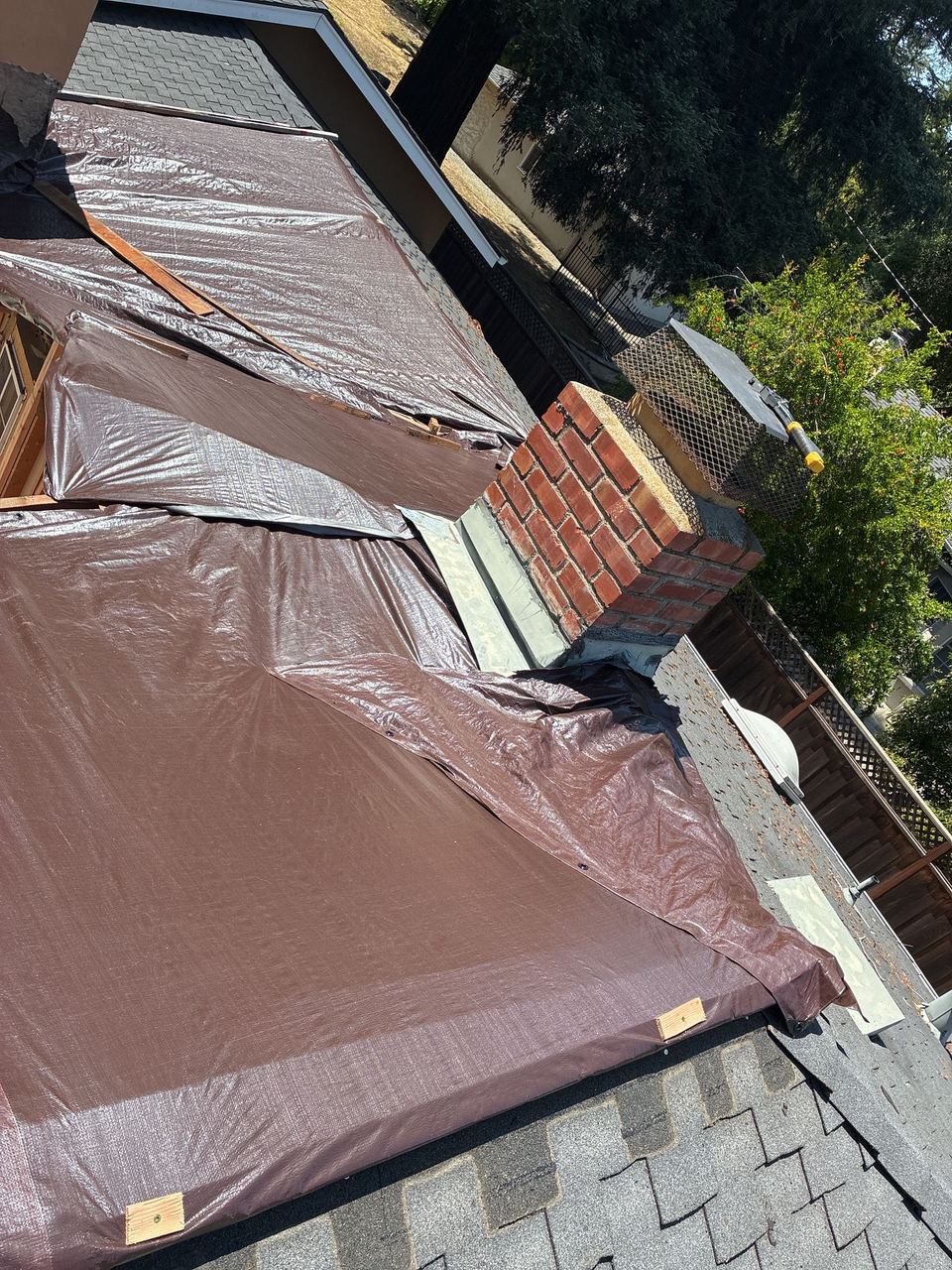
If it's safe and weather permits, a tarp over the leak area is the standard emergency protection. Tarps come in various sizes at any hardware store. The key is covering the leak source, not just the roof area above the interior drip (water enters in one place and travels — the source is often uphill from where it's dripping).
Don't attempt tarping yourself unless you're comfortable on roofs and confident in the weather. Wet roofs are dangerously slippery. High winds make tarps unmanageable. Working on roofs without proper safety equipment is how people get hurt. We do emergency tarping as part of our service and can usually deploy within hours for active leaks.
Call a contractor. Even if you've managed the immediate emergency, get a professional inspection scheduled quickly. We respond to San Jose leak calls typically same-day during business hours and prioritize active leaks for next-day response after hours.
The First Week: Diagnose and Repair
With the immediate crisis handled, the focus shifts to permanent repair. A proper response involves three steps:
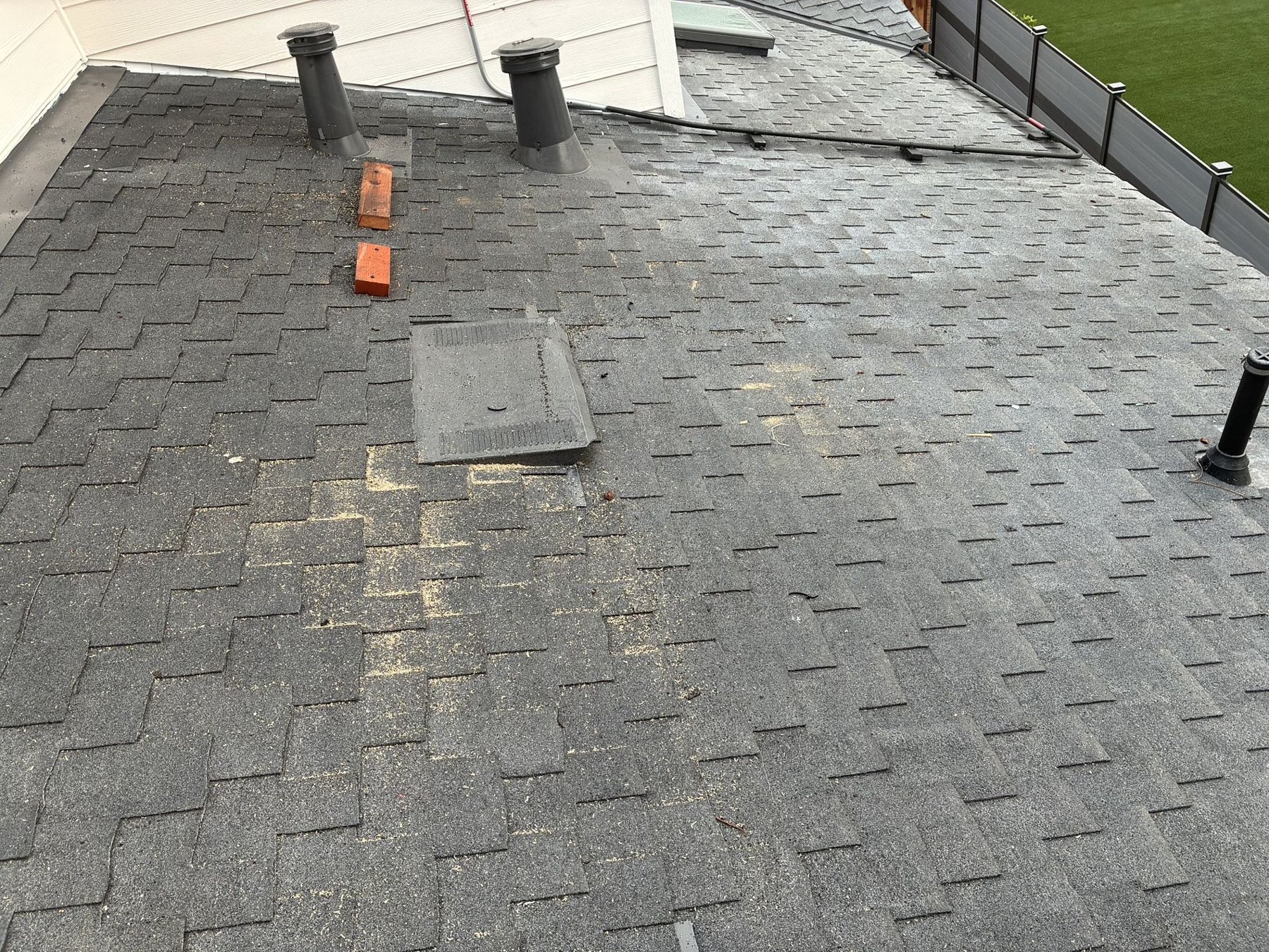
1. Leak source diagnosis. As mentioned, water enters at one point and travels — sometimes significant distances — before showing up on the ceiling. A roof inspection traces the leak to its actual entry point. Common sources: failed flashing around chimneys, vent pipes, or skylights; damaged shingles or tiles; failed valley flashings; ice-and-water shield failure at transitions; or penetrations around HVAC equipment.
2. Scope assessment. Is this a localized issue that can be repaired, or is the roof failing systemically? For roofs under 15 years old, most leaks are localized and repairable. For roofs past 20 years, leaks often signal that the roof has reached end of service life — and continued repairs on a failing roof become expensive band-aids. We'll tell you honestly which applies to your specific situation.
3. Permanent repair or replacement. Depending on the scope assessment, the permanent solution is either targeted repair (flashing renewal, shingle replacement, skylight re-flash) or full roof replacement. Repair typical timeline: 1-3 days. Replacement typical timeline: 2-7 days depending on material.
Common Leak Sources (and How to Prevent Them)
Most San Jose roof leaks come from one of these sources:
Chimney flashing. The #1 leak source on older homes. Chimneys have multiple flashing points (base, step, counter) that fail over time from thermal cycling, material age, and sometimes sloppy original installation. Typical repair: full chimney flashing renewal with proper counter-flashing.
Skylight flashing. Skylights are complex penetrations with multiple failure points. Older plastic-dome skylights frequently leak at the flashing interface; newer glass skylights last longer but eventually develop issues. Typical repair: re-flash in place, or replace the skylight if it's beyond service life.
Valley issues. Roof valleys see concentrated water flow and more thermal/physical stress than field roofing. Failed ice-and-water shield, debris accumulation, or improper installation all cause valley leaks. Typical repair: valley flashing renewal.
Penetrations. Every vent pipe, HVAC stack, satellite dish bracket, and solar mount is a potential leak source. Rubber boots around plumbing vents particularly fail after 10-15 years. Typical repair: replace flashing boot.
Wind damage. High wind events can lift shingles or break tiles, creating water entry points. Typical repair: shingle or tile replacement.
The preventive story: annual roof inspections catch most of these before they become active leaks. An hour-long inspection that identifies a failing flashing before winter saves you the emergency call, the water damage, and the expensive restoration that follows.
Repair vs. Replace: The Hard Decision
When the diagnosis is complete, homeowners often face a decision: repair this specific issue, or replace the whole roof?
Repair is usually the right call when: the roof is under 15 years old, the leak source is localized, and other signs of aging (granule loss, curling shingles, multiple prior leaks) aren't present. In these cases, a $500-$2,500 roof repair extends the roof's service life meaningfully.
Replacement is usually the right call when: the roof is past 20 years, multiple leaks are active or have been active recently, widespread material deterioration is visible, or the repair scope approaches 20-30% of replacement cost. In these cases, pouring money into repairs doesn't make economic sense.
We give straight advice during the inspection. Our business is sustainable because we're honest — we recommend repair when it makes sense even though replacement is more revenue. A customer who has a $1,500 repair in 2026 and a proper $20,000 replacement in 2034 is worth more than a customer we pressured into a $20,000 replacement today who never calls us again.
Preventing the Next Leak
After handling the immediate situation, think about prevention. Three steps significantly reduce your risk of future leaks:
1. Annual roof inspections. Pre-winter is ideal — catch any flashing or penetration issues before the atmospheric-river season. We offer free inspections with any estimate and fee-based standalone inspections for real estate transactions.
2. Gutter cleaning. Clogged gutters back water up under shingles. Clean or have someone clean them at least twice a year (spring and fall).
3. Tree management. Branches overhanging the roof drop debris into valleys, scrape the roof surface, and provide paths for rodents to access the attic. Keep branches trimmed back at least 6 feet from the roofline.
These three habits dramatically extend roof lifespan and reduce emergency repair calls. They take very little time and save meaningful money over the life of the roof.
Frequently Asked Questions
Need professional help with your roof? Keith Roofing Company has been serving San Jose and the South Bay since 1952. We offer free estimates, honest recommendations, and work that's backed by BBB A+ Accreditation and CSLB License #1118418. Schedule a free estimate or call (408) 295-8616.