Campbell Tar-to-Shingle
Conversion
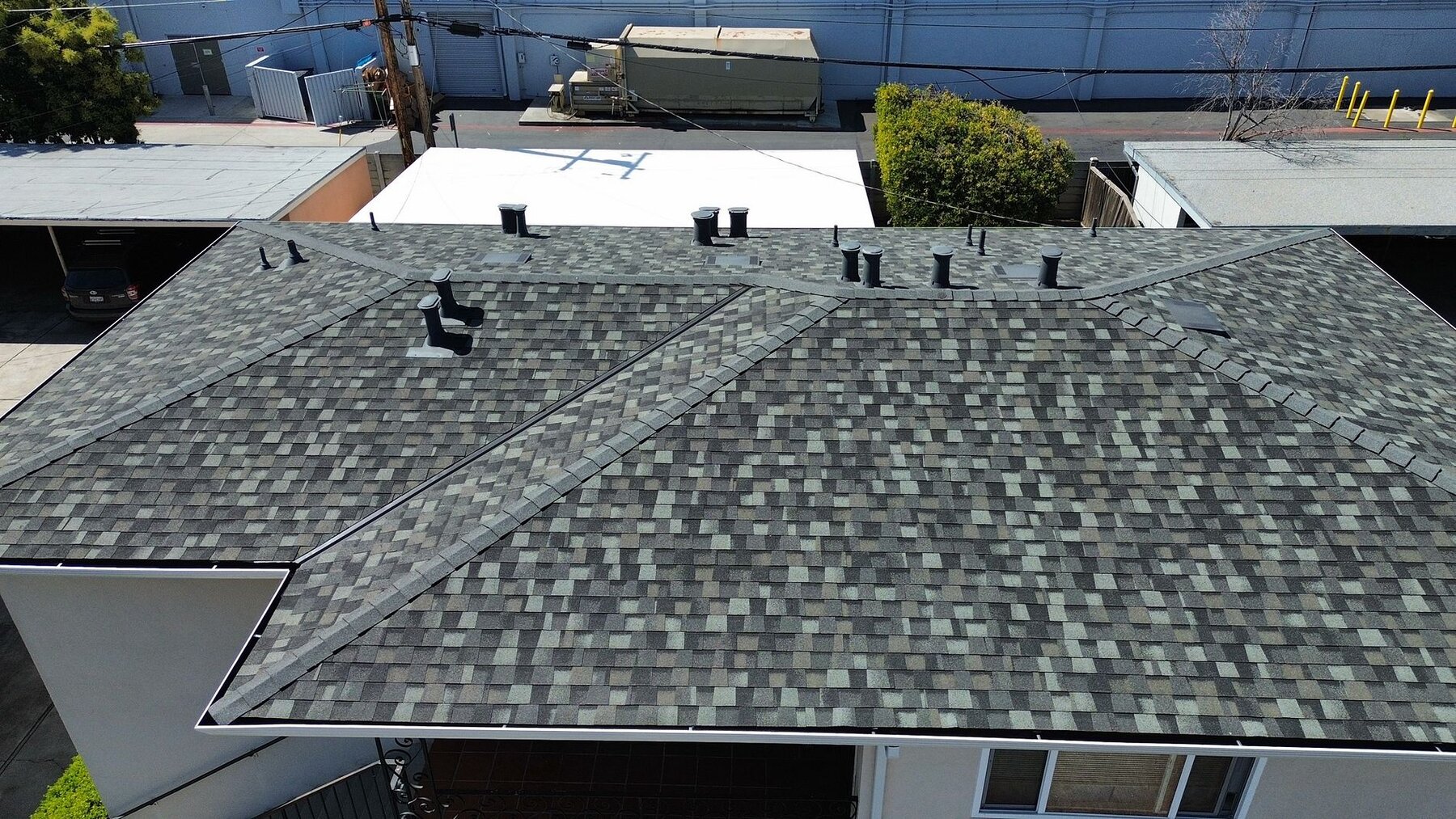
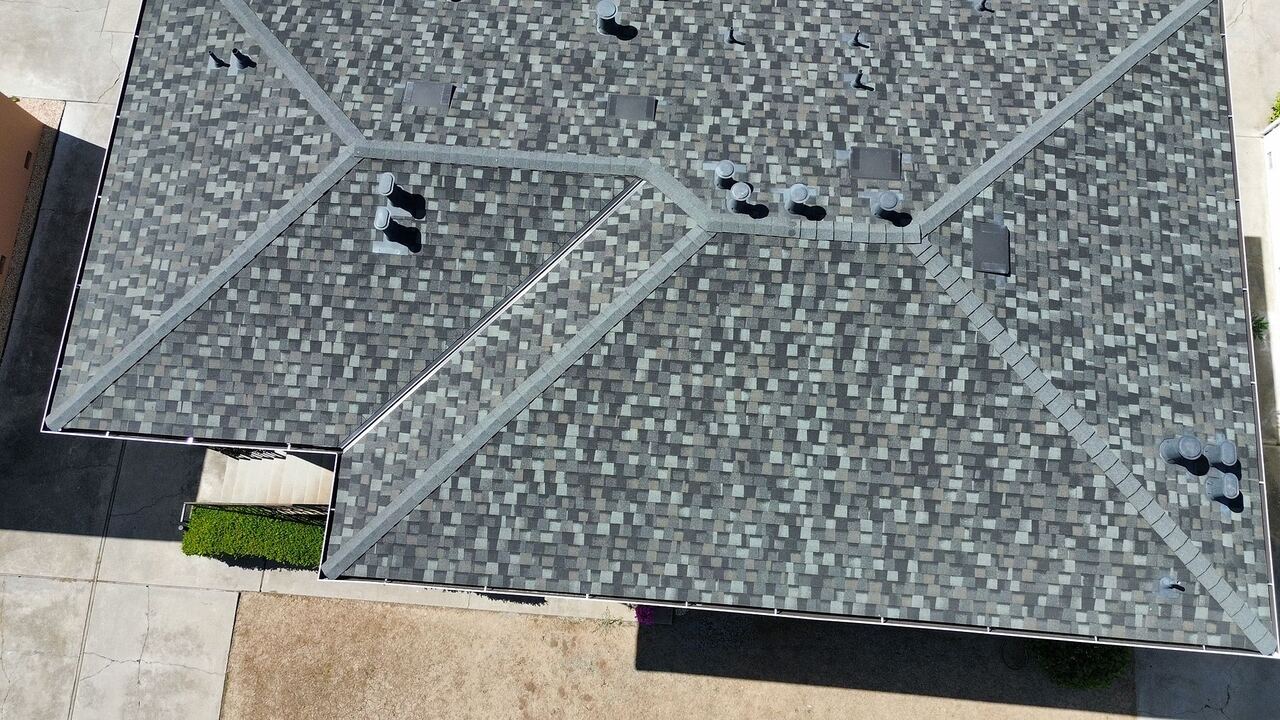
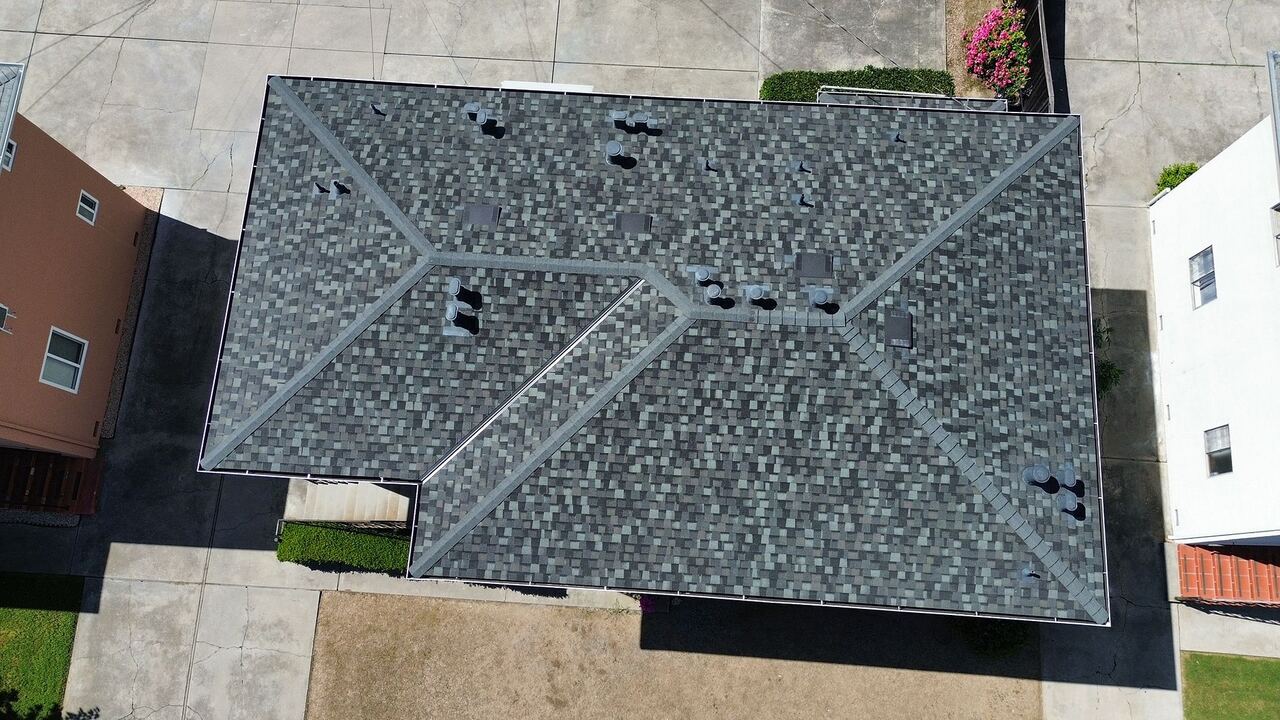
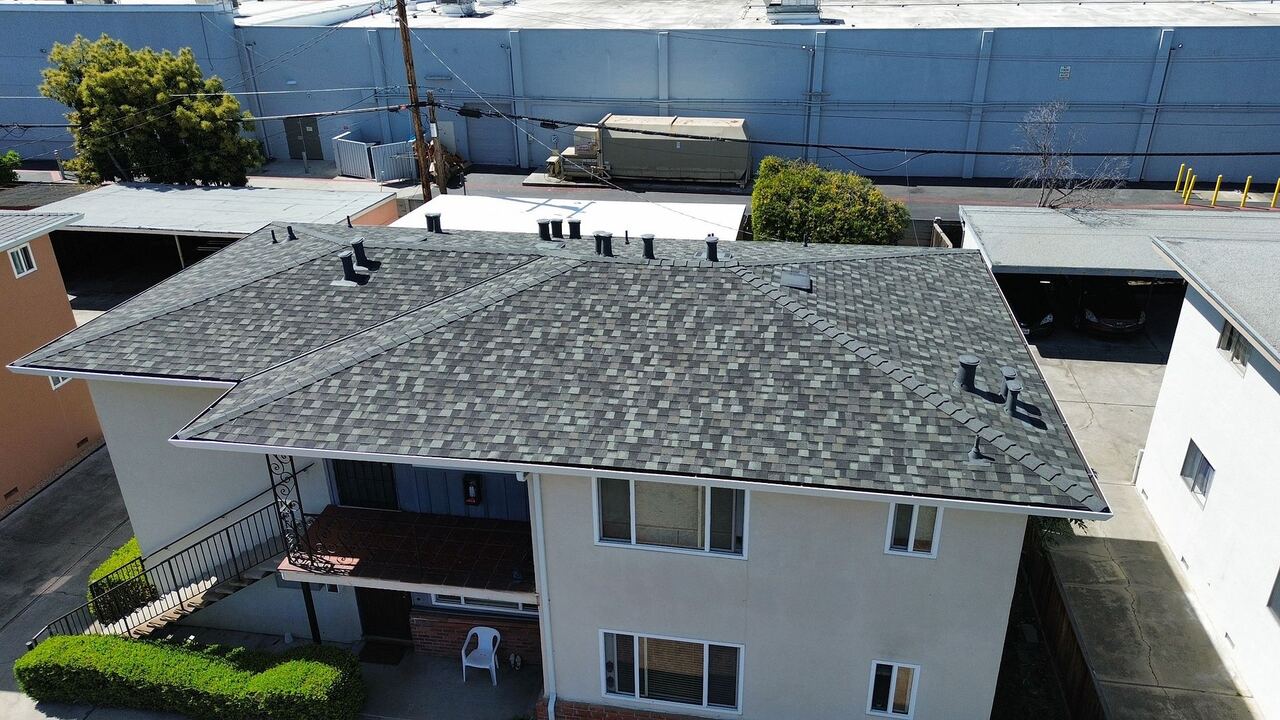
This project involved tearing off an existing tar-and-gravel roof and converting it to a 30-year CertainTeed Landmark composition shingle system — a meaningful upgrade in both appearance and long-term performance. We also installed new gutters around the entire home, applied a single-ply roofing system on the carport, and completed the smaller rear section over the laundry area. The transformation turned out absolutely beautiful — another solid upgrade in both curb appeal and roof performance for a Campbell homeowner.
From Tar-and-Gravel
to 30-Year Landmark
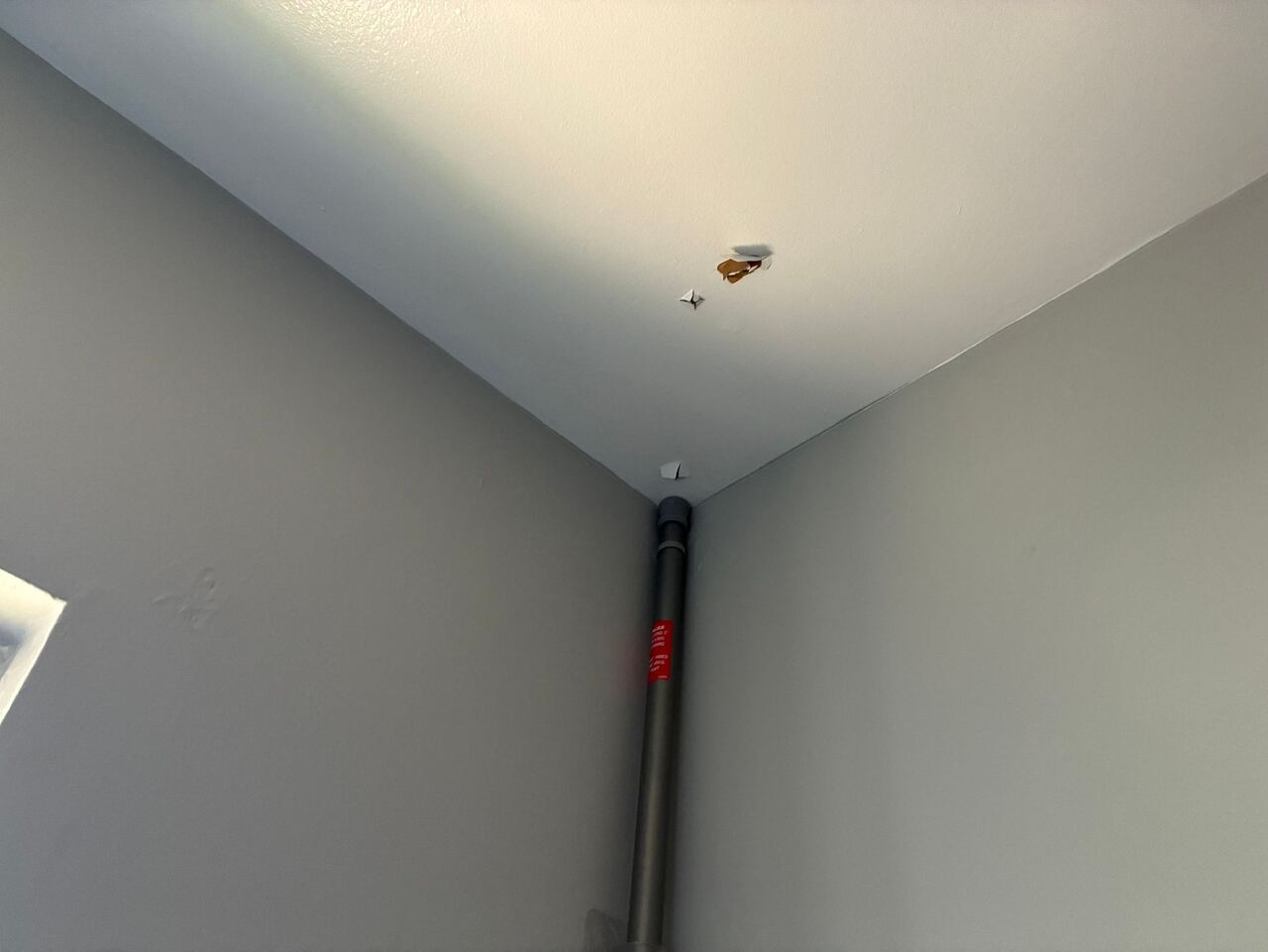
Tar-and-gravel built-up roof systems were a workhorse of mid-century residential and light-commercial construction. Campbell has a lot of them — small apartment buildings, duplexes, and older homes built between the 1950s and 1980s commonly had BUR (built-up roof) systems installed when the building went up, and many of those original roofs are still in place decades later. They're durable, but they have a finite service life, and when they start to fail, the failure mode is usually ceiling leaks showing up inside the living space. That's exactly what prompted this project: the homeowner noticed water damage on an interior ceiling (documented in one of the gallery photos), called us for an inspection, and we confirmed that the existing tar-and-gravel roof had reached end-of-service across the board.
The right answer on this kind of project isn't repair. It's conversion to a modern shingle system. Tar-and-gravel requires specialty maintenance that most roofing contractors can't do well, and every patch over an existing BUR is a short-term fix. The home's roof geometry had enough pitch to accept a shingle system cleanly, so we specified 30-year CertainTeed Landmark composition shingles for the main roof — a dimensional architectural shingle with a 30-year limited warranty, Class A fire rating, and the kind of long-term performance that gives a homeowner confidence for the next several decades.
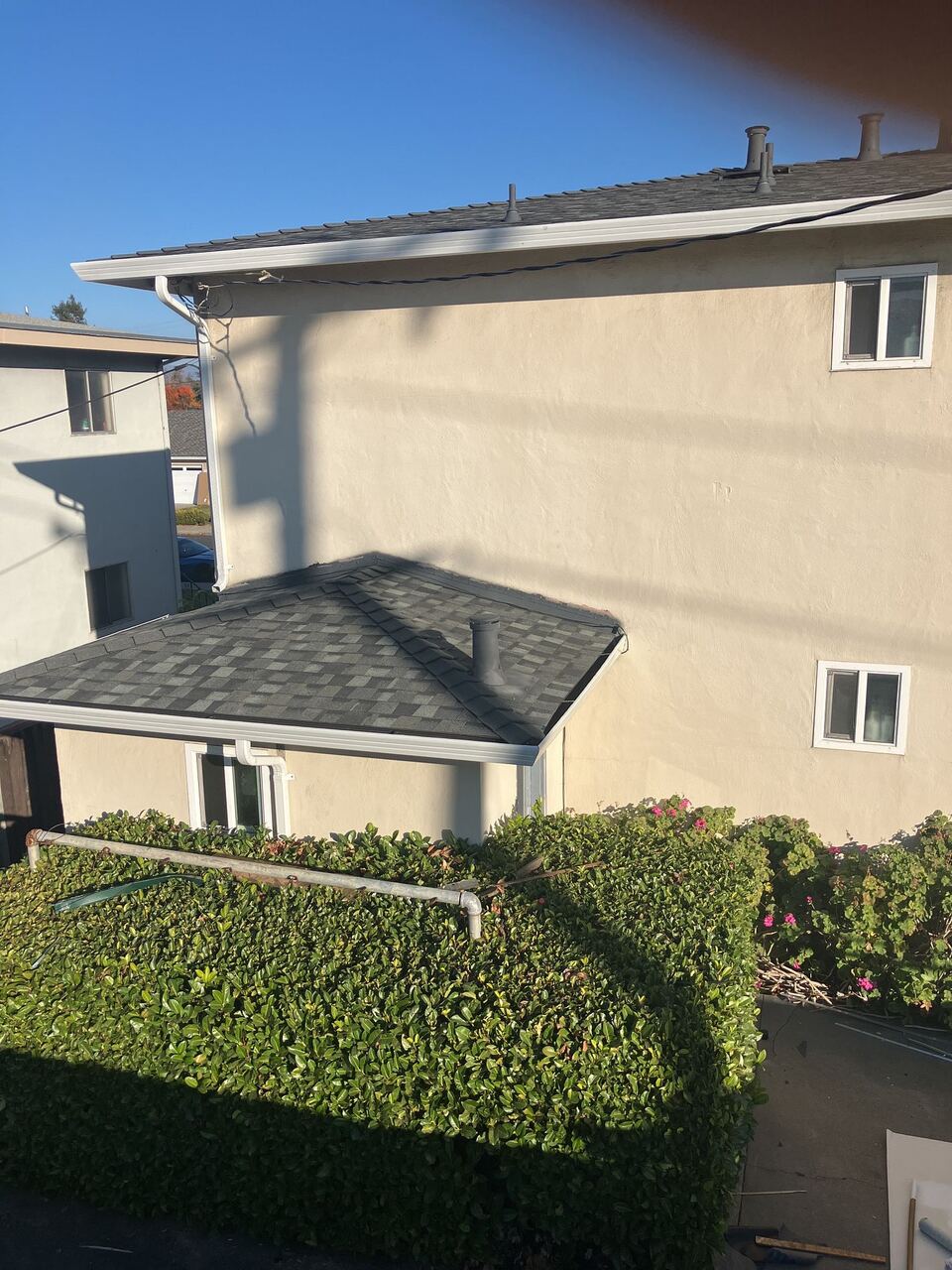
The rest of the scope came together around the main conversion. New gutters around the entire home — the old gutters had deteriorated alongside the old roof and needed to be replaced as a set. A single-ply roofing system on the carport, because the carport deck is too low-slope for shingles and needed a continuous membrane instead. And a complete re-roof of the smaller rear section over the laundry area — a lower hip-roof bump-out that ties into the main building at a dormer-style transition and needed to match the new main roof in material and detailing.
The transformation is dramatic. Gray dimensional Landmark shingles replacing black tar-and-gravel is a major curb-appeal upgrade just on material swap alone. Add proper ridge and hip detailing, color-matched vent pipes and box vents, new gutters, and clean valley transitions — and the finished roof looks like it belongs on a building 20 years newer than the one underneath it.
How We Scoped & Executed the Work
Tar-and-gravel tear-offs are a heavier, dirtier, and more labor-intensive project than a standard shingle-over-shingle re-roof. The existing material — asphalt-saturated felt layers plus gravel ballast — can weigh 6-8 pounds per square foot and has to be manually removed in sections to expose the deck. We budget more time and more dumpster capacity on a tar-and-gravel tear-off than we would on a straight shingle tear-off, and the homeowner should expect a slightly longer on-site schedule and more staged material handling in the driveway or parking area during the work.
Phase one is inspection and scope finalization. The homeowner had already flagged the interior ceiling leak, so our inspection confirmed what we expected: the existing tar-and-gravel membrane was compromised across enough area that full replacement was the right answer, and the roof geometry had enough pitch to accept a shingle system. We also confirmed the carport deck was too low-slope for shingles (single-ply was the right call there) and walked the rear laundry section to confirm it tied into the main roof cleanly.
Phase two is tear-off and deck inspection. Complete removal of the existing tar-and-gravel roof down to the deck, with all debris loaded into staged dumpsters — tar-and-gravel debris is heavier per cubic foot than shingle debris, so we stage larger-capacity dumpsters for these jobs. Once the deck is exposed, we walk every square foot to identify any substrate damage. Dry rot around penetrations and valley areas is common on older BUR roofs that have been leaking quietly for a while; any soft or compromised plywood gets replaced before the new roof goes on.
Phase three is the main roof install. Synthetic underlayment across the entire deck, ice-and-water shield at eaves and valleys, new metal drip edge at all perimeters, starter course properly offset, and CertainTeed Landmark 30-year shingles installed course by course. Color-matched pipe boots and box vents — the new vents sit flush with the shingle field and recede visually. Hip-and-ridge caps along every ridge line for a clean finished profile.
Phase four is the carport single-ply install and the rear laundry section. Single-ply membrane on the carport deck with proper termination at the parapet or fascia, detailed around any penetrations and drainage. The rear laundry bump-out gets the same Landmark system as the main roof, since it's a pitched section — properly tied into the main roof at its dormer-style transition so the two roofs read as a single continuous assembly. Finally, new gutters around the entire home, sized appropriately for the main roof area with downspouts routed to grade.
Step by Step —
What We Did
Tar-and-Gravel Tear-Off + Heavy-Duty Debris Staging
Complete manual removal of the existing tar-and-gravel built-up roof down to the deck. Asphalt-saturated felt layers and gravel ballast are heavy — we stage larger-capacity dumpsters than we would on a standard shingle tear-off, and budget extra time for the phase. Property and landscaping protected with tarping throughout tear-off.
Deck Inspection & Dry Rot Replacement
Every square foot of exposed decking inspected for rot, water damage, or prior-patch compromises. BUR roofs that have been leaking quietly often show substrate damage concentrated around penetrations, at valleys, and along eave lines — any compromised plywood or sheathing replaced wholesale before the new roof is installed.
Underlayment, Ice-and-Water Shield & Flashings
Modern synthetic underlayment across the entire deck — significantly stronger than 30-lb felt and rated for extended exposure during install. Ice-and-water shield applied at all eaves, valleys, and around penetrations. New metal drip edge installed at eaves and rakes. Step flashing and counter-flashing prepared for every wall and dormer transition.
30-Year Landmark Composition Shingle Install
CertainTeed Landmark shingles installed course by course at proper reveal on the main roof and the rear laundry section. Correct nail pattern for the San Jose / Campbell wind zone. Offset seams to prevent telegraphing across courses. Color-matched pipe boots, box vents, and penetration hardware so the finished roof reads as a single cohesive field.
Single-Ply Carport Membrane Install
Single-ply membrane installed on the low-slope carport deck with heat-welded or bonded seams depending on the specific system. Proper termination at parapet walls or fascia, detailed around any penetrations, with careful drainage routing so water sheds off the deck cleanly. The flat-roof counterpart to the pitched-roof shingle work.
New Gutters, Ridge Caps & Final Walk-Through
New seamless gutters installed around the entire home perimeter, sized for the main roof area draining into each section, with downspouts routed to grade. Shadow Ridge hip-and-ridge shingles installed along every ridge line. Magnetic sweep of the property for stray nails, final walk-through with the homeowner, complete photo documentation for records and warranty registration.
Premium Materials
on This Project
CertainTeed Landmark 30-Year Composition Shingles
The workhorse of premium residential shingle roofing across California — dimensional architectural profile, 30-year limited warranty, Class A fire rating, wind rating to 110 mph, and StreakFighter algae-resistance technology. The right spec for converting an older tar-and-gravel roof to a modern shingle system: strong long-term performance, wide color palette, transferable warranty at resale.
Single-Ply Membrane (Carport Deck)
Flat-roof single-ply system installed on the low-slope carport deck — single-ply, PVC, or modified bitumen depending on the specific installation. Heat-welded or bonded seams create a continuous waterproof plane, no exposed mastics in the primary weather barrier. The right spec for flat roof sections that can't shed water by slope alone.
Synthetic Underlayment + Ice-and-Water Shield
Modern synthetic underlayment across the entire pitched-roof deck — significantly stronger tear resistance and better extended-exposure performance than traditional 30-lb felt. Self-adhering ice-and-water shield at all eaves, in valleys, and around penetrations. These layers are the actual waterproof plane; the shingle is the UV and wind-resistant layer on top.
Seamless Aluminum Gutters — Full Perimeter
New seamless aluminum gutters fabricated on site to continuous runs around the complete home perimeter. Properly sized for the roof area draining into each section, with integrated outlets and new downspouts routed to grade. Replaces the deteriorated gutters that had aged alongside the old tar-and-gravel roof.
Replacement Plywood Decking (as needed)
Any rotted, water-damaged, or previously-patched decking identified during deck inspection is replaced wholesale with fresh sheathing to match existing substrate thickness. Older BUR roofs that have been leaking quietly often have concentrated damage at valleys, penetrations, and eave lines — the new roof is only as good as what's underneath it.
Color-Matched Vent Boots, Pipe Jacks & Ridge Caps
Pipe boots, box vents, and penetration hardware specified in colors that match the Landmark shingle field — they recede visually rather than standing out as obvious penetrations. CertainTeed Shadow Ridge hip-and-ridge shingles along every ridge line, same color family as the main field for a clean finished profile.
What the Client Got
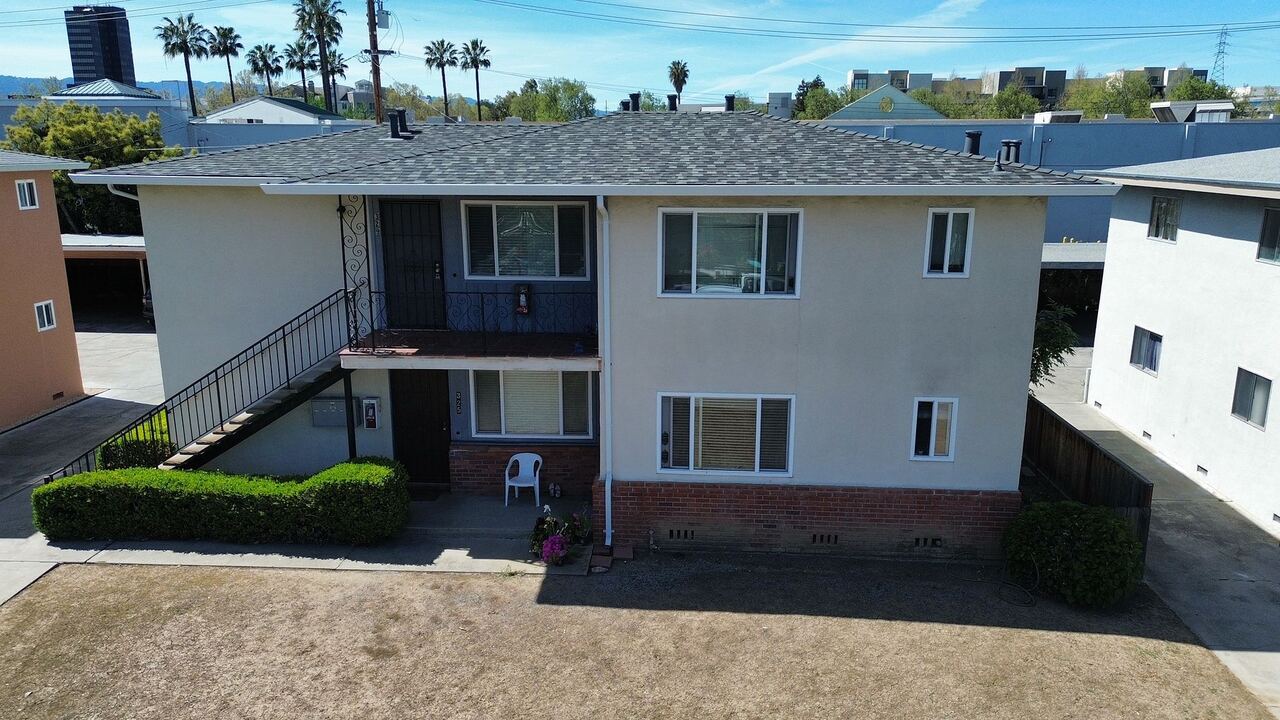
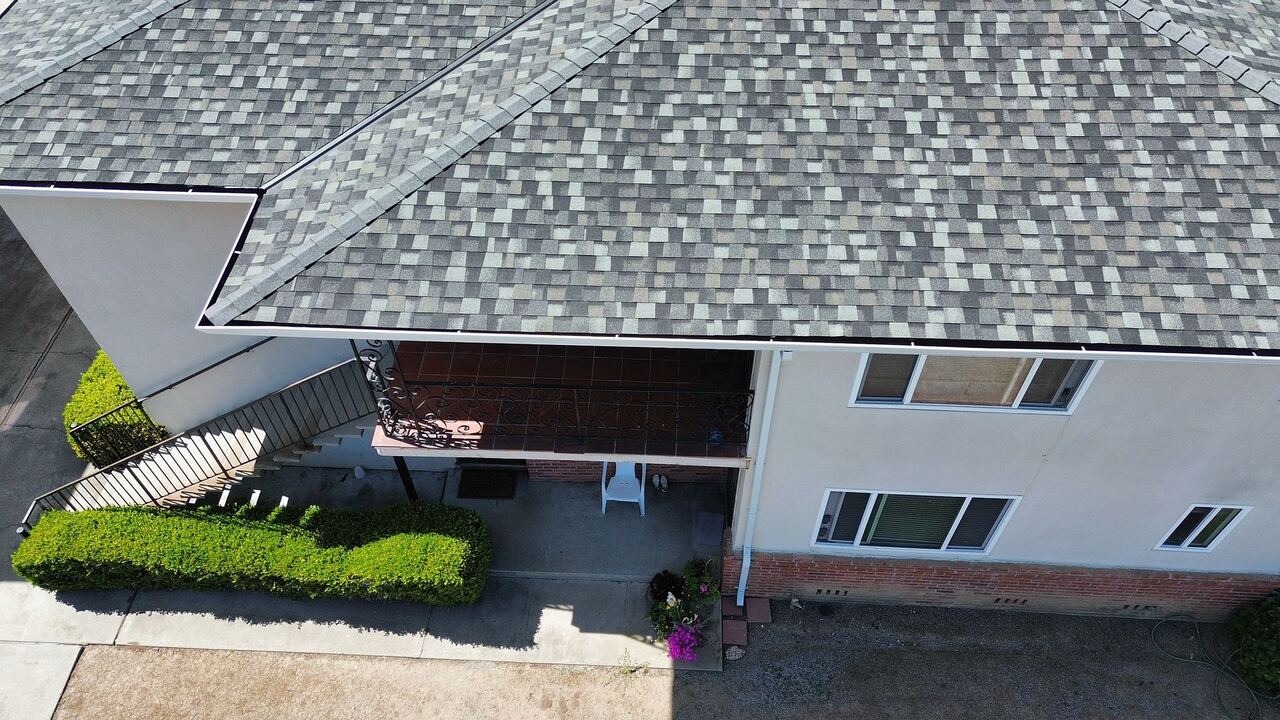
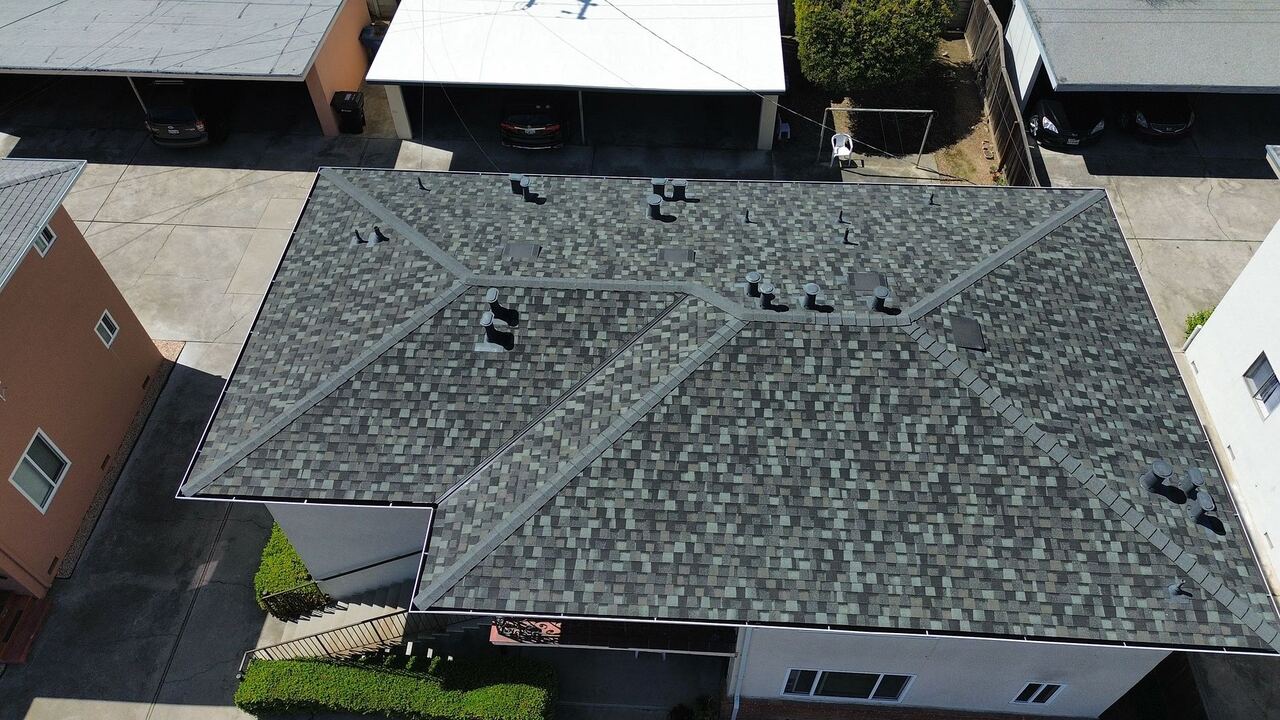
The transformation turned out absolutely beautiful — another solid upgrade in both appearance and performance. From the ground, the home reads as a completely different building than it did before the project. The dimensional gray Landmark shingle field has real visual weight and texture compared to the flat black tar-and-gravel it replaced. From the aerial view, the new roof is the clear visual anchor of the property — the hip-and-ridge detailing, the proper valley transitions, the color-matched vents all communicating the quality of the underlying work.
More importantly, the homeowner has a modern roof system with a 30-year manufacturer warranty replacing an end-of-life tar-and-gravel membrane. The active ceiling leak is gone, the building no longer has hidden water infiltration damaging the structure, and the roof is set up to perform reliably for the next several decades without the ongoing maintenance burden that older BUR systems carry. The carport single-ply addresses the flat-roof portion of the building with a system actually designed for that geometry. The new gutters protect the foundation and siding from water damage that the old deteriorated gutters weren't catching properly.
This is the kind of project where every scope item reinforces the others. Converting a tar-and-gravel roof to Landmark shingles, without also replacing the gutters, would have meant premium-performance new roof draining into failing gutters. Doing the main roof without addressing the carport would have left an obvious maintenance problem on the adjacent flat section. Doing it without the rear laundry bump-out re-roof would have left a visible mismatch on the finished building. Comprehensive scope is often better value than phased scope on older homes because the components interact — and this project is a good example of that principle.
Campbell Tar-to-Shingle Conversion
Photo Archive
Why This Matters
in Campbell
Campbell has one of the largest inventories of mid-century residential buildings in the West Valley — ranch homes, small duplexes, and garden-style apartment buildings from the 1950s-70s that made up the city's original post-war expansion. A meaningful share of that older inventory has original tar-and-gravel (built-up) roofs that are now at or past end-of-service. BUR systems installed in the 1960s and 70s are now 50-60 years old — far beyond their designed 20-25 year service envelope — and while some get patched along for longer than they should, most are now ripe for full conversion to modern shingle systems.
The pattern we see repeatedly: homeowner notices an interior ceiling leak, calls for an inspection, and discovers that the entire tar-and-gravel membrane is at end-of-service. Partial repair isn't the right answer at that stage — every patch has diminishing returns on a BUR system that old, and the hidden substrate damage compounds over time. A single comprehensive conversion to a modern shingle system (like this Campbell project) replaces 50+ years of accumulating problems with a roof engineered to perform for the next 30 years under the current manufacturer warranty.
The hybrid roof geometry is also common across Campbell's mid-century residential and light-multifamily stock. Buildings from this era commonly have pitched main roofs plus flat carport decks or flat rear-section bump-outs for laundry rooms, storage, or utility areas. A complete re-roof on this kind of building means shingles on the pitched sections and single-ply on the flat sections, handled as one coordinated project. Our Campbell new-construction project documents a premium custom-build example with copper gutters; this project is the other end of the Campbell residential spectrum — an older existing building getting the conversion it needed after decades of deferred roof work. Both are valuable additions to the Campbell housing stock.
Frequently Asked
About This Type of Work
Similar Projects
Campbell New Construction
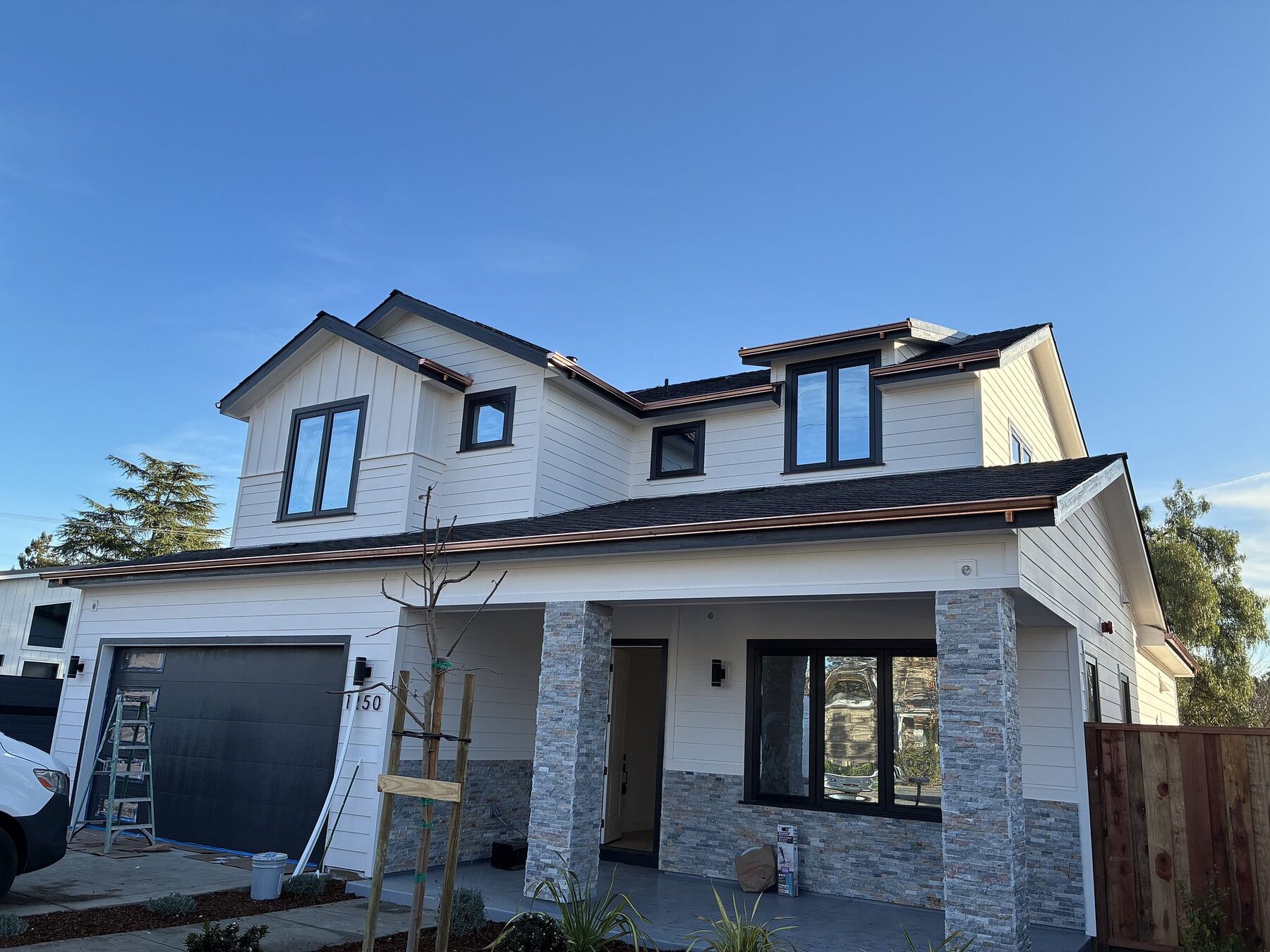
Premium new-construction roofing on a modern farmhouse in Campbell — 40-year CertainTeed Landmark shingles, standing seam metal accents, and copper gutters around the entire home. The new-build counterpart to this conversion project.
Commercial Apartment Re-Roof
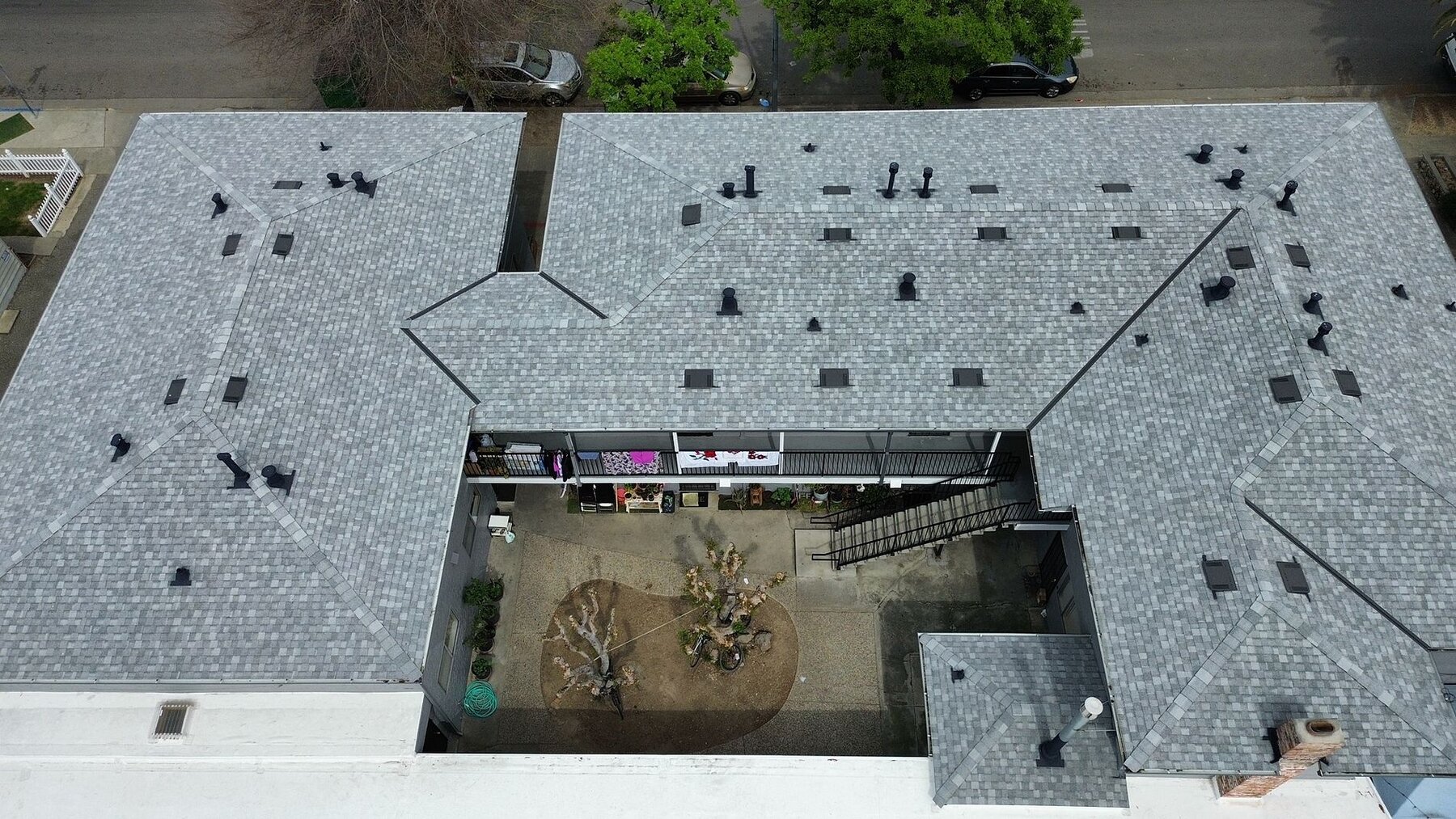
Full re-roof on a San Jose family apartment building — Landmark shingle on pitched wings, single-ply on flat carport decks, new sheathing, dry rot repair, new gutters. The multifamily hybrid-system counterpart to this Campbell project.