Roofing Contractor
in San Leandro, CA
From our shop in San Jose, Keith Roofing Company handles San Leandro homes, shops and warehouses alike, from leaky tile bungalows to bayside industrial roofs. We have been family owned since 1952, we carry a BBB A+ accreditation, and our California license is #1118418.
San Leandro's Trusted
Roofing Contractor
A lot of San Leandro was built in one long burst between the 1920s and the 1950s, and for a roofer that is helpful: once you know the era of a house, you have a good idea what is overhead. Estudillo Estates, Broadmoor and the blocks around the Bal Theatre are full of Spanish Revival and Mediterranean homes, many of them still wearing clay or concrete tile. Further out, the post-war tracts are mostly shingle.
The pattern we run into again and again is a 1920s or 1930s tile roof sitting on felt that wore out a generation ago. From the sidewalk the roof looks handsome. Up close the tiles are mostly fine, but the paper underneath, which is what actually keeps water out of the attic, has dried, cracked and given up. Owners usually call expecting the worst, and they are often relieved by what we tell them.
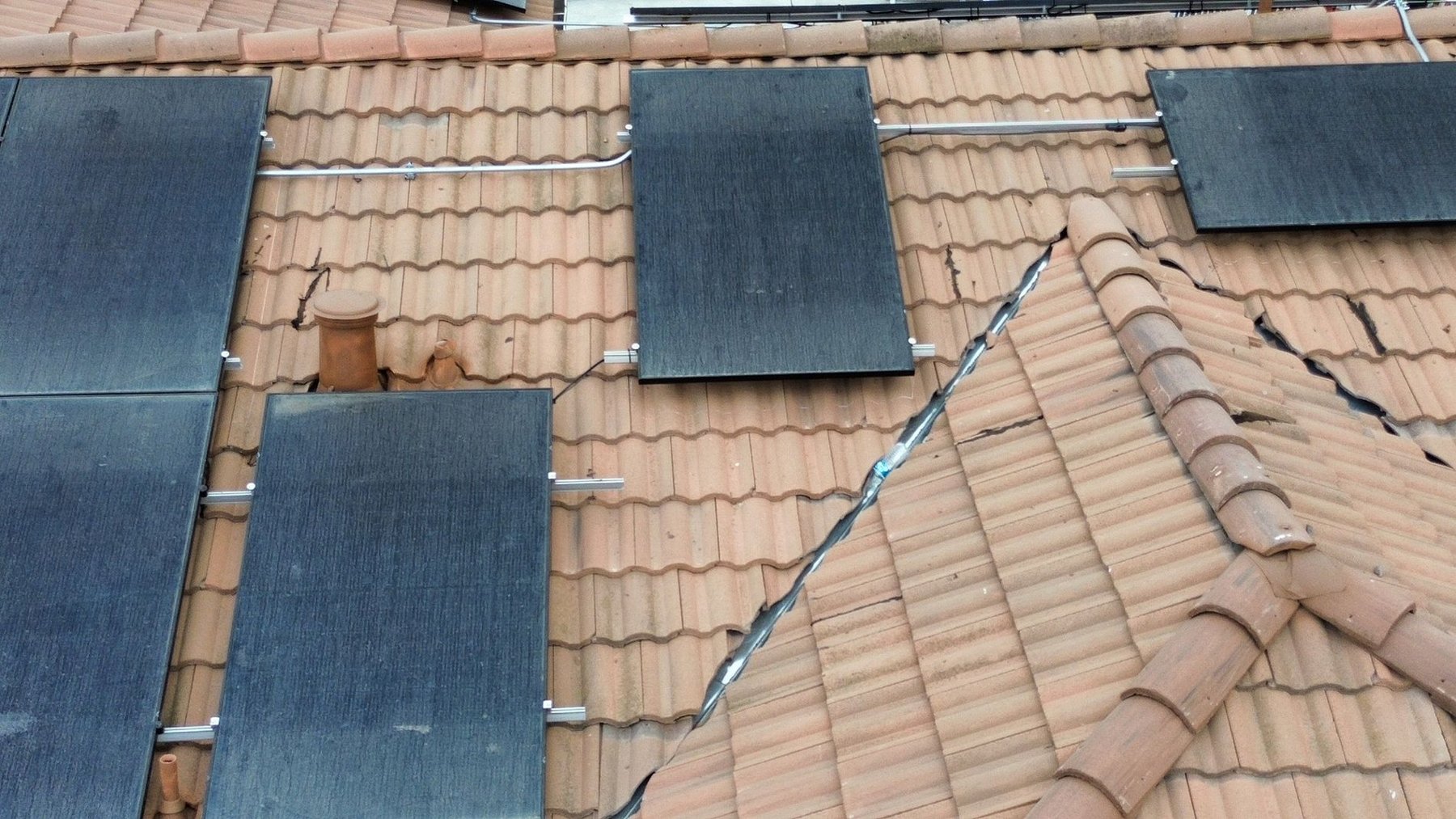
What this means for you: On an older San Leandro tile home, ask whether the layer under the tile has failed before anyone tells you the tile has. One answer means relaying the tile you already own; the other means buying a new roof. Sorting out which one you have is the most useful thing we do on these houses.
What We See on
San Leandro Roofs
San Leandro roofs fall into a few clear groups, and each one tends to fail in its own way.
Tile shows up here more than in most East Bay towns, mainly in the pre-war neighborhoods around downtown. The post-war subdivisions such as Washington Manor and Bonaire are mostly architectural shingle. Down by the water, along Doolittle Drive and around the Marina, the warehouses and plants sit under big flat roofs of single-ply membrane, modified bitumen or coated surfaces.
Century-Old Underlayment Beneath Sound Tile
This is the call we get most in San Leandro. The tile on a pre-war house is often still serviceable while the felt under it has long since failed. Lifting the tile, renewing the underlayment and relaying the same tile costs far less than a new roof.
Discontinued Period Tile Profiles
Many of the tile shapes and colors on 1920s and 1930s houses are no longer made. We look for a close match, and we also move salvaged originals to the front of the house so any newer pieces end up where nobody looks.
Under-Ventilated Post-War Attics
Plenty of the 1950s tracts have too little attic venting by today's shingle-maker standards. Hot, damp attics shorten shingle life and can put a warranty at risk, and adding vents while the roof is open is cheap.
Salt Exposure in the Industrial Corridor
Near the Marina and the shoreline, salty air eats at flashing, nails, gutters and vent caps sooner than the standard inland parts are built to handle.
Period Tile Relays and Bayfront Industrial Low-Slope
Why This Works Here
Most of our tile work in San Leandro comes from the pre-war streets. When an Estudillo Estates or Broadmoor homeowner sees a water stain, the first thought is usually a whole new roof. More often the tile can go back on, and keeping it keeps the house looking the way it was built to look.
Technical Installation Approach
In a lift-and-relay we take the tiles off by hand and stack them on the roof or the lawn, tear the worn felt down to bare wood, fix any soft or rotted boards, and lay fresh underlayment with peel-and-stick membrane in the valleys, along the eaves and around every pipe. Then the old tiles go back on over new flashing, with new battens and fasteners where needed. Some tiles always crack when they come off old roofs, so we line up matching spares before the job starts.
If the tile itself is spent, we bring in new concrete or clay in the closest profile and color still made. For a period house coming off wood shake, a heavy designer shingle in a cedar-toned blend keeps the old look and gives you a Class A fire rating.
For the 1950s shingle houses, we install architectural shingle with algae-resistant granules (the bay fog feeds algae here), replace the flashing rather than reusing it, and add venting when the attic needs it.
On the Doolittle and Marina buildings, the menu is single-ply membrane, modified bitumen or a coating over the existing roof. We sort out the drains first, test the insulation for trapped water before any coating goes down, and choose metals that can stand up to the salt.
Expected Longevity & Value
How long things last: fresh underlayment under relaid tile should give you another 25 to 30 years, and good tile itself can keep going well past that. New tile runs 50 years or more, designer shingle 40 to 50, standard architectural shingle 25 to 30, and single-ply 20 to 30. On a tile house, the underlayment's age is the figure to ask about, and it is rarely the one people have been told.
San Leandro's Climate
and Your Roof
San Leandro weather is gentle on paper, but fog, winter storms and bay air each leave their own marks on a roof.
Summer Heat & UV
Summers here stay fairly cool, often in the 72 to 82°F range, because the bay keeps the heat down. Sun still wears out the south- and west-facing slopes faster than the shaded ones.
Winter Rainfall
Most of the year's 18 to 22 inches of rain lands between November and March, often several storms in a row. Days of soaking rain are when tired felt under good-looking tile finally lets water through.
Fog, Moss & Bayfront Salt
Morning fog leaves north slopes and shaded corners wet for hours, which is where moss and algae take hold, lift shingle edges and creep under tile. Close to the shoreline and along the industrial strip, salt in the air also wears out ordinary flashing, nails and gutters early.
Practical Implications
For San Leandro: pick algae-resistant shingles, keep the pressure washer off the roof, check attic venting on older houses, use salt-tolerant metal near the water, and have the felt checked on any old tile roof even when the tile looks fine.
Where We Work
in San Leandro
Estudillo Estates
Excellent pre-war Spanish Revival and period-revival stock, heavily tile — prime lift-and-relay territory.
Broadmoor
1920s–40s period homes with strong architectural character and original detailing.
Bal Theatre & Downtown
Older residential mixed with small-commercial buildings around the historic core.
Washington Manor
Post-war tract housing, predominantly architectural shingle re-roof work.
Marina & Bayfront
Industrial and commercial buildings with large low-slope roofs and elevated salt exposure.
Bonaire & Floresta
Mid-century residential neighborhoods with consistent housing age.
How We Handle Roofing
in San Leandro
San Leandro Permit Path
We file the re-roof permit with the City of San Leandro Building Division and book the inspections. Some addresses near the city edge actually sit in unincorporated Alameda County (Ashland, San Lorenzo and Castro Valley neighbors), so we check which office your parcel belongs to before we file.
A Look Under the Tile
We walk the roof, look in the attic, and test-lift a few tiles on older homes to see the felt with our own eyes. You get real tile and shingle samples to hold up against your stucco, not a printout.
A Set Price, in Writing
Before we start you get a written scope and a set price, including a per-sheet price for any rotted decking we find once the old roof is off. Pre-war houses often have board sheathing, so we explain up front how we handle it.
Tidy Work on Tight Lots
San Leandro lots are often tight with driveways shared or close together, so we plan where tile is stacked and where the bin goes before day one. We photograph the flashing and valleys before they are covered and run a magnet over the yard at the end.
Why San Leandro Property Owners
Choose Us
Real Period Tile and Relay Expertise
The 1920s and 1930s homes here need someone who can track down old tile shapes, reuse the originals where they show most, and call honestly whether a roof needs relaying or replacing. We do that work every week.
A Straight Answer on Repair vs. Replace
Many San Leandro calls start with someone who has a quote for a whole new roof. If a relay or a smaller repair will do the job, that is what we will recommend, and we will put the reasons in writing.
Bayfront Industrial Capability
For owners of the flat-roofed buildings near the Marina and along Doolittle, we start with the drains, test for wet insulation before suggesting a coating, and use metals that can take the salt.
A Family Company Since 1952
Keith Roofing is a family business that started in 1952, holds California license #1118418, carries full insurance and is BBB A+ accredited. When you call about the roof years from now, the same company will answer.
What We Do
for San Leandro Homes & Businesses
Recent Keith Roofing
Projects