Roofing Contractor
in Newark, CA
Tract homes near the bay and big warehouse roofs off Cherry Street: Keith Roofing Company handles both in Newark. BBB A+ Accredited and California Licensed #1118418, run by the same family since 1952.
Newark's Trusted
Roofing Contractor
Newark is a compact, flat, bayfront city — and that geography defines its roofing. Almost the entire city sits close to the bay, which means salt exposure is a citywide consideration rather than a neighborhood one. That single fact changes flashing, fastener, gutter and vent specifications across essentially every property we work on here.
The housing is predominantly post-war and later tract development — 1950s through 1970s in the central neighborhoods, with newer construction filling in toward the bayfront and around the NewPark area. There are no hills, no wildland interface and very little architectural exotica; what Newark has instead is a great many similar homes that reached roof age at similar times, plus a substantial industrial and commercial base along the Cherry Street and Thornton Avenue corridors with large low-slope roof areas.
What this means for you: In Newark the money is in specification, not complexity. The roofs are straightforward; the environment is not. Corrosion-appropriate metals, proper drainage on flat lots that do not shed water anywhere quickly, and honest material selection are what determine whether a Newark roof reaches its rated life.
What We See on
Newark Roofs
Newark's homes were built in a few big waves and its warehouses are huge and nearly flat. Both make the common problems easy to predict.
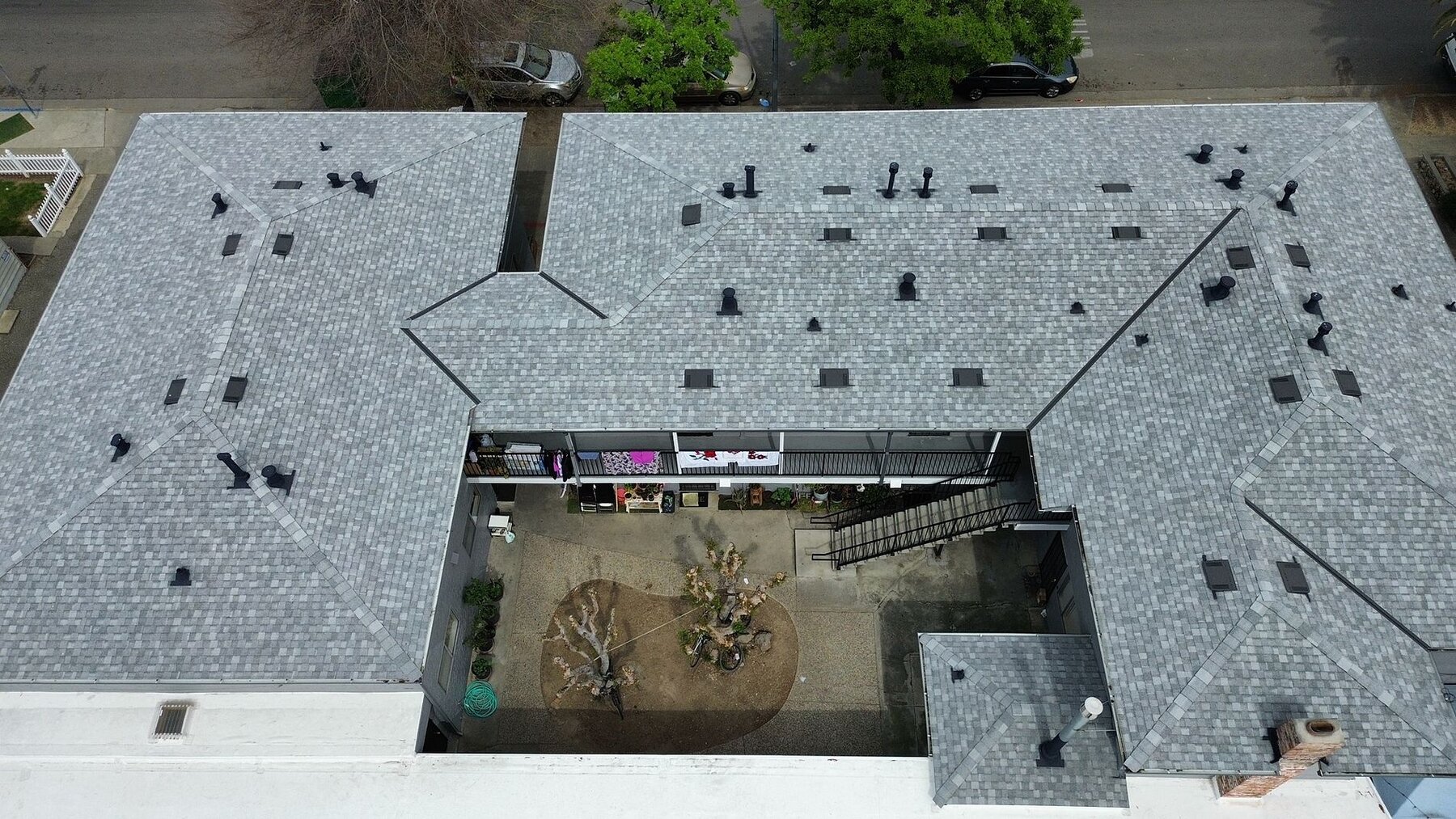
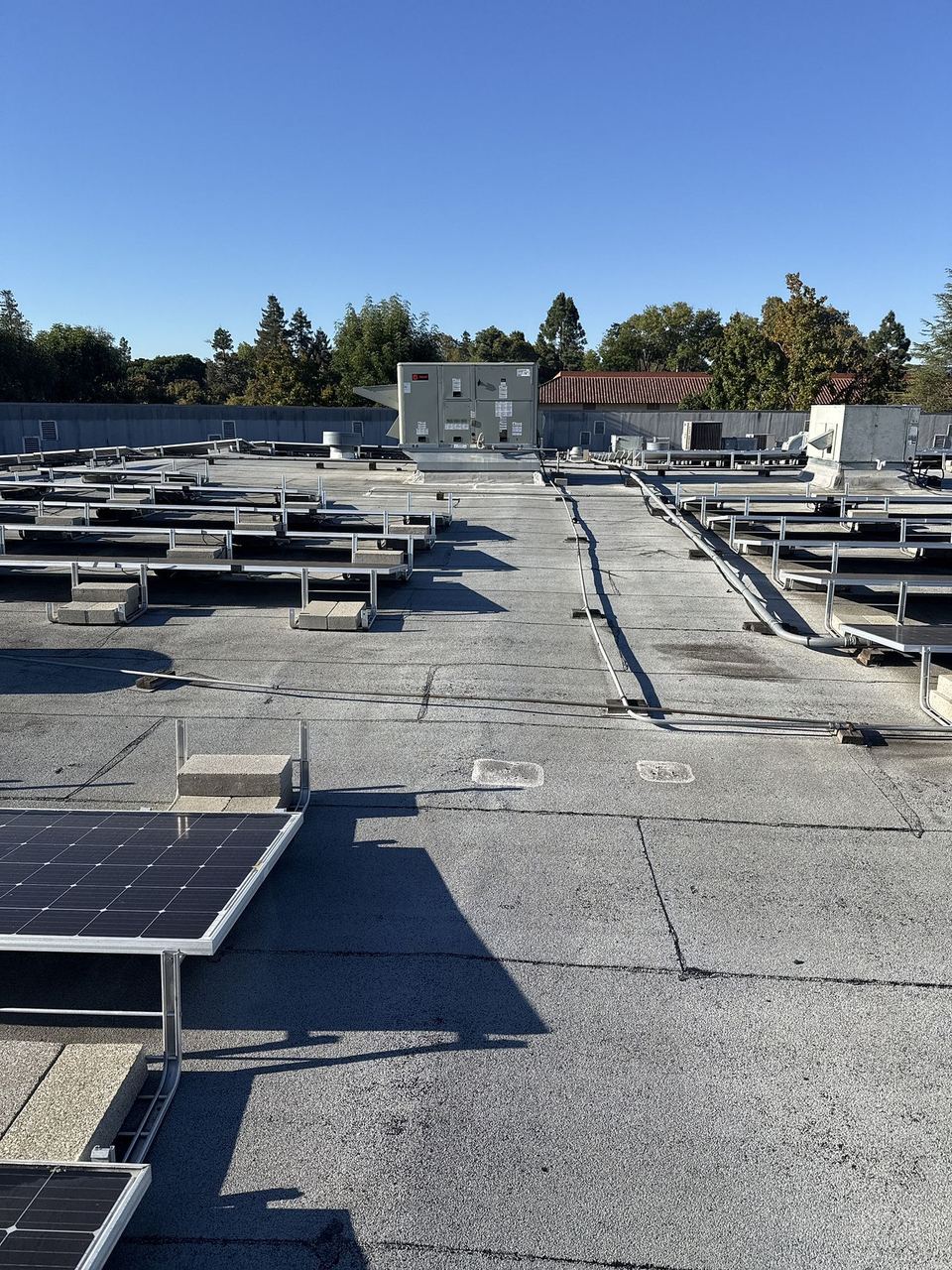
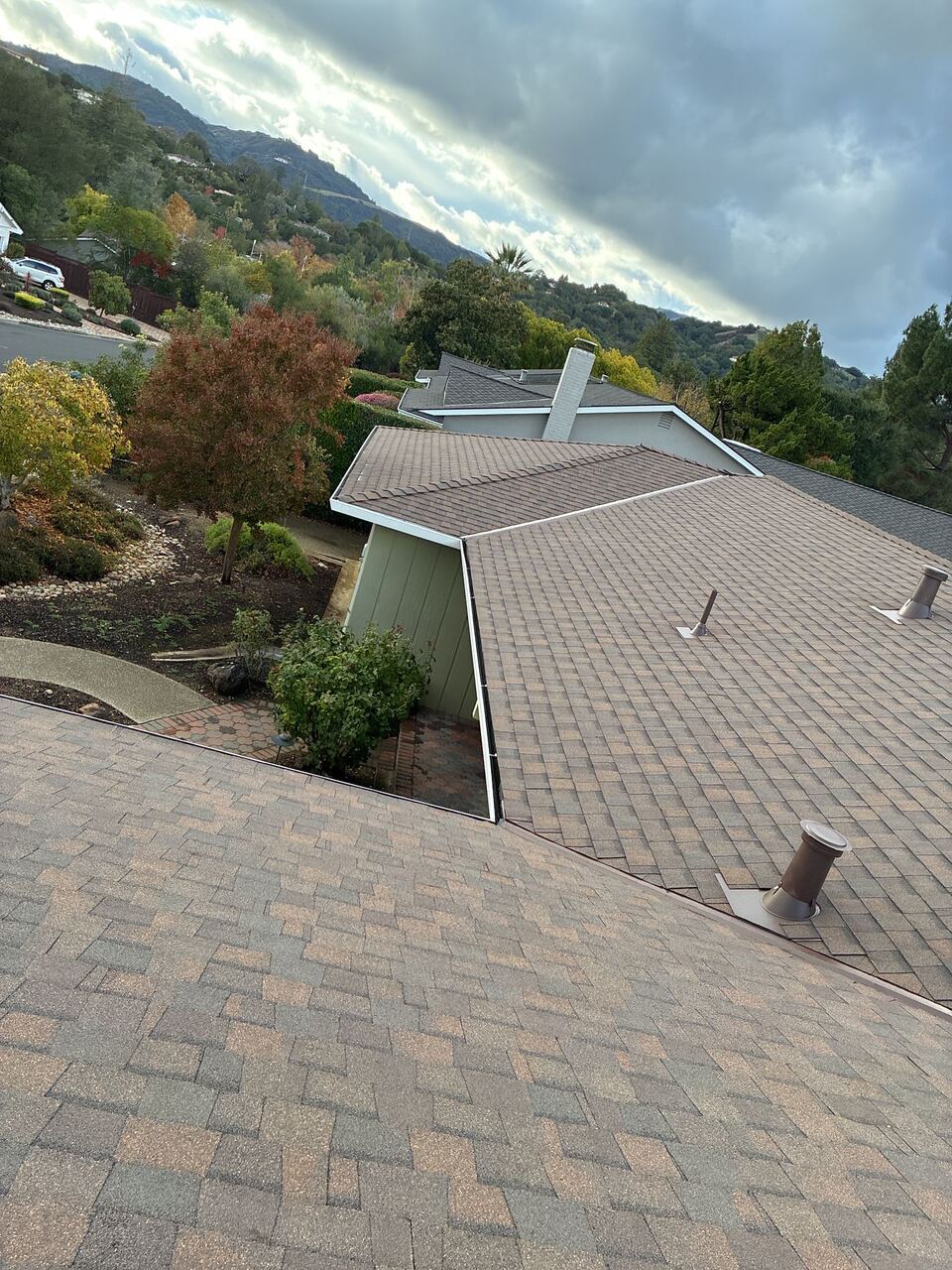
Most Newark houses wear architectural asphalt shingle, with some concrete tile on newer construction. Because the housing is so consistent, the failure patterns are consistent too — which makes diagnosis fast. The industrial corridors along Cherry Street, Thornton Avenue and toward the bayfront are lined with warehouse and plant roofs in single-ply, modified bitumen or a restoration coating.
Citywide Salt-Air Corrosion
Newark's bayfront position means every property gets salt exposure. Standard flashing, fasteners, gutters, downspouts and vent caps are made with inland air in mind, and here they rust out well before their time.
Tract Roofs Aging on the Same Schedule
Newark's housing was built in concentrated waves, so entire neighborhoods reach end of roof life together. If your neighbors are re-roofing, your roof is very likely the same age and in similar condition.
Flat-Lot Drainage and Gutter Performance
With no grade to help, water that leaves the roof has nowhere to go quickly. Undersized or poorly pitched gutters, short downspout extensions and blocked outlets cause fascia rot and foundation-zone saturation.
Ponding on Large Industrial Roofs
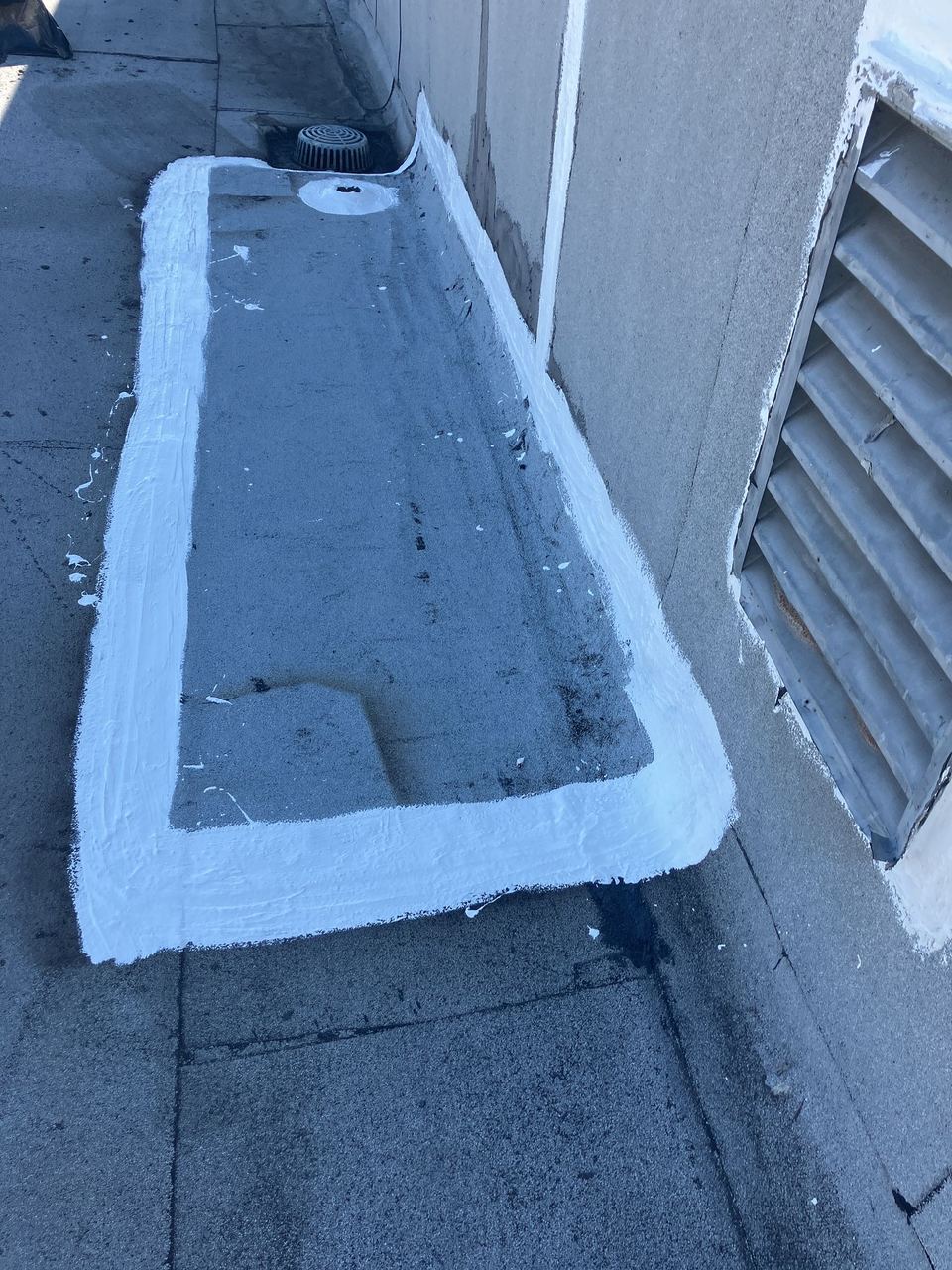
The warehouse and manufacturing roofs along the industrial corridors are large and very low-slope. Water collects wherever a drain clogs or rooftop units have pressed a dip into the deck, and standing water is what wears these membranes out.
Corrosion-Appropriate Specifications for a Bayfront City
Why This Works Here
Most roofing failures in Newark are not failures of the roof surface — they are failures of the metal attached to it. Salt-laden air finds the cheapest fastener, the thinnest flashing and the least-protected gutter, and it works on them continuously. On a bayfront property the specification of those components matters more than the shingle brand does.
Technical Installation Approach
On homes, the shingle itself is the easy decision; the care goes into everything metal: corrosion-appropriate flashing material, fasteners rated for the exposure, and gutter and downspout selection that will not be pitted in eight years. We also specify algae-resistant granule packages, because Newark's marine moisture and fog drive growth on shaded slopes.
Drainage gets more attention here than the roof pitch suggests it should. On flat lots, gutters need correct sizing and pitch, outlets need to actually flow, and downspouts need extensions that carry water genuinely away from the foundation rather than depositing it at the base of the wall. It is unglamorous work that prevents a category of expensive problems.
For warehouse and industrial buildings the options are TPO or PVC membrane, modified bitumen, or a silicone restoration coat over the existing roof. The first priority on these buildings is always drainage — clearing and reworking drains and scuppers, and where necessary building positive slope with tapered insulation. Reflective membrane selection also pays here, both for Title 24 compliance and for cooling load on large-footprint buildings.
Expected Longevity & Value
What Newark owners can plan on: a shingle roof for 25–30 years; concrete tile for 50+ provided the underlayment is relaid at about 25–30; a TPO or PVC membrane for 20–30; and a silicone coat, on a roof that is still sound underneath, for another 10–15. Standard-spec metal components will fall well short of those figures near the bay — which is precisely the argument for specifying them properly the first time.
Newark's Climate
and Your Roof
Newark's weather is mild, and its rain is modest. The bay next door is what makes the difference, along with land so flat that water has nowhere to run.
Summer Heat & UV
Newark summers are mild and bay-moderated — generally 75–85°F, with fog on many mornings. Roofs here bake less than they do in San Jose, though clear afternoons still bring strong UV and large flat industrial roofs still absorb substantial heat.
Winter Rainfall
Annual rain is roughly 15–18 inches, most of it in a few runs of winter storms. On flat lots with minimal grade, the challenge is less the volume than where the water goes once it leaves the roof — drainage and downspout routing carry more weight here than in hillier cities.
Salt Air & Marine Moisture
The defining Newark condition. Bayfront proximity means salt-laden air across the whole city, accelerating corrosion on flashing, fasteners, gutters, downspouts and vents. Damp, foggy mornings also let moss and algae creep across north-facing slopes. There is no wildland fire exposure to offset against.
Practical Implications
Specify corrosion-appropriate metals as the default rather than the upgrade, choose algae-resistant shingles, size and pitch gutters properly and extend downspouts genuinely away from the building, and on industrial roofs keep drains clear and consider reflective membranes.
Where We Work
in Newark
Central Newark
1950s–70s tract housing on flat lots, predominantly architectural shingle work.
NewPark Area
Newer residential and retail development around the mall corridor.
Bayfront & Mowry Slough
Properties closest to the water with the highest salt exposure on metal components.
Cherry Street Corridor
Warehouses and plants whose roofs are wide, nearly flat and full of drains.
Thornton Avenue
Mixed commercial and residential along the main arterial.
Lido Faire & Birch Grove
Established residential neighborhoods with consistent housing age and roof condition.
How We Handle Roofing
in Newark
Permit Through the City of Newark
Newark is surrounded by Fremont and the bay, so jurisdiction is rarely in doubt, but we still check the parcel. We file the roofing permit with the City of Newark and arrange the inspections, so you do not have to deal with the paperwork.
Metal and Drainage Check
Besides the shingles and the attic, we look hard at the parts salt air attacks: flashing, vent caps, nails and gutters. Then we follow the water off the roof and see where it ends up on a lot with no slope to carry it away.
A Quote That Lists the Metal
The written quote names the flashing, fastener and gutter materials we will use near the bay, gives one firm price, and explains how rotted sheathing will be handled if the tear-off reveals any.
Quick Work on Tract Streets
On compact lots with cars on the street, we keep the bin and deliveries tight to your driveway, install to the manufacturer's instructions, photograph the flashing before it is covered, and sweep for nails with a magnet before the crew leaves.
Why Newark Property Owners
Choose Us
Salt-Ready Metal as Standard
In a bayfront city the metal is what fails first. Corrosion-appropriate flashing, fasteners and gutters are our default in Newark rather than an upgrade we hope you will pay for.
Drainage Taken Seriously on Flat Lots
With no grade to help, gutter sizing, pitch and downspout routing determine whether water ends up away from your foundation or against it. We treat that as part of the roof.
Industrial Low-Slope Capability
We look after warehouse and plant roofs along Newark's industrial streets, starting with the drains and testing for wet insulation before any coating is proposed.
Licensed and Here to Stay
Our California license is #1118418, we are insured and BBB A+ Accredited, and the company has been family-owned since 1952. Every Newark job starts with a written scope and a fixed price.
What We Do
for Newark Homes & Businesses
Recent Keith Roofing
Projects