Bay Area
Roofing Contractor
Keith Roofing Company has been roofing the Bay Area since 1952 — South Bay, Peninsula, East Bay and San Francisco. Residential, commercial and industrial. Family-owned. BBB A+ Accredited. California Licensed #1118418.
The Bay Area's Trusted
Roofing Contractor
Keith Roofing Company has been roofing the Bay Area since 1952. Seventy-three years in one region produces something you cannot buy or shortcut: knowing how each part of it actually behaves. The Bay Area is not one climate or one housing market — it is a dozen of them packed into fifty miles, and the roof that is correct in Gilroy is the wrong roof in the Sunset District.
We work four broad territories. The South Bay, where we are based, runs from San Jose out through the Santa Clara Valley — hot inland summers, heavy tile stock, and wildland fire exposure in the foothills. The Peninsula is cooler, foggier and mossier, with salt exposure near the bay and a great deal of period housing. The East Bay spans bayfront industrial flats through dense residential to hillside fire country, with the Hayward Fault running through the middle of it. And San Francisco is its own thing entirely — a city of low-slope membrane roofs, parapets and internal drains.
Residential, commercial, industrial and multi-family. Shingle, tile, standing seam metal, TPO, PVC, EPDM, modified bitumen, built-up and coatings. Repair, maintenance, restoration and full replacement.
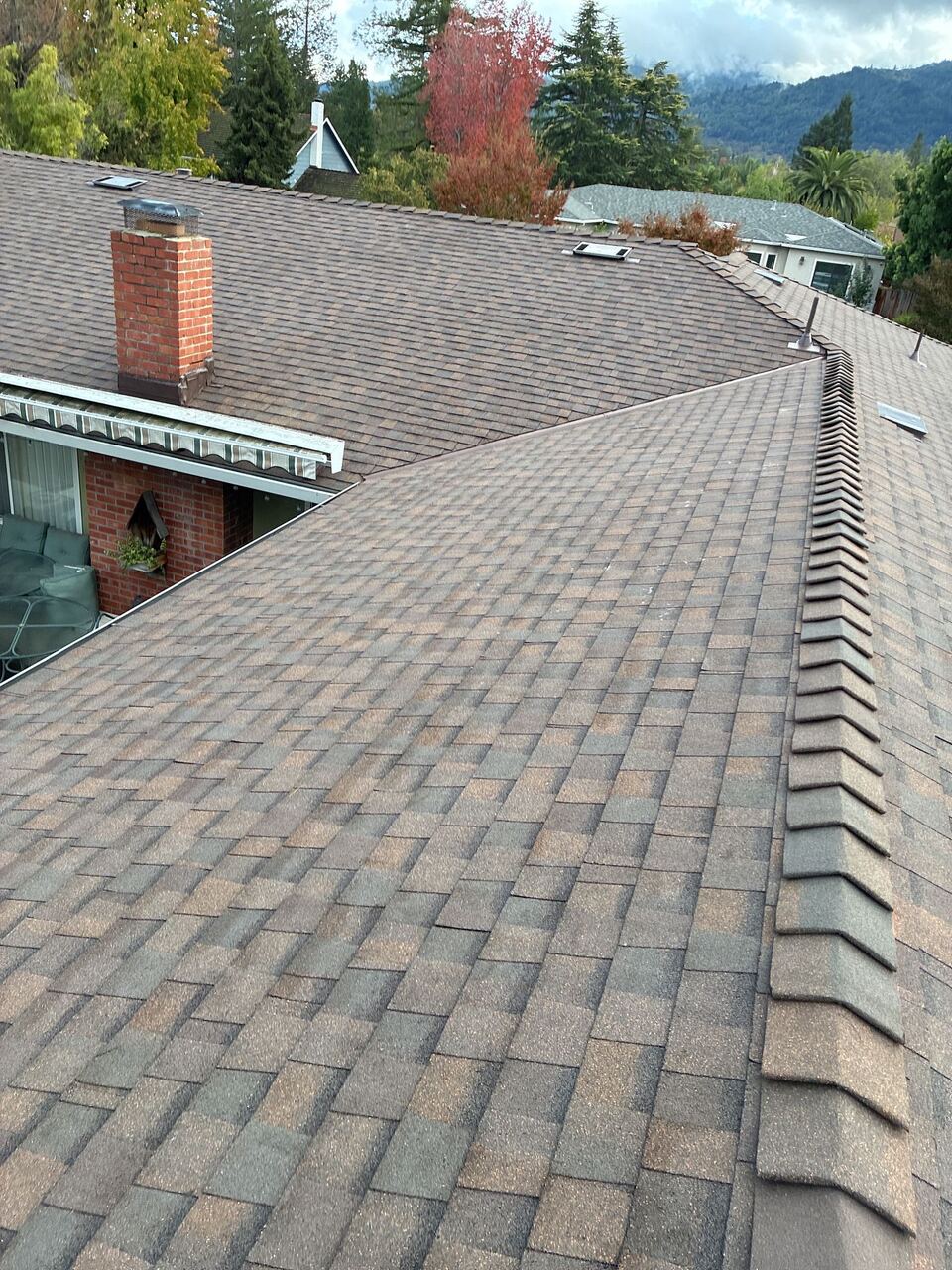
What this means for you: You get a specification chosen for where your building actually is. High-temperature underlayment in South County heat. Algae resistance and corrosion-appropriate metal on the Peninsula. Ember-resistant assemblies in the hills. Parapet-first detailing in San Francisco. Getting that match right is what lets a roof last as long as the manufacturer says it should, instead of giving out early.
What We See on
Bay Area Roofs
Across four counties and a dozen microclimates, a few problems come up again and again. These are the ones we see most.
Across the region we install and service the full range of systems. Steep-slope residential: architectural and premium designer asphalt shingle, concrete and clay tile, standing seam metal, and wood shake conversions to Class A assemblies. Low-slope and commercial: TPO and PVC single-ply, EPDM, modified bitumen, built-up roofing, and silicone and acrylic coating restoration. Plus seamless gutters, custom copper work, leak diagnosis and scheduled maintenance programs across all of it.
One Region, Many Microclimates
Gilroy heat, Peninsula fog, Oakland hills fire exposure and San Francisco marine moisture all demand different specifications. A contractor applying one spec region-wide will get it wrong somewhere, and usually does.
Wildland-Urban Interface Across the Hills
The Santa Cruz Mountains, the Diablo Range and the Oakland and Peninsula hills all carry genuine ember exposure. Class A material is the floor; ember-resistant vent, eave and gutter detailing is what actually changes outcomes.
Tile Underlayment Reaching End of Life Region-Wide
The Bay Area's enormous 1980s–2000s tile inventory is hitting the point where underlayment has aged out while the tile remains sound. That is a lift-and-relay, not a replacement — a distinction worth a great deal of money.
Aging Commercial and Industrial Low-Slope
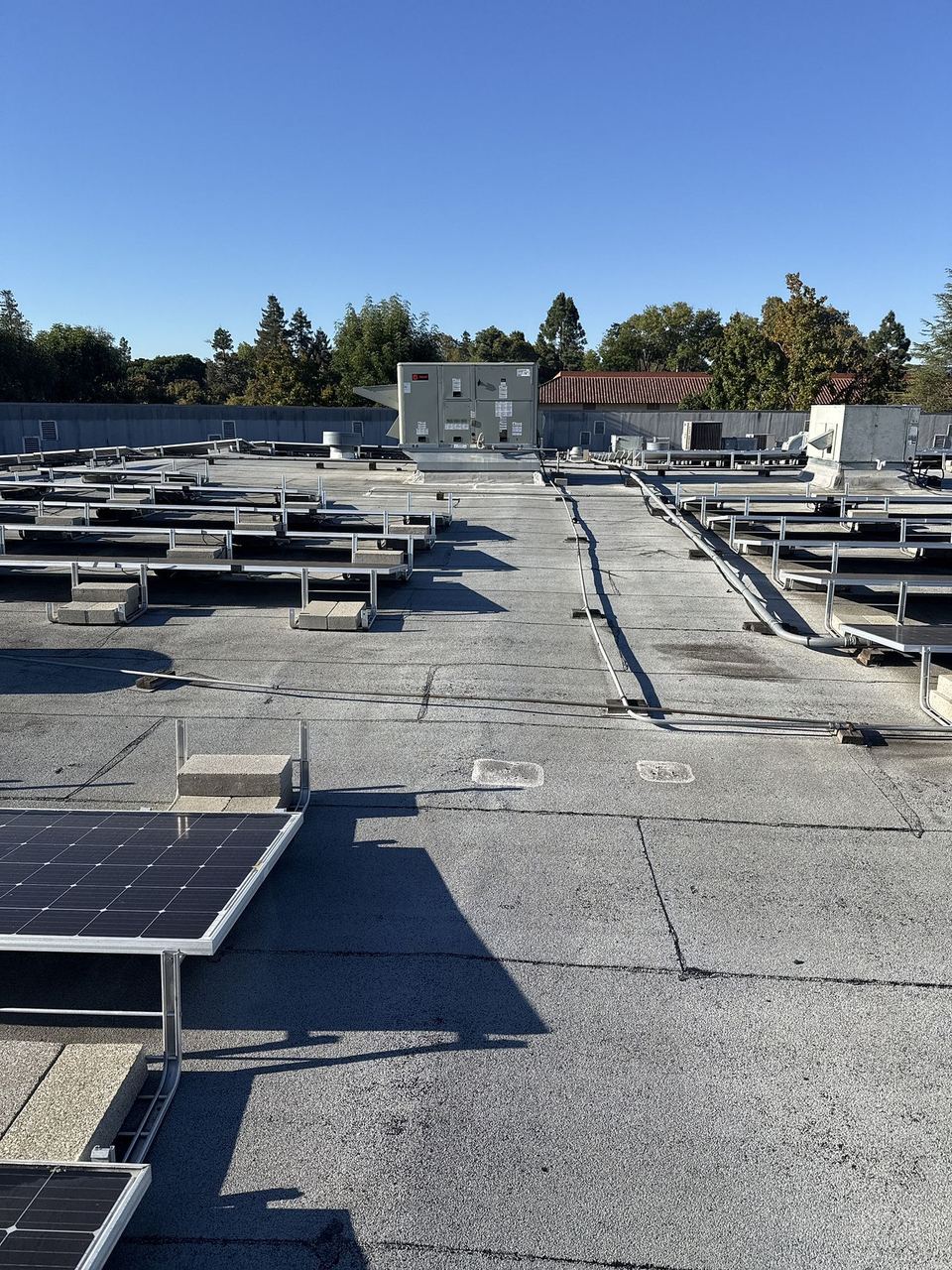
Across the region, plenty of warehouse, plant and apartment roofs have outlived their design life. Water pooling around clogged drains, seams opening up, and leaks at the pitch pans under solar racks and HVAC units are everyday calls.
Seventy-Three Years of Regional Pattern Recognition
Why This Works Here
The practical value of a long-established regional contractor is diagnostic speed and specification accuracy. We know what a 1960s Santa Clara Valley tract roof does at thirty years, how a Peninsula roof behaves under sustained fog, which Oakland hill assemblies actually perform, and where a San Francisco low-slope roof leaks before we get on it. That pattern recognition is seventy-three years of accumulated local failure data, and it is the thing a new entrant simply does not have.
Technical Installation Approach
In the inland South Bay and South County — San Jose, Morgan Hill, Gilroy — heat leads. High-temperature underlayment beneath tile, attic ventilation sized to manufacturer requirements rather than treated as an upgrade, and heat-stable material selection. Sustained triple-digit summers measurably shorten the life of standard specifications.
On the Peninsula — Palo Alto, Menlo Park, Redwood City, San Mateo, Los Altos — moisture and salt lead. Algae-resistant granule packages as a default, corrosion-appropriate flashing, fasteners and gutters near the bay, and careful moss management on shaded slopes. Plus a great deal of period-appropriate detailing on older housing.
In the East Bay — Fremont, Newark, Union City, Hayward, San Leandro, Oakland, Walnut Creek — it splits three ways: enormous industrial low-slope roofs where drainage is everything, dense residential where consistency makes diagnosis fast, and hillside fire country where the assembly matters more than the surface. The Hayward Fault runs through it, and recurring leaks along its trace are frequently structural rather than roofing failures.
In San Francisco, it is a membrane market — torch-applied modified bitumen, built-up and single-ply, drained internally, behind parapets. Parapet and wall flashing is the primary detail, and drainage is solved before any membrane goes down.
Expected Longevity & Value
Rules of thumb for the region: architectural shingle 25–30 years, shorter in inland heat and longer near the coast; designer shingle 40–50; standing seam metal 40–70; tile 50+ once its underlayment has been relaid at about 25–30. On flat roofs, single-ply membranes run 20–30, built-up 20–30 and modified bitumen 15–25, while a restoration coating on a sound, dry roof adds another 10–15. Specification and maintenance move these numbers more than brand does.
The Bay Area's Climate
and Your Roof
Gilroy heat, Peninsula fog, bay salt and hillside fire risk all fall inside the area we serve. Here is how each one works on a roof.
Summer Heat & UV
Enormous variation. Gilroy and Morgan Hill regularly exceed 95°F with frequent triple digits; Walnut Creek runs similarly hot inland; the Peninsula sits in the 70s and 80s; and San Francisco often stays in the 60s under fog. Inland roofs face thermal aging that coastal roofs simply do not.
Winter Rainfall
Region-wide, most rainfall arrives in a handful of concentrated atmospheric-river events between November and March. Totals range from roughly 15 inches in parts of the East Bay flats to 25-plus inches in San Francisco and the wetter hills. The concentration matters more than the total — everything marginal fails at once.
Fire, Fog, Salt & Fault
Four regional factors that each dominate somewhere. Wildland-urban interface fire exposure across the Santa Cruz Mountains, Diablo Range, and the Oakland and Peninsula hills. Fog and marine moisture driving moss along the coast and bay. Salt air corroding metal near the water. And the Hayward Fault producing slow structural movement through the East Bay corridor.
Practical Implications
Specify to the microclimate, not the region: high-temp underlayment and ventilation inland, algae resistance and corrosion-appropriate metal near the coast and bay, ember-resistant assemblies in the hills, and drainage-first design on every low-slope roof anywhere in the region.
Where We Work
Across the Bay Area
South Bay
San Jose, Santa Clara, Sunnyvale, Campbell, Cupertino, Milpitas, Los Gatos, Saratoga, Willow Glen, Almaden Valley and Cambrian Park.
South County
Morgan Hill and Gilroy — the hottest part of the county, heavy tile inventory and agricultural and industrial buildings.
Peninsula
Palo Alto, Menlo Park, Redwood City, San Mateo, Los Altos and Mountain View — fog, moss, salt and period housing.
East Bay Tri-City
Fremont, Newark and Union City — mixed residential, bayfront salt exposure and very large industrial roof inventory.
Central & North East Bay
Hayward, San Leandro, Oakland and Walnut Creek — industrial flats, period homes, hillside fire country and the Hayward Fault.
San Francisco
A low-slope membrane market: parapets, internal drains, persistent moisture and dense attached construction.
How We Handle Roofing
in the Bay Area
The Right Permit Office
Every city in the region runs its own building department, unincorporated pockets go to the county, and San Francisco has its own Department of Building Inspection. We look up your parcel, file with whichever office covers it and schedule the inspections.
Inspection Before Any Recommendation
A roofer walks the whole roof, checks the attic and the drainage, and photographs what matters. You get an honest read on whether you need a repair, a maintenance visit or a new roof, with samples on hand if you are choosing materials.
One Written Proposal
The proposal lists every material, every flashing detail and the fixed price, along with how we will deal with rotted decking should the tear-off reveal any. Nothing gets added halfway through without your signature.
Specification Matched to Your Microclimate
Whether that means high-temperature underlayment for inland heat, corrosion-appropriate metal near the bay, ember-resistant detailing in the hills, or parapet-first membrane work in the city — the spec follows the location rather than a regional default.
Why Bay Area Property Owners
Choose Us
Seventy-Three Years in This Specific Region
Family-owned and operating here since 1952. That is not a tagline — it is the accumulated local failure data that makes diagnosis fast and specification accurate across a region with a dozen distinct microclimates.
Every Common Roof System
Shingle, concrete and clay tile, standing seam metal, single-ply membranes, modified bitumen and coatings are all regular work for our crews. Because no single system pays our bills, the recommendation follows your building.
Residential, Commercial and Industrial Under One Roof
Hillside custom homes, period restorations, apartment complexes and 200,000 square foot logistics roofs. Buildings that mix flat and pitched roofing, such as apartments and mixed-use blocks, are where having one contractor for both pays off.
Honest About What You Need
Plenty of roofs that someone has quoted for replacement only need a repair. When that is the case, our inspection report says it plainly, and we would rather earn your trust on a small job than sell a roof you do not need.
What We Do
for Bay Area Homes & Businesses
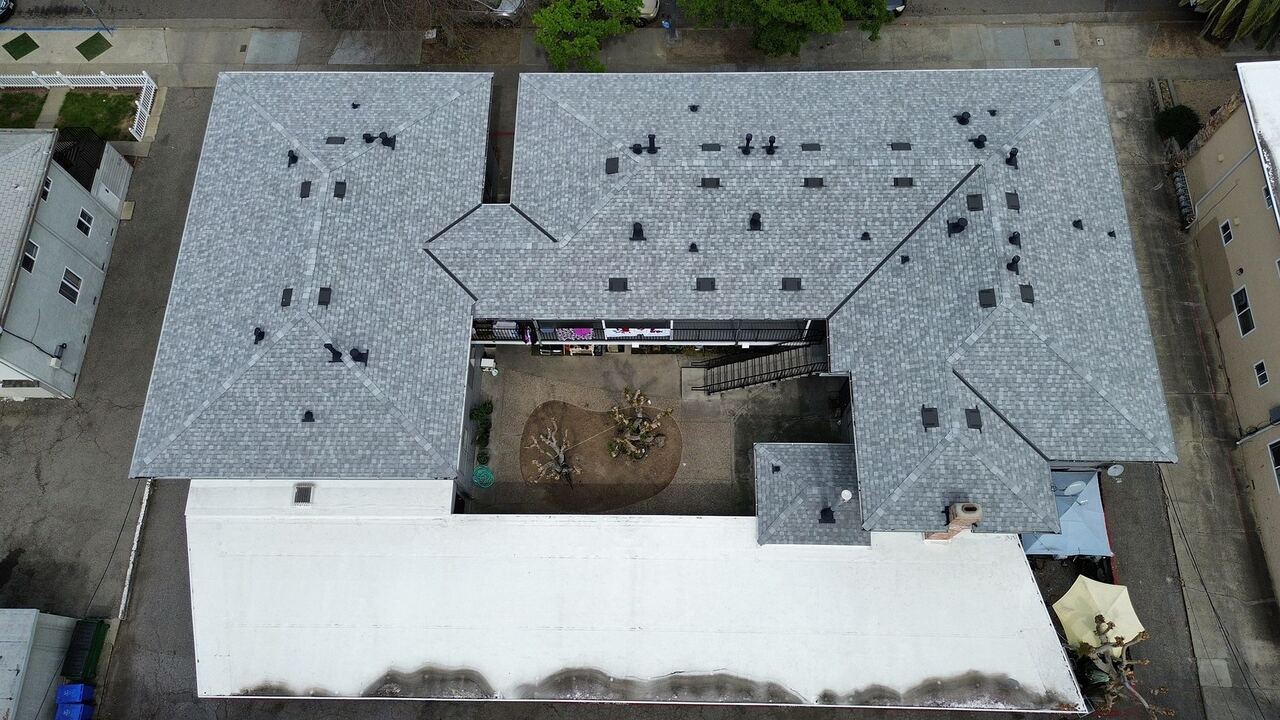
Recent Keith Roofing
Projects