Flat Roofing
San Jose & the Bay Area
A flat roof has no gravity assist — water sits until it finds a drain or a seam. Getting the details right is the entire job.
Flat Roofing
Done Right Since 1952
Flat roofs are not actually flat. Every properly built low-slope roof carries a deliberate pitch — typically a quarter-inch per foot — engineered to move water to a drain before it can find a weakness. When a flat roof fails, the cause is almost always one of three things: the water stopped draining, a seam opened, or a penetration detail gave up. Everything else is a symptom.
Keith Roofing has installed and repaired low-slope roofs across San Jose and the Bay Area since 1952 — on commercial buildings, apartment complexes, warehouses, and the flat sections of mid-century and Eichler-era homes that are everywhere in the South Bay. That mix matters, because a 40,000 sq ft warehouse deck and the flat porch roof on a Willow Glen bungalow fail in different ways and want different systems.
We work in every major low-slope technology: single-ply membranes (TPO and PVC, mechanically attached or fully adhered), EPDM rubber, modified bitumen in torch-applied and cold-adhered forms, traditional built-up roofing, and fluid-applied coating systems that can restore a serviceable roof without a tear-off. We are not committed to one product line, which means the recommendation you get is driven by your deck, your drainage, your equipment load, and your budget horizon — not by what we happen to buy in volume.
Whether you need a leak traced and repaired, a failing roof replaced, or an honest answer about which of those you actually need — that is the conversation we are set up to have.
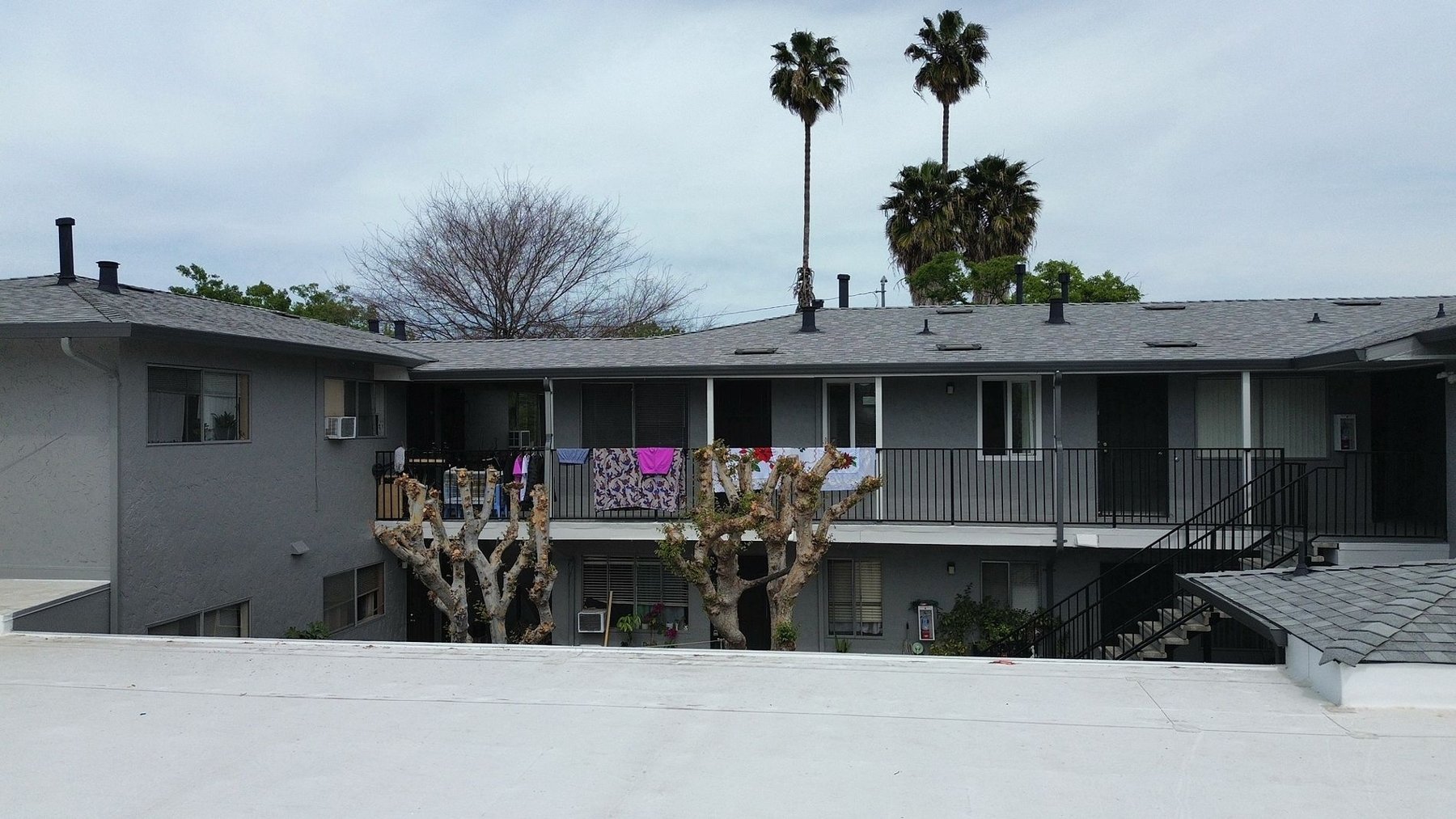
A Complete Guide to Flat Roofing in San Jose
Why Low-Slope Roofs Fail
A steep roof sheds water in seconds and forgives a surprising number of detailing sins. A low-slope roof forgives nothing. Water that does not drain ponds, and ponded water is the single most destructive condition a flat roof faces. It magnifies UV damage, grows biological material, adds structural load — roughly five pounds per square foot per inch of depth — and it finds every marginal seam by simply sitting on it. Industry standard treats water still present 48 hours after rain as ponding that needs correction.
Most ponding is not a structural problem. It is a blocked drain, a crushed scupper, or a low spot created when equipment was set on the roof without regard to drainage. Those are fixable. Genuine deck deflection is the harder case and may call for tapered insulation to rebuild positive slope, or additional drains.
The second failure mode is seams. Every low-slope roof is assembled from sheets, and every joint between them is a deliberate engineered bond — heat-welded on TPO and PVC, adhesive or tape on EPDM, torched or cold-adhered laps on modified bitumen. Seams fail from poor original welding, from thermal cycling, from age, and from being walked on by trades who do not know what is underfoot.
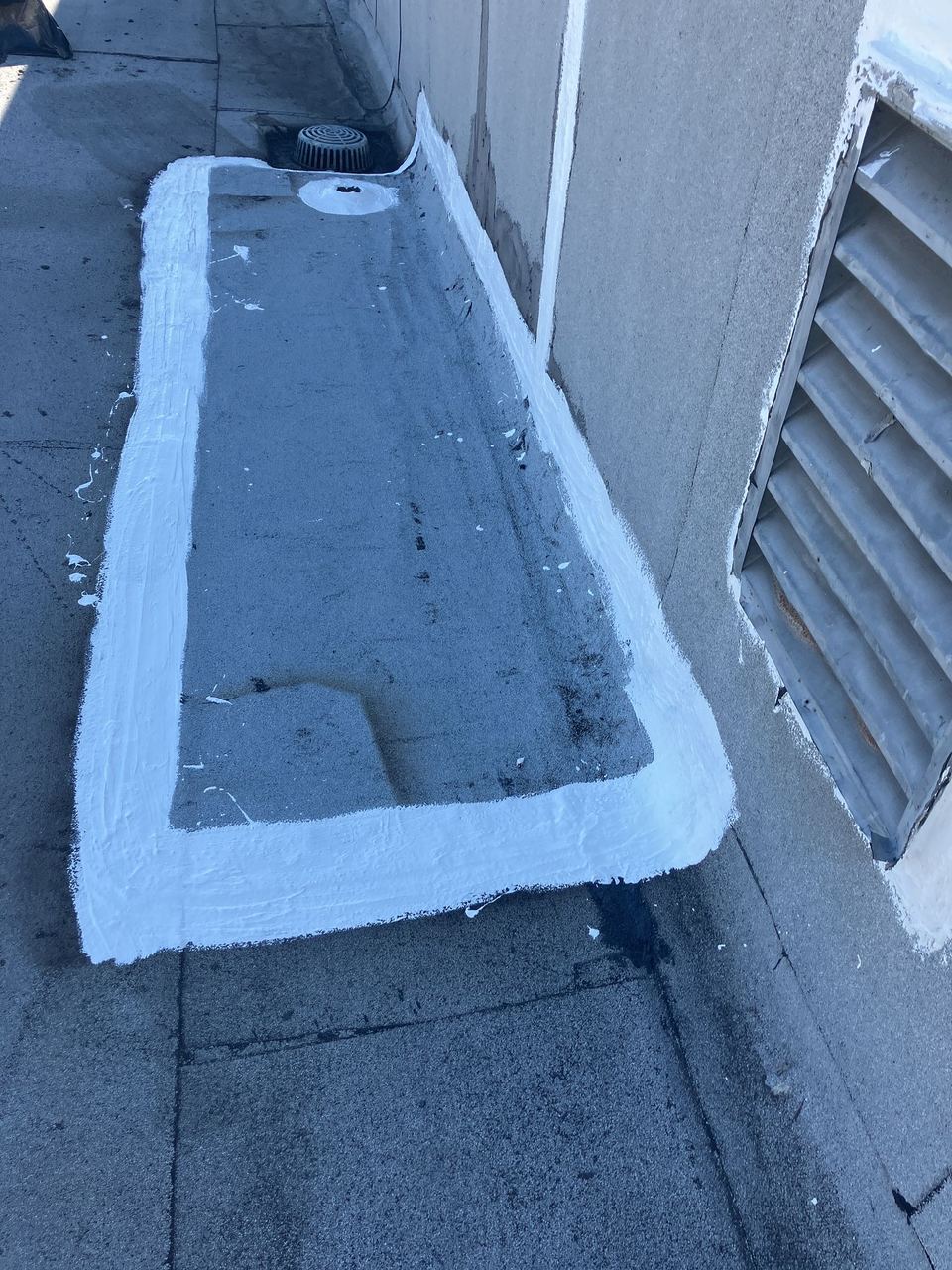
The third is penetrations and terminations — the drains, vents, curbs, conduits, parapet walls, and equipment supports where the field membrane has to stop and transition to something else. Pitch pans shrink and need topping. Termination bars loosen. Counter-flashing corrodes. On roofs carrying solar and dense HVAC, the number of these details multiplies dramatically, and so does the failure surface.
Choosing a System
TPO is the default for most Bay Area commercial work today. It is a heat-weldable thermoplastic, its white surface reflects sunlight (which matters for Title 24 compliance and for cooling load in our hot, sun-heavy summers), it is cost-effective, and welded seams are strong and inspectable. It is what we install most often on new commercial low-slope roofs.
PVC is the premium thermoplastic. It costs more than TPO but resists grease, chemicals, and biological attack far better — which makes it the correct choice over restaurant kitchens, food processing, and anywhere exhaust deposits land on the roof.
EPDM is a synthetic rubber with an exceptional service record and excellent flexibility across temperature swings. Its traditional black surface absorbs heat, which cuts against Title 24 on many projects, though reflective and ballasted options exist. It remains a strong choice on certain buildings and for repairs to existing EPDM fields.
Modified bitumen is asphalt reinforced with polymer modifiers, installed in multiple plies. It is tough, walkable, and highly repairable, which makes it well suited to roofs with heavy foot traffic and dense equipment. It is also frequently the right answer on residential flat sections, where a granulated cap sheet handles both weathering and appearance.
Built-up roofing — the traditional multi-ply asphalt-and-felt assembly, often gravel-surfaced — is still in service on a great many older San Jose buildings. It is genuinely durable and very repairable, and it is often more economical to maintain and recoat a sound BUR roof than to tear it off.
Fluid-applied coatings — silicone and acrylic systems — are a restoration path rather than a roof in themselves. Applied over a roof whose substrate is still sound, a coating renews the waterproofing surface, adds reflectivity, and can extend service life ten years or more at a fraction of replacement cost. Applied over a wet or failed substrate, it traps moisture and buys nothing. The honest assessment of which situation you are in is the whole value of the consultation.
Repair, Restore, or Replace
These are three genuinely different decisions and we treat them that way. Repair is right when the field membrane has remaining life and the problem is localized — a seam, a drain, a penetration, a section of damaged membrane. Restoration by coating is right when the membrane is broadly intact and dry but weathered, the seams are sound, and you want another decade without a tear-off. Replacement is right when the membrane is at end of life, when there are multiple leaks across the field, or — critically — when there is saturated insulation beneath the membrane. Wet insulation never dries out in place; it destroys thermal performance and it will rot the deck. Coating over it is one of the more expensive mistakes in the trade, and it is a common one.
Determining which case applies means getting on the roof, checking the substrate for moisture rather than guessing at it, and looking at the drainage as a system. That is the inspection, and it is what we do before quoting anything.
Signs You Need
Flat Roofing
Water Still Standing 48 Hours After Rain
Ponding is the defining flat-roof problem. Water present two days after a storm means the drainage has failed — usually a blocked drain or a low spot — and it is actively shortening the life of the membrane underneath it.
Seams Lifting, Splitting, or Wrinkling
Open or wrinkled seams are the most common entry point on single-ply roofs. Any visible separation, fishmouth, or ridge along a lap line is water getting under the membrane, and it spreads laterally once it does.
Blisters or Soft Spots Underfoot
A spongy or bubbled area means trapped moisture or air between layers, or saturated insulation below. Soft decking underfoot is a serious signal — it means water has already reached the structure.
Cracked Pitch Pans and Failed Sealant
Pitch pans shrink as they cure and need periodic topping off. Cracked pans, gapped termination bars, and split sealant at conduits and curbs are ordinary aging — and reliable leak sources if nobody attends to them.
Interior Stains Near Walls or Equipment
On a flat roof, interior staining along a parapet, at a wall transition, or under rooftop equipment usually points to a flashing or curb detail rather than the open field of the roof. Those are typically repairable.
Ballast or Gravel Displaced in Patches
On ballasted and gravel-surfaced roofs, bare patches expose the membrane below to direct UV and accelerate its breakdown. Displacement often follows wind events or trades working on rooftop equipment.
Low-Slope Systems
We Install
TPO Single-Ply
The workhorse of modern commercial low-slope roofing. Heat-welded seams, a reflective white surface that helps with Title 24 and summer cooling load, and strong value. Our usual recommendation for new commercial flat roofs unless something specific argues otherwise. See our single-ply roofing page.
PVC Single-Ply
Premium thermoplastic with superior resistance to grease, chemicals, and biological attack. The right specification over commercial kitchens, food processing, and any building where exhaust deposits land on the roof surface.
EPDM Rubber
Synthetic rubber membrane with a long service record and excellent flexibility through temperature swings. Available in ballasted, mechanically attached, and fully adhered configurations, and still the right call on certain buildings.
Modified Bitumen
Polymer-modified asphalt in multiple plies, torch-applied or cold-adhered. Tough, walkable, and highly repairable — well suited to roofs with heavy equipment and foot traffic, and to residential flat sections. See our modified bitumen page.
Built-Up Roofing (BUR)
The traditional multi-ply asphalt-and-felt assembly, often gravel-surfaced. Extremely durable and very repairable, and still in service on many older San Jose buildings where maintaining is smarter than replacing. See our built-up roofing page.
Fluid-Applied Coating Systems
Silicone and acrylic restoration systems that renew the waterproofing surface and add reflectivity without a tear-off — when and only when the substrate beneath is genuinely dry and sound. See our roof coatings page.
How We Handle
Your Flat Roofing
Inspection & Moisture Check
We walk the roof, map the drainage, examine seams, penetrations and terminations, and check whether the substrate below is dry. That last part decides repair versus replacement.
Honest Scope Recommendation
You get a clear read on which of the three paths — repair, coating restoration, or full replacement — actually fits your roof, with the reasoning and the trade-offs spelled out.
Drainage Design
Before any membrane goes down we solve the water. That can mean clearing and reworking drains and scuppers, adding drains, or building positive slope with tapered insulation.
Installation to Spec
Manufacturer-specified attachment, welded and probe-tested seams on thermoplastics, and properly detailed flashing at every curb, parapet, drain and penetration on the roof.
Documentation & Warranty
Photographed details throughout, manufacturer warranty registration where applicable, and a maintenance schedule — because low-slope warranties generally require documented service.
Why Bay Area Owners Choose Us
for Flat Roofing
We Are Not Loyal to One Membrane
We install TPO, PVC, EPDM, mod-bit, BUR and coatings. That means the system we recommend is chosen for your deck, drainage and equipment load rather than for our purchasing agreement.
We Check the Substrate Before Quoting
Coating over saturated insulation is the most expensive shortcut in low-slope roofing. We establish whether what is under the membrane is dry before we propose anything on top of it.
Commercial and Residential Flat Work
Warehouses and apartment complexes, and the flat porch and addition roofs on mid-century South Bay homes. Different problems, different systems — we do both and we do not conflate them.
Seventy-Plus Years, Licensed and Insured
Serving San Jose since 1952. CSLB #1118418, fully insured, BBB A+. Our crews are trained to manufacturer specification and our seam work is probe-tested, not assumed.
Local Resources
for Flat Roof Owners
Codes, climate and verification references that matter specifically for low-slope roofs in San Jose, Santa Clara County and the wider Bay Area.
Title 24 & Cool-Roof Requirements
California's energy code sets solar-reflectance and thermal-emittance minimums for low-slope roofs, which is a large part of why white TPO and PVC dominate new commercial work here. Background from the California Energy Commission: CA Energy Commission →
Permits for Low-Slope Work
Re-roofing and structural repair require a permit; routine maintenance and minor patching generally do not. Requirements and inspection sequencing are set by the city the building sits in — San Jose's Building Division for San Jose properties: City of San Jose →
Ponding and the 48-Hour Rule
Industry practice treats water remaining on a roof more than 48 hours after rainfall as ponding requiring correction. Knowing when storms actually cleared is part of assessing it — records and forecasts from the NWS Bay Area office: NWS Bay Area forecast →
Verify the Contractor's License
Low-slope work is specialized and the failure cost is high. Confirm an active C-39 roofing classification and current insurance before anyone touches your roof. Keith Roofing is CSLB #1118418. Look up any California contractor: Look up any CA contractor →
Solar and HVAC on Flat Roofs
Rooftop equipment is the leading source of new penetrations and of third-party damage on Bay Area commercial roofs. Coordinate roof work with your solar and mechanical contractors, and keep a record of who has been on the roof and when.
Fire Ratings for Low-Slope Assemblies
Roof assemblies carry fire classifications, and requirements tighten in wildland-urban-interface areas around the hills in Los Gatos, Saratoga, Almaden and the East Bay. Guidance from the State Fire Marshal: CA State Fire Marshal →
Serving San Jose, Santa Clara, Sunnyvale, Campbell, Los Gatos, Saratoga, Cupertino, Mountain View, Palo Alto, Milpitas, Morgan Hill, Gilroy, Los Altos, Menlo Park, Redwood City, San Mateo, Fremont, Newark, Union City, Hayward, San Leandro, Oakland, Walnut Creek and San Francisco.
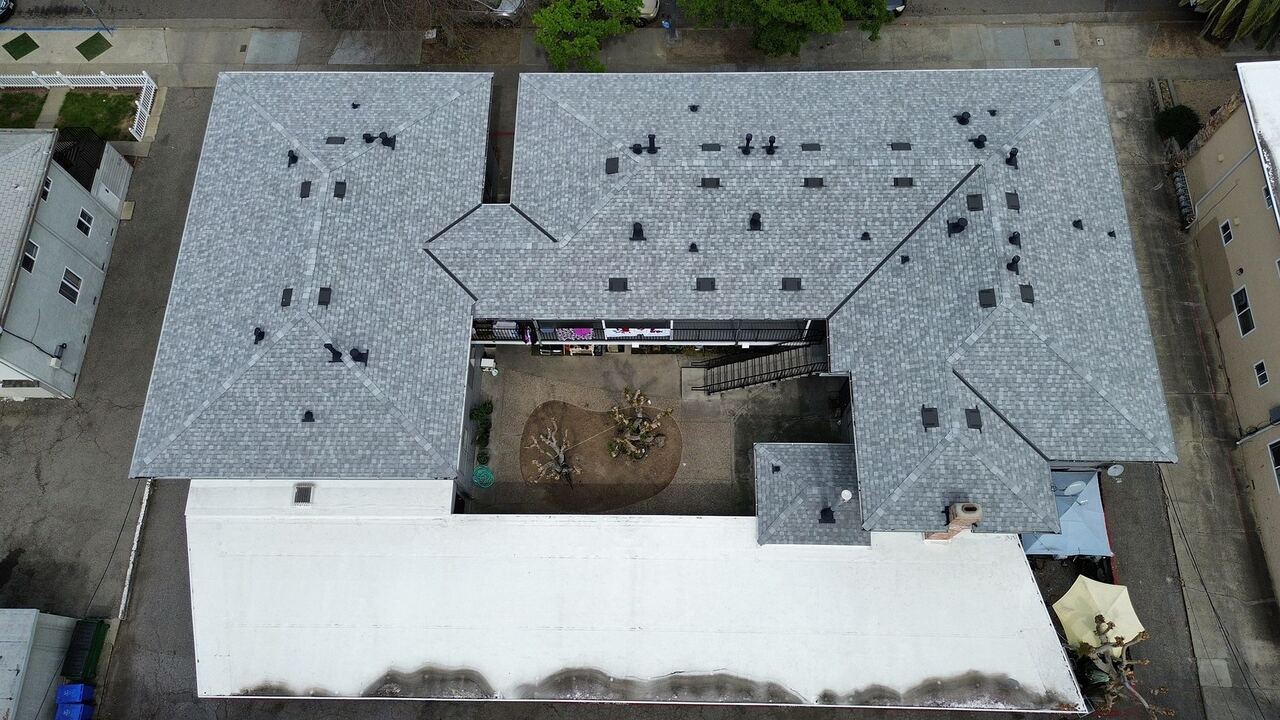
San Jose Apartment Complex — TPO & Shingle Re-Roof
A full-scope re-roof on a San Jose apartment complex that combined both roof types in one project: TPO single-ply across the low-slope sections and carport, with Landmark architectural shingle on the pitched areas, and a properly detailed transition where the two systems meet. That junction is where mixed-slope buildings usually leak, and it got the attention it deserved. Scope also included dry rot replacement discovered during tear-off, parapet wall and skylight flashing detail, new fascia, and complete seamless gutter and downspout replacement. Photographed throughout for the owner's records and warranty registration.
Recent Flat Roofing
Projects
Projects Featuring
Our Flat Roofing Service
Real Keith Roofing projects where we delivered this service. Click any case study for the full story.
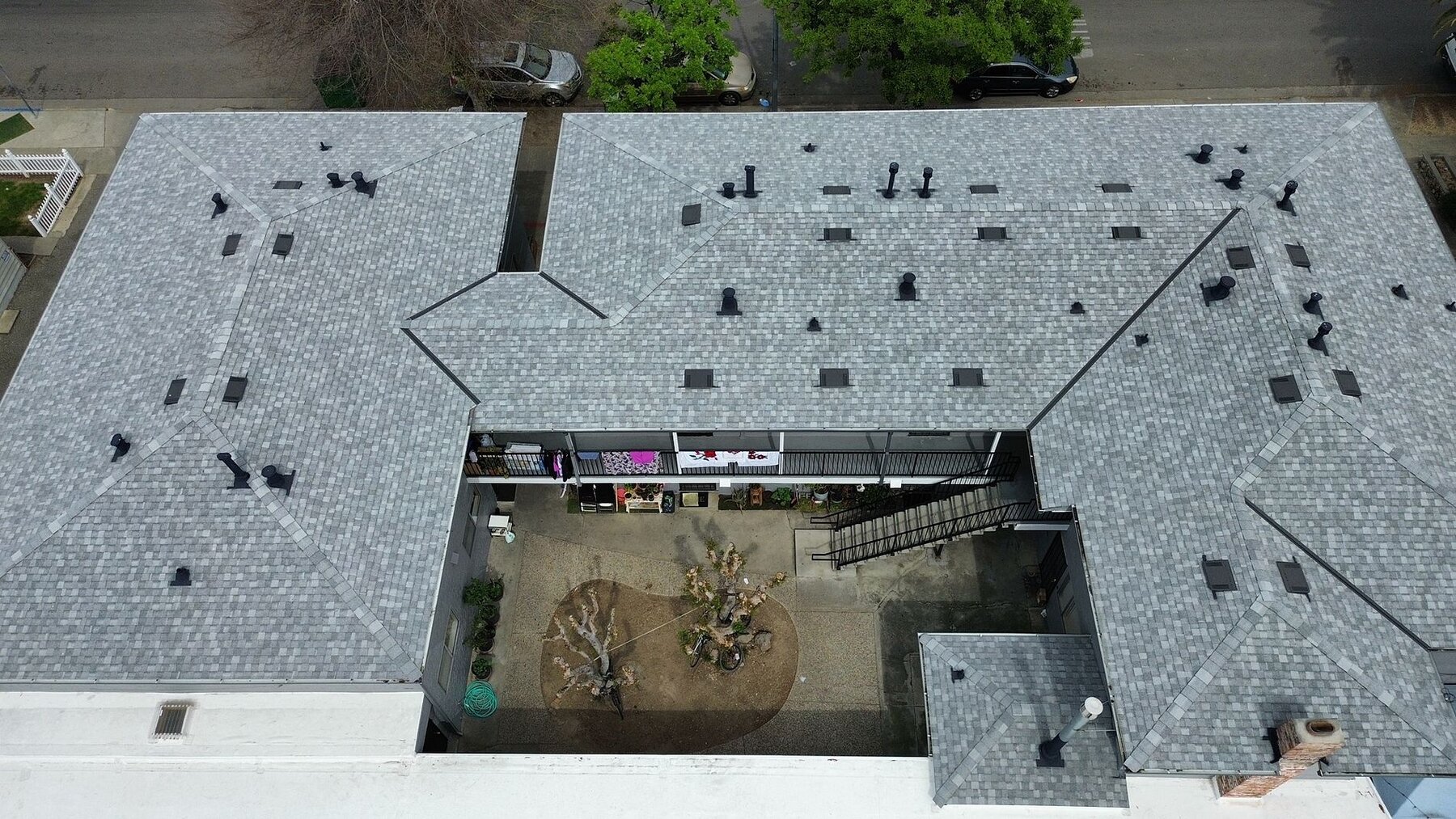
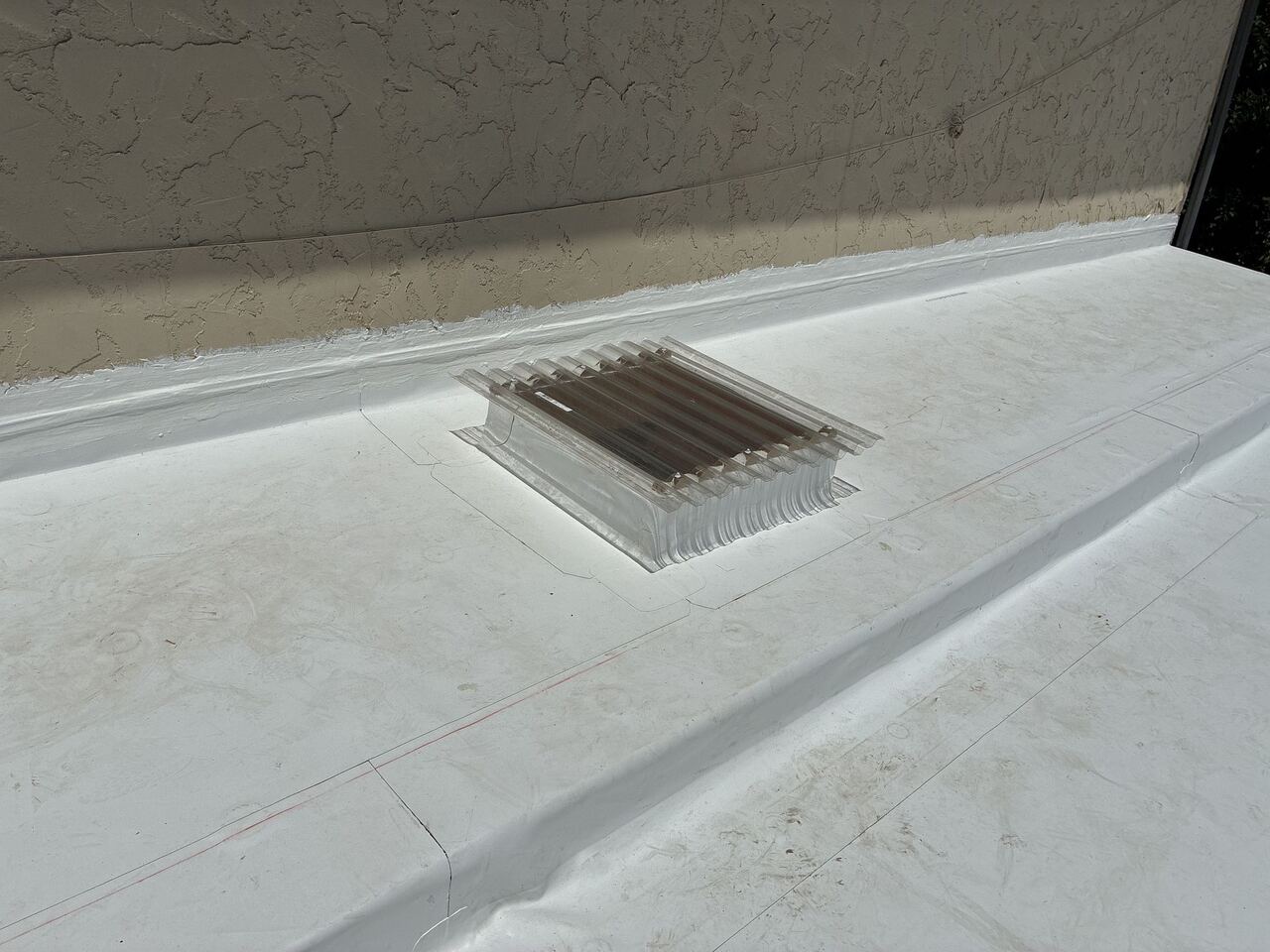
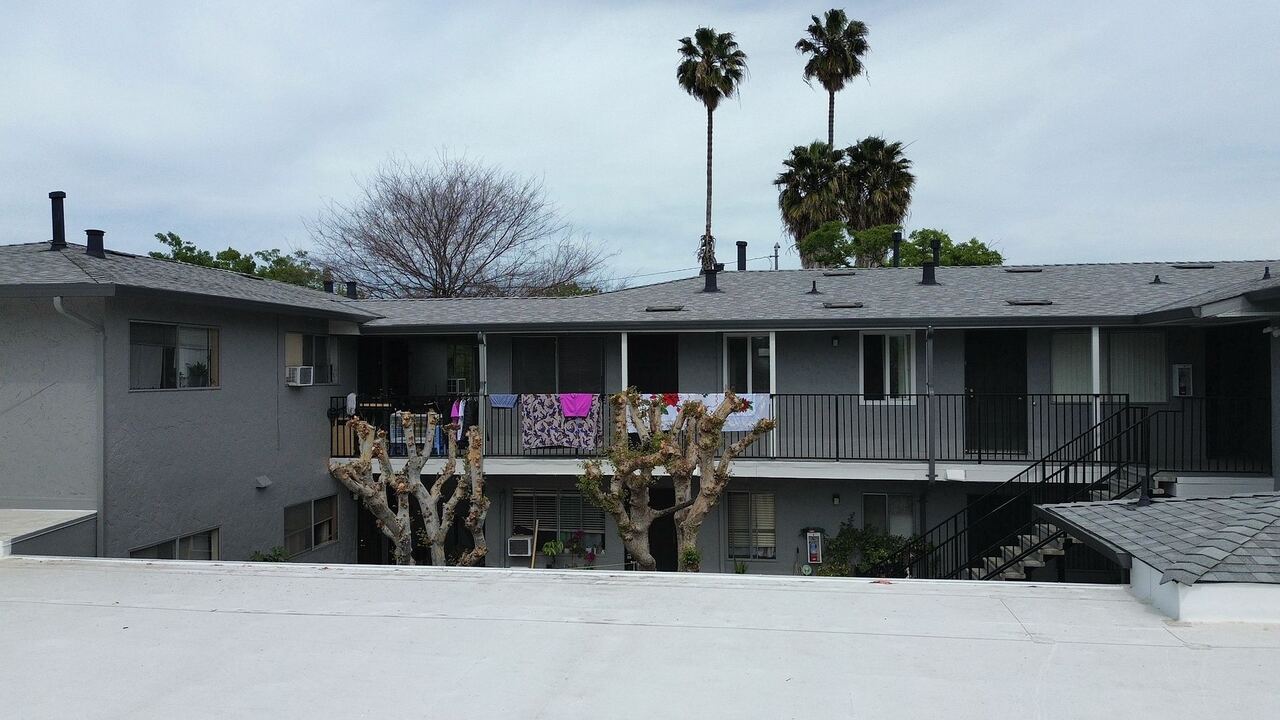
San Jose Apartment Complex Re-Roof
Full-scope apartment re-roof combining TPO low-slope, Landmark shingle, dry rot repair and new gutters.
View Case Study →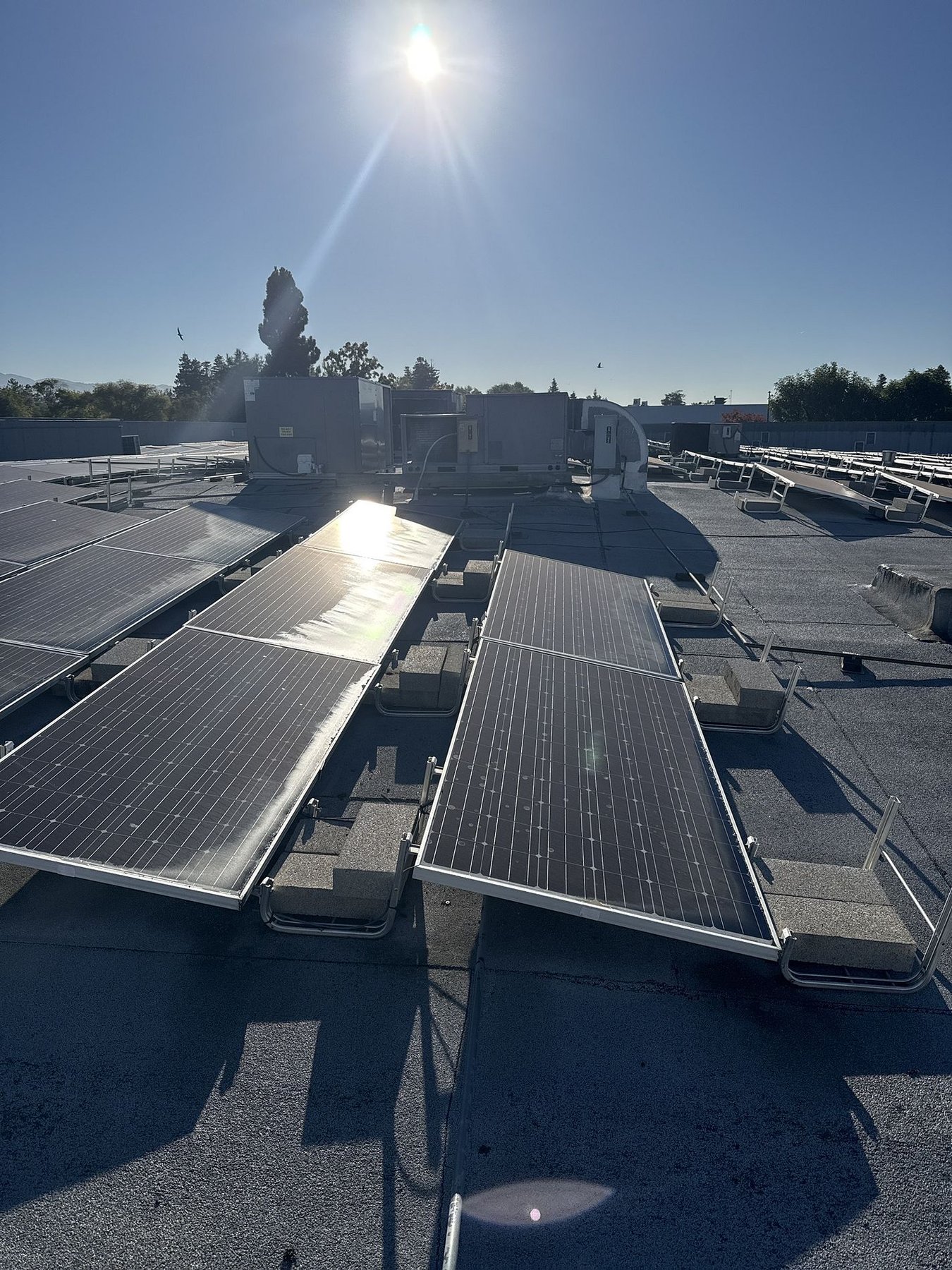
San Jose Commercial Maintenance
Ongoing commercial flat-roof maintenance with solar panel coordination, single-ply install, and active leak repair.
View Case Study →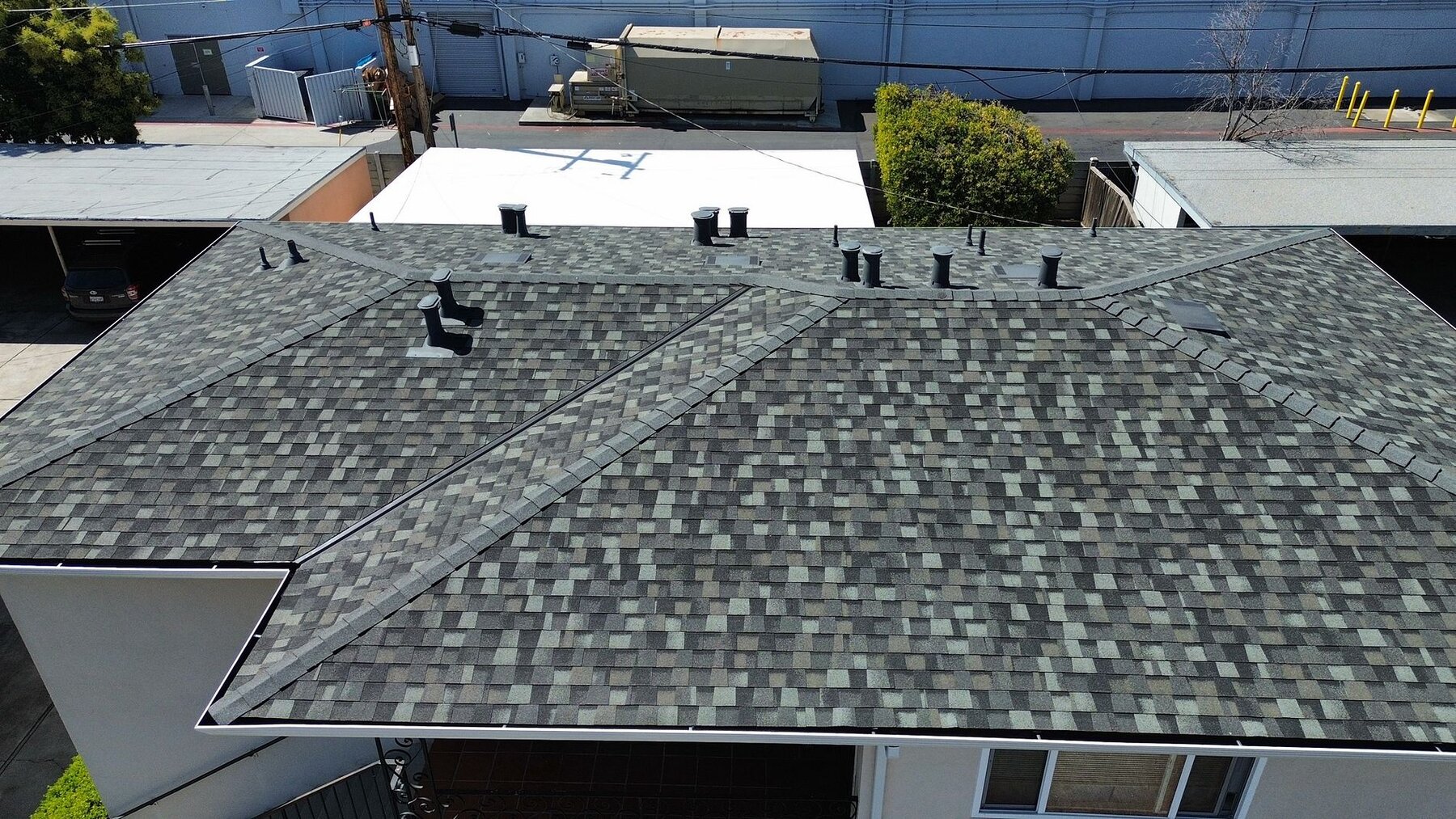
Campbell Tar-to-Shingle Conversion
Converting an aging tar-and-gravel low-slope roof to a modern system on a Campbell home.
View Case Study →