Roof Leak Repair
San Jose & the Bay Area
Water enters in one place and shows up somewhere else entirely. Finding the real entry point is the whole job — everything after that is straightforward.
Roof Leak Repair
Done Right Since 1952
A roof leak is the one roofing problem that gets worse every single day you wait. Water that enters an assembly does not stay where it lands — it travels along rafters and sheathing, saturates insulation, soaks drywall, and given enough time it rots framing and grows mold in places nobody will see until the repair bill has multiplied several times over. The cost of fixing a leak is small. The cost of living with one is not.
Keith Roofing has been chasing down leaks in San Jose and across the Bay Area since 1952. The single most important thing we bring to a leak call is accurate diagnosis, because the visible symptom is almost never above the actual hole. A stain in a hallway ceiling can originate fifteen feet away at a chimney. A drip at a recessed light can come from a cracked pipe boot on the far side of a ridge. Guessing produces a repair that does not stop the leak — which is exactly why so many homeowners call us as the second or third contractor on the same stain.
We handle the full range: active emergency leaks during a storm, where the first job is tarping to stop the damage; intermittent leaks that only appear in wind-driven rain and are the hardest kind to trace; and slow, chronic leaks that show up as a spreading stain or a musty smell long before anyone sees a drop of water. Shingle, tile, and flat roofs alike.
And when a leak is a symptom of a roof that has simply reached the end of its life, we will tell you that plainly rather than sell you a repair that buys a few months.
How Roof Leaks Are Actually Found and Fixed
Why the Stain Is Not Above the Hole
This is the single most misunderstood thing about roof leaks, and it is the reason well-meaning repairs so often fail. Water entering a roof lands on the underside of the sheathing and then follows the path of least resistance — running down the slope of the deck, along the top of a rafter, across a ceiling joist, down the face of a wall stud — until it reaches a point where it can drip or wick into finished surfaces. That travel is routinely ten or fifteen feet, and it can be considerably more on a low-pitch roof or through a complex framed ceiling.
The practical consequence: sealing the roof directly above a ceiling stain fixes nothing most of the time. It just moves the money. Proper leak repair means tracing the water backwards from the symptom to the entry point, and that requires understanding how the roof is framed, how it drains, and where its specific detailing is most likely to have failed.
Where Leaks Actually Come From
After seventy-plus years the distribution is remarkably consistent. Plumbing vent boots are the most common single source on residential roofs — the neoprene gasket cracks from UV after ten to fifteen years of our summers and water runs straight down the pipe. Chimney flashing is second: counter-flashing corrodes or pulls out of the mortar joint, and the resulting gap admits water at the highest-volume point on the roof. Skylight perimeters fail as gaskets and flashings age past fifteen or twenty years.
Valleys leak when debris dams water sideways under the courses, or when the valley metal has corroded through. Sidewall and headwall transitions leak when step flashing separates, was never installed correctly, or was covered over with sealant instead of being replaced. Cracked or slipped tiles expose the underlayment, which is the actual waterproof layer on a tile roof and which has a much shorter life than the tile above it. On flat and low-slope roofs, the leading causes are blocked drains, open seams, and failed pitch pans at penetrations.
And a meaningful share of what gets reported as a roof leak turns out not to be the roof at all — condensation from inadequate attic ventilation, a failed bathroom fan duct, a plumbing supply line in a wall, or an HVAC condensate drain. We would rather tell you that than sell you a roof repair you do not need.
Our Diagnostic Sequence
We start inside, with what you are seeing: where the stain is, when it first appeared, whether it correlates with heavy rain, wind direction, or nothing obvious at all. An intermittent leak that appears only in a driven southerly rain tells us something very specific about which elevation to examine.
Then the attic, where access allows. This is the highest-value step in leak diagnosis and the one most often skipped. Water staining on the underside of sheathing, rust tracks on nail points, darkened rafters, and compressed or discolored insulation form a trail that leads back toward the entry point far more reliably than anything visible from the roof surface.
Then the roof itself, worked systematically rather than by looking for something obvious: every penetration, every flashing, every valley and transition, the condition of the field material, and — on low-slope roofs — the drains and seams. We are matching what we found in the attic to what we can see up top.
When a leak still resists diagnosis, we run a controlled water test: one person applies water to isolated roof sections in sequence, starting low and working up, while a second person watches the interior entry point. It is slow and methodical, and it is definitive. It is also the step that separates finding a leak from guessing at one.
Emergency Response and Temporary Protection
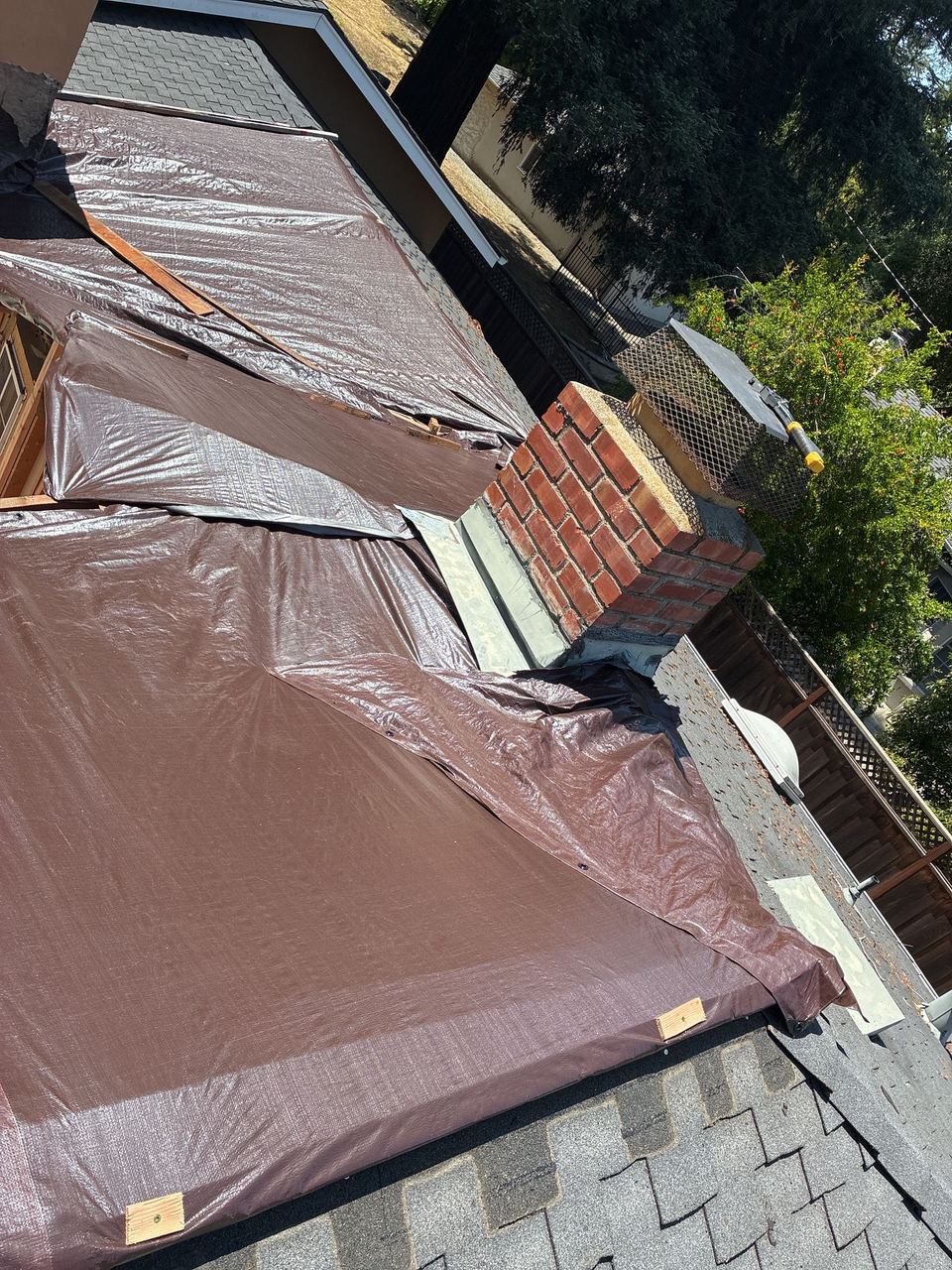
During an active storm with water coming into the building, diagnosis is not the first priority — stopping the damage is. We tarp. A properly installed tarp is mechanically fastened and lapped to shed water, not a sheet of plastic held down with sandbags, and it will hold through subsequent storms while a permanent repair is scoped and scheduled. Once the weather allows a proper diagnosis and a lasting repair, we come back and do it right. Attempting a permanent repair on a soaked roof mid-storm produces work that fails, and we will not pretend otherwise to close a job faster.
Signs You Need
Roof Leak Repair
Active Drip During Rain
The most urgent case. Call immediately — every hour of an active leak spreads damage into insulation, drywall and framing. We can tarp to stop the intrusion and scope the permanent repair once conditions allow.
Ceiling or Wall Stain
A brown-ringed stain is the classic signature, and a ring that keeps growing means the leak is still active. Remember that the stain marks where water exited, not where it entered — the source is usually elsewhere.
Musty Smell or Visible Mold
A persistent musty odor in a room, closet, or attic often means water has been present long enough to grow biological material inside the assembly, even where no stain has appeared on a finished surface yet.
Bubbling Paint or Sagging Drywall
Paint blistering on a ceiling or a soft, bowed patch of drywall means water is saturating the material from behind. This is well past the early-warning stage and needs immediate attention before the ceiling fails.
Daylight or Wet Spots in the Attic
Visible daylight through the roof deck, damp or matted insulation, water staining on sheathing, or rust on nail points are direct evidence of intrusion — often visible in the attic long before anything shows up in the living space.
Leaks Only in Wind-Driven Rain
A leak that appears only during storms from a particular direction, then disappears, points to a specific flashing, wall transition, or vent detail. These are the hardest leaks to trace and the ones most often misdiagnosed.
The Leaks We Find
Most Often
Plumbing Vent Boots
The most common residential leak source we encounter. The neoprene gasket cracks after roughly ten to fifteen years of Bay Area sun and water runs down the pipe into the structure. A fast, inexpensive replacement that resolves the leak permanently.
Chimney & Skylight Flashing
Counter-flashing corrodes or works loose from the mortar joint; skylight gaskets and flashing kits age out around the fifteen-to-twenty-year mark. Both sit at high-volume water paths, so failures here leak substantially rather than slowly.
Valleys & Wall Transitions
Valleys clog with oak, redwood and eucalyptus debris and dam water sideways under the courses. Step flashing at sidewalls separates or was sealed over instead of replaced. Both are common and both are genuinely repairable.
Cracked or Slipped Tile
On a tile roof the underlayment is the actual waterproof layer, and it has a much shorter life than the tile. Broken or displaced tiles expose it directly to sun and water, and underlayment failure at the eaves is a classic South Bay tile-roof leak.
Flat Roof Drains & Seams
On low-slope roofs, blocked drains, open seams and failed pitch pans account for the large majority of leaks. Ponded water sitting on a marginal seam will find its way through given time. See our flat roofing page.
Not the Roof at All
Condensation from poor attic ventilation, a disconnected bath fan duct, an HVAC condensate line, or a plumbing leak inside a wall all masquerade as roof leaks. We diagnose these regularly — and we tell you when the roof is not the problem.
How We Handle
Your Roof Leak Repair
Call & Triage
We establish whether water is actively entering the building right now. Active intrusion gets priority scheduling and, where needed, emergency tarping ahead of full diagnosis.
Emergency Tarping If Needed
A mechanically fastened, properly lapped tarp that will hold through subsequent storms — not a plastic sheet and sandbags — to stop damage while the real repair is scoped.
Interior & Attic Investigation
We start with your symptom and go into the attic where access allows, following water staining, rust tracks and damp insulation back toward the actual point of entry.
Systematic Roof Inspection
Every penetration, flashing, valley and transition examined in order — plus a controlled water test when a leak resists visual diagnosis. We confirm the source before repairing.
Permanent Repair & Verification
We fix the actual failed component, document it with photographs, and tell you honestly whether the roof around it has years left or is nearing the end of its service life.
Why Bay Area Owners Choose Us
for Roof Leak Repair
We Find It Before We Fix It
Most failed leak repairs are failures of diagnosis, not workmanship. We trace water back to its real entry point — including a controlled water test when needed — rather than sealing the spot above the stain and hoping.
Emergency Response When Water Is Coming In
Active intrusion gets priority. We tarp properly so the damage stops now, then return for a permanent repair once conditions allow one that will actually last.
We Tell You When It Is Not the Roof
Condensation, bath fan ducts, HVAC condensate and wall plumbing all mimic roof leaks. If that is what is happening, you will hear it from us — not a repair invoice for a roof that was fine.
Seventy-Plus Years of Local Failure Patterns
Since 1952 on Bay Area roofs. We know how tract-era details, South Bay tile roofs and mid-century flat sections fail, and that pattern recognition is what makes diagnosis fast.
Local Resources
& What to Do Right Now
Practical steps to limit damage before we arrive, plus the local references that matter when a leak turns into an insurance claim or a permitted repair.
What to Do Before We Arrive
Move furniture and electronics clear, put a bucket under the drip, and if a ceiling is bulging with trapped water, pierce it at the lowest point with a small hole to let it drain in a controlled way — a sagging ceiling that lets go all at once does far more damage. Photograph everything for your insurer.
Document It for Insurance
Sudden, accidental water damage — a storm-driven leak — is often covered, while damage from long-term neglect generally is not. Dated photographs of the source, the interior damage and the weather event matter. Storm records from the NWS Bay Area office: NWS Bay Area forecast →
Storm Timing in the Bay Area
Most of our rain arrives in a handful of concentrated atmospheric-river events between November and March, which is exactly when marginal details fail all at once. Watching the forecast helps you get ahead of a known weak spot: NWS Bay Area forecast →
Permits for Leak Repair
Localized leak repair generally does not require a permit; replacing a roof section or doing structural repair to a damaged deck does. Requirements are set by the city the property sits in — San Jose's Building Division for San Jose: City of San Jose →
Verify Before You Let Anyone Up There
Active leaks attract storm-chasing operators. Confirm an active license with a C-39 roofing classification and current workers' comp before anyone climbs on your roof. Keith Roofing is CSLB #1118418. Check any California contractor: Look up any CA contractor →
Prevent the Next One
Nearly every leak we repair was preventable — a boot, a clogged valley, a failed sealant joint that a scheduled visit would have caught. Our roof maintenance programs exist for exactly this reason, and an annual walk costs a fraction of one interior repair.
Serving San Jose, Santa Clara, Sunnyvale, Campbell, Los Gatos, Saratoga, Cupertino, Mountain View, Palo Alto, Milpitas, Morgan Hill, Gilroy, Los Altos, Menlo Park, Redwood City, San Mateo, Fremont, Newark, Union City, Hayward, San Leandro, Oakland, Walnut Creek and San Francisco.
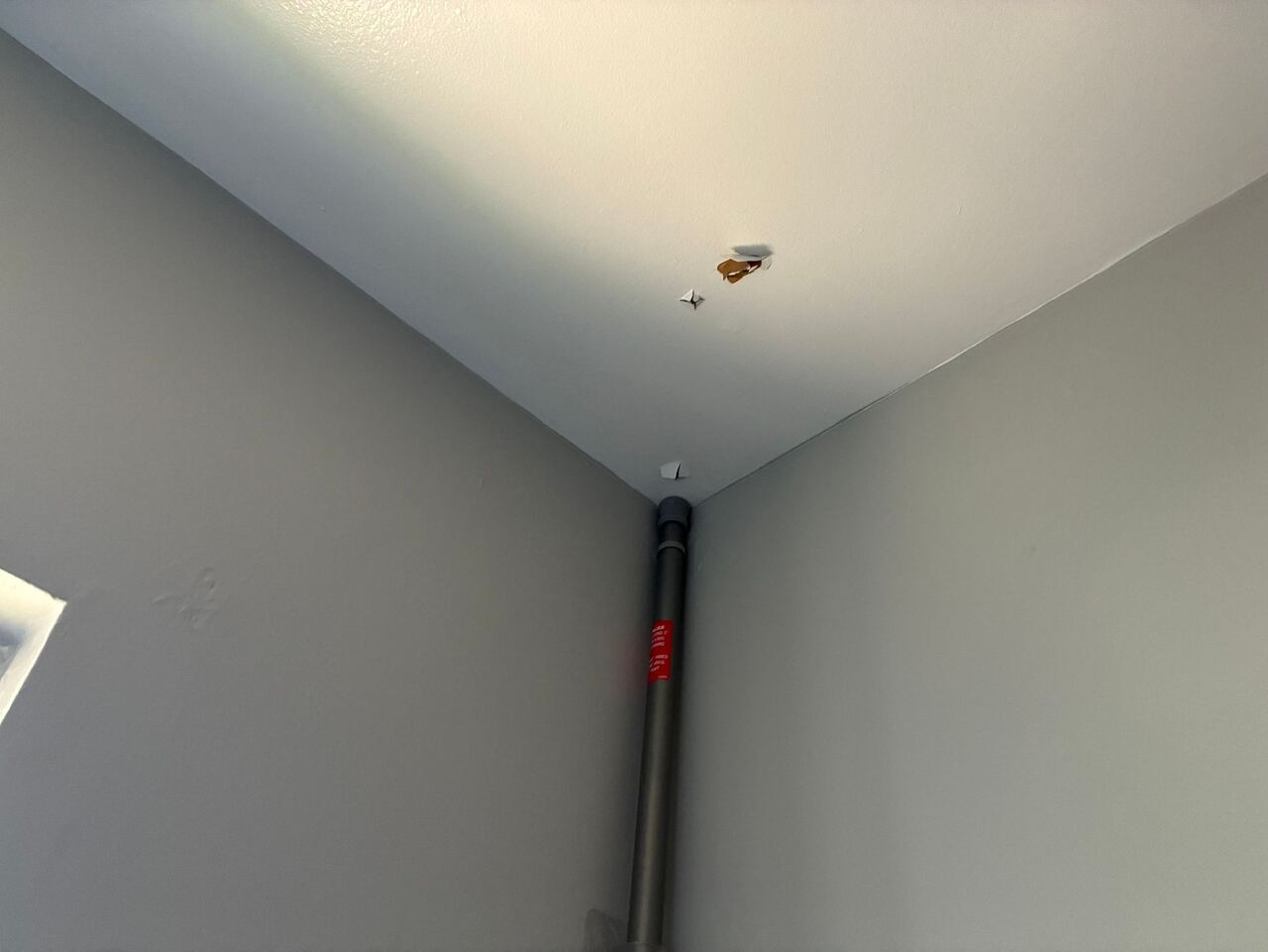
Campbell — Chronic Ceiling Leak to Permanent Fix
This Campbell home came to us with interior ceiling damage from a leak that had been recurring for seasons on an aging tar-and-gravel low-slope roof. The interior staining told us water was getting in, but not where — the entry point turned out to be well away from the visible damage, which is why previous patching had not held. Once the source was traced, it was clear the roof itself had reached the end of its service life and that further spot repair would keep failing. Rather than sell another patch, we converted the low-slope section to a modern shingle system with proper drainage, new gutters and downspouts. The leak is gone because the condition causing it is gone.
Recent Roof Leak Repair
Projects
Projects Featuring
Our Roof Leak Repair Service
Real Keith Roofing projects where we delivered this service. Click any case study for the full story.
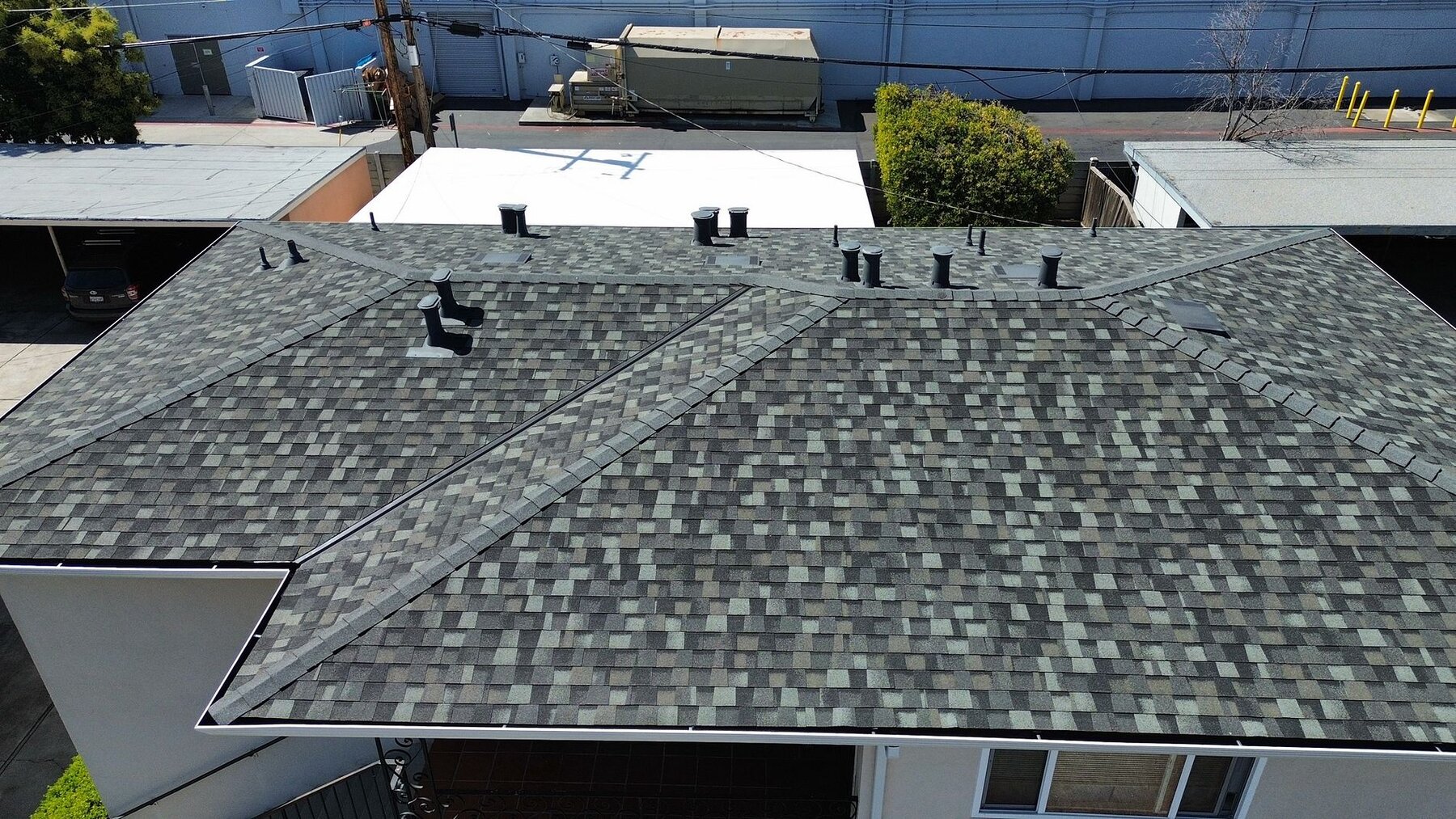
Campbell Tar-to-Shingle Conversion
A chronic low-slope leak traced, diagnosed and permanently resolved by converting to a modern shingle system.
View Case Study →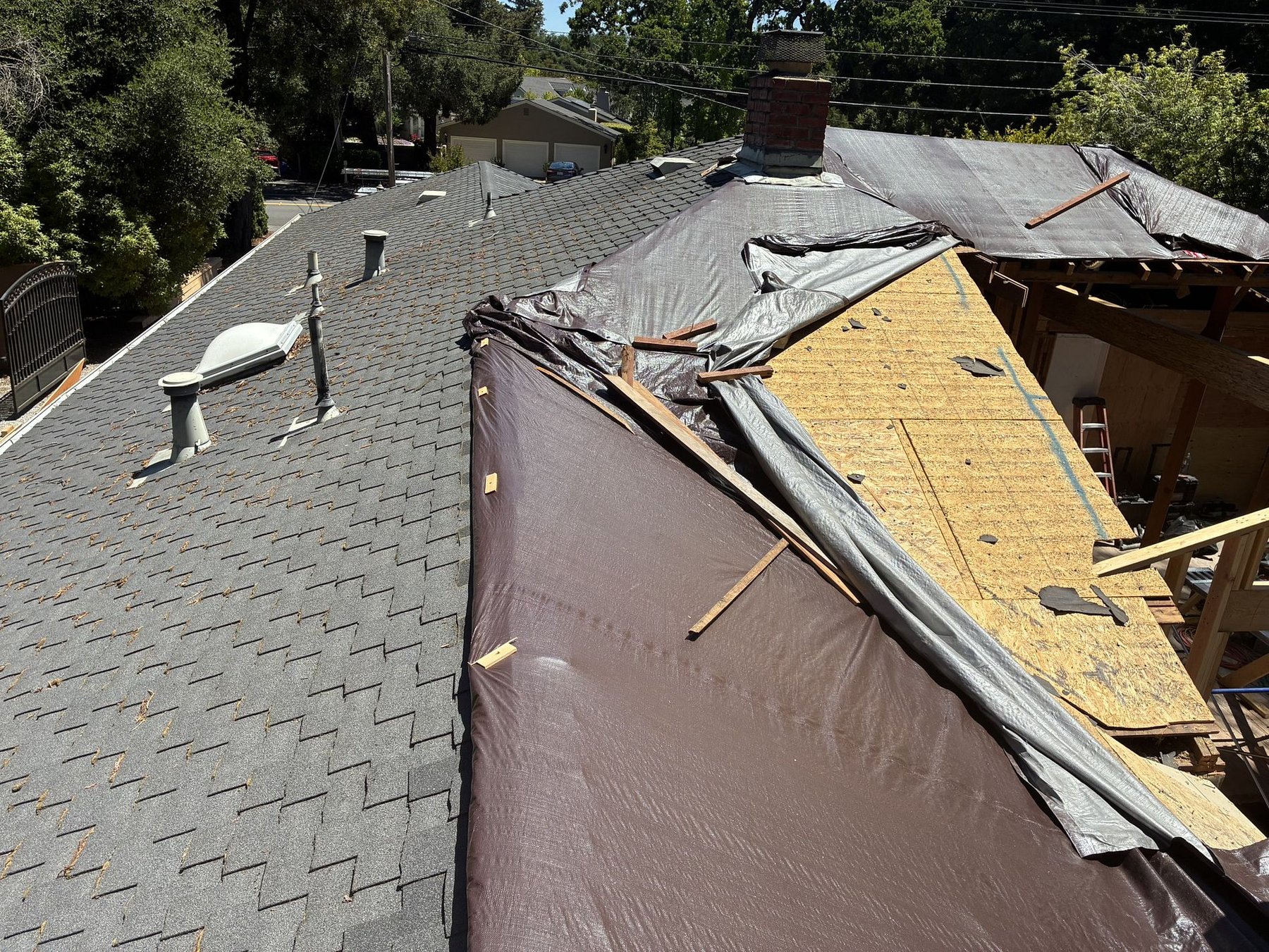
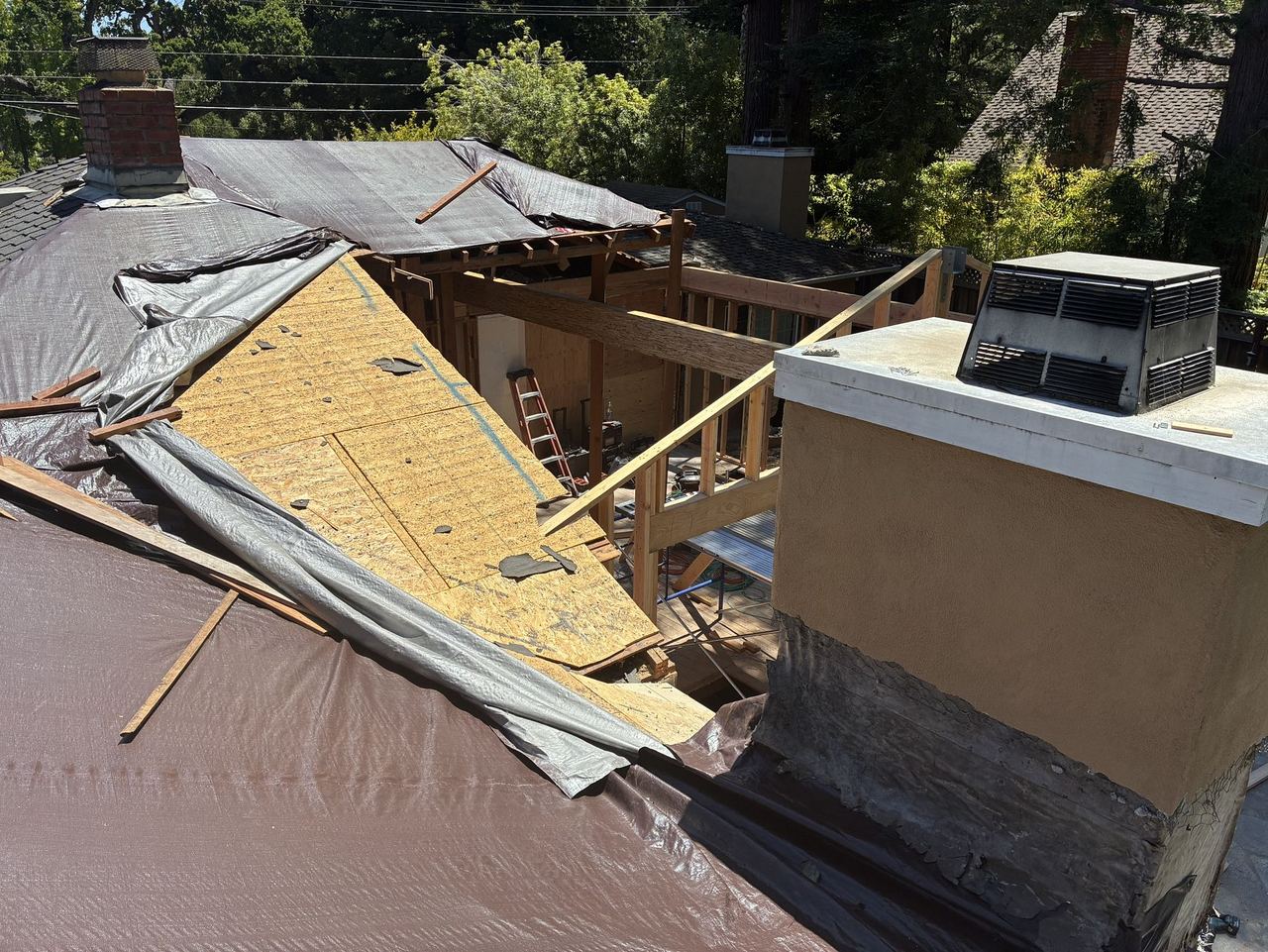
Saratoga Presidential Fire Repair
Emergency tarping followed by fire-damage repair with a seamless CertainTeed Presidential shingle tie-in.
View Case Study →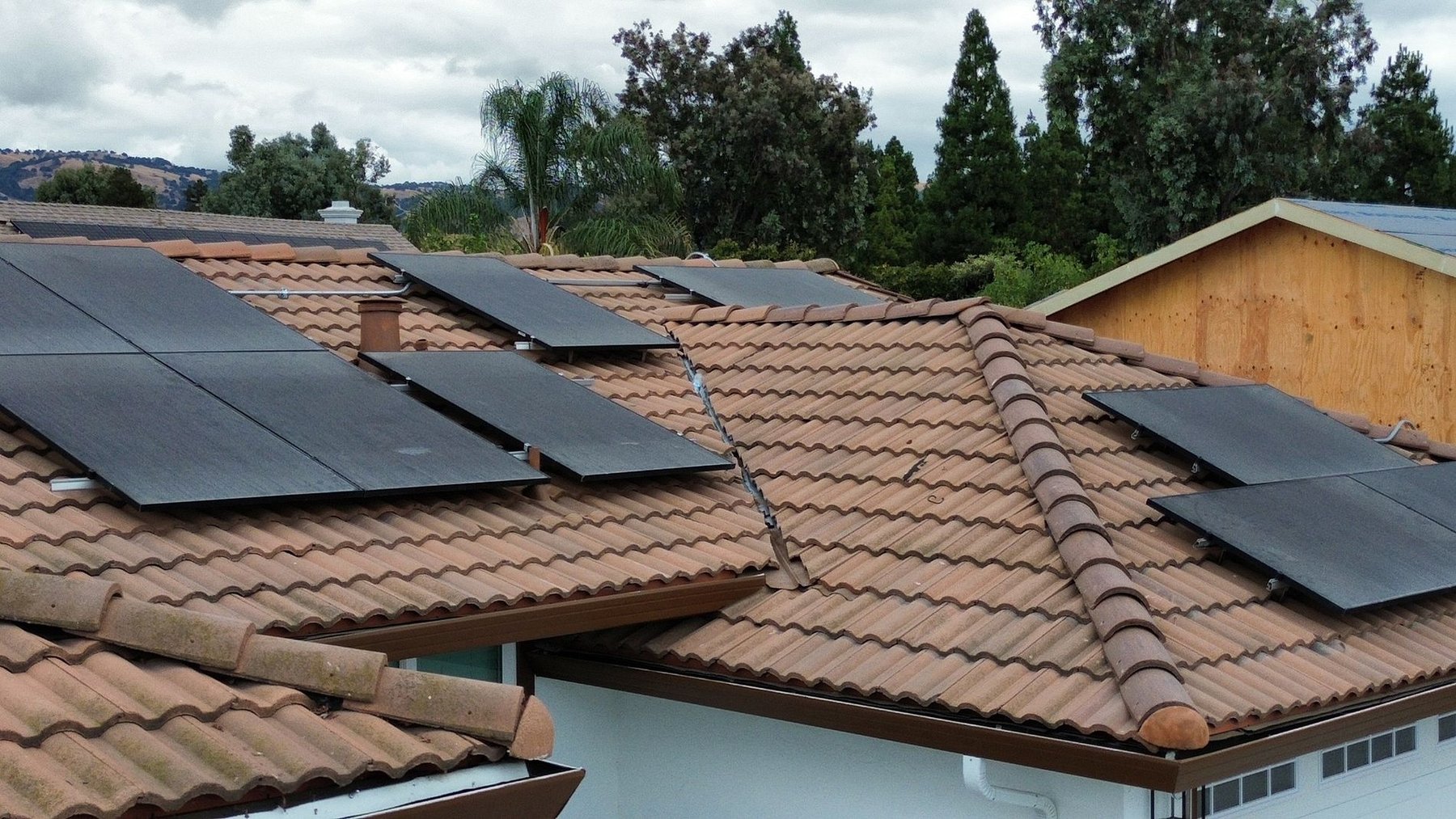
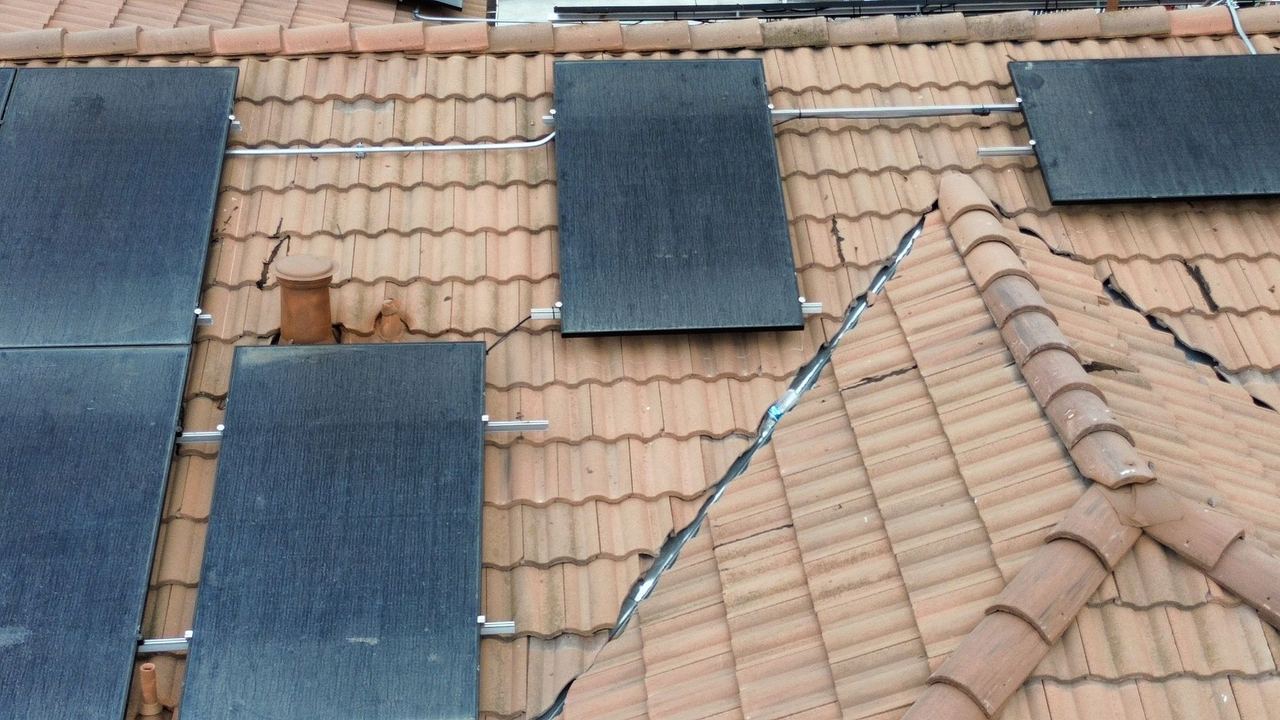
Evergreen Tile Fire Damage Repair
Tile roof damage repair with solar panel coordination and color-matched tile replacement.
View Case Study →