Roofing Contractor
in San Francisco, CA
Flat roofs behind Sunset and Richmond facades, Victorian and Edwardian roofs, and commercial membranes in SoMa: Keith Roofing Company handles San Francisco's roofs from its San Jose base. California Licensed #1118418, BBB A+ Accredited, family-owned since 1952.
San Francisco's Trusted
Roofing Contractor
San Francisco is the most distinctive roofing market in the Bay Area, and it is worth being specific about why. The overwhelming majority of the city's housing — the Sunset, the Richmond, the Mission, Noe Valley, Bernal Heights — consists of attached and semi-attached homes with low-slope or nearly flat roofs, often hidden behind a parapet or a decorative false front. Very little of San Francisco is a conventional pitched-roof market.
That single fact drives everything. These roofs are membrane roofs — torch-applied modified bitumen, built-up, and increasingly single-ply — not shingle roofs. They have no gravity assist, they drain to internal drains or scuppers rather than to eaves, and they fail at seams, at parapet and wall transitions, and at penetrations. Add persistent fog and marine moisture, dense attached construction where access runs through neighbors' property, and one of the most demanding permit environments in California, and you have a market that punishes contractors who treat it like anywhere else.
What this means for you: A San Francisco roof problem is almost always a low-slope problem — a seam, a parapet flashing, a blocked drain, a failed pitch pan. Those are diagnosable and usually repairable. What they are not is a shingle job, and a contractor whose experience is tract-home shingle work will struggle here. Low-slope and membrane work has been core to our business since 1952.
What We See on
San Francisco Roofs
Behind most San Francisco parapets sits a flat membrane roof, and those roofs leak in a handful of predictable places.
This is a low-slope market above all else. Torch-applied modified bitumen and built-up roofing dominate the existing residential stock, with single-ply TPO and PVC increasingly specified on replacement and on commercial buildings. Steep-slope work exists — some Victorians and Edwardians carry pitched sections, mansards and turrets, and a minority of neighborhoods have conventional pitched roofs — but membrane work is the bulk of it. Commercially, SoMa, the Mission and the industrial southeast carry large low-slope inventory.
Parapet and Wall Transition Failures
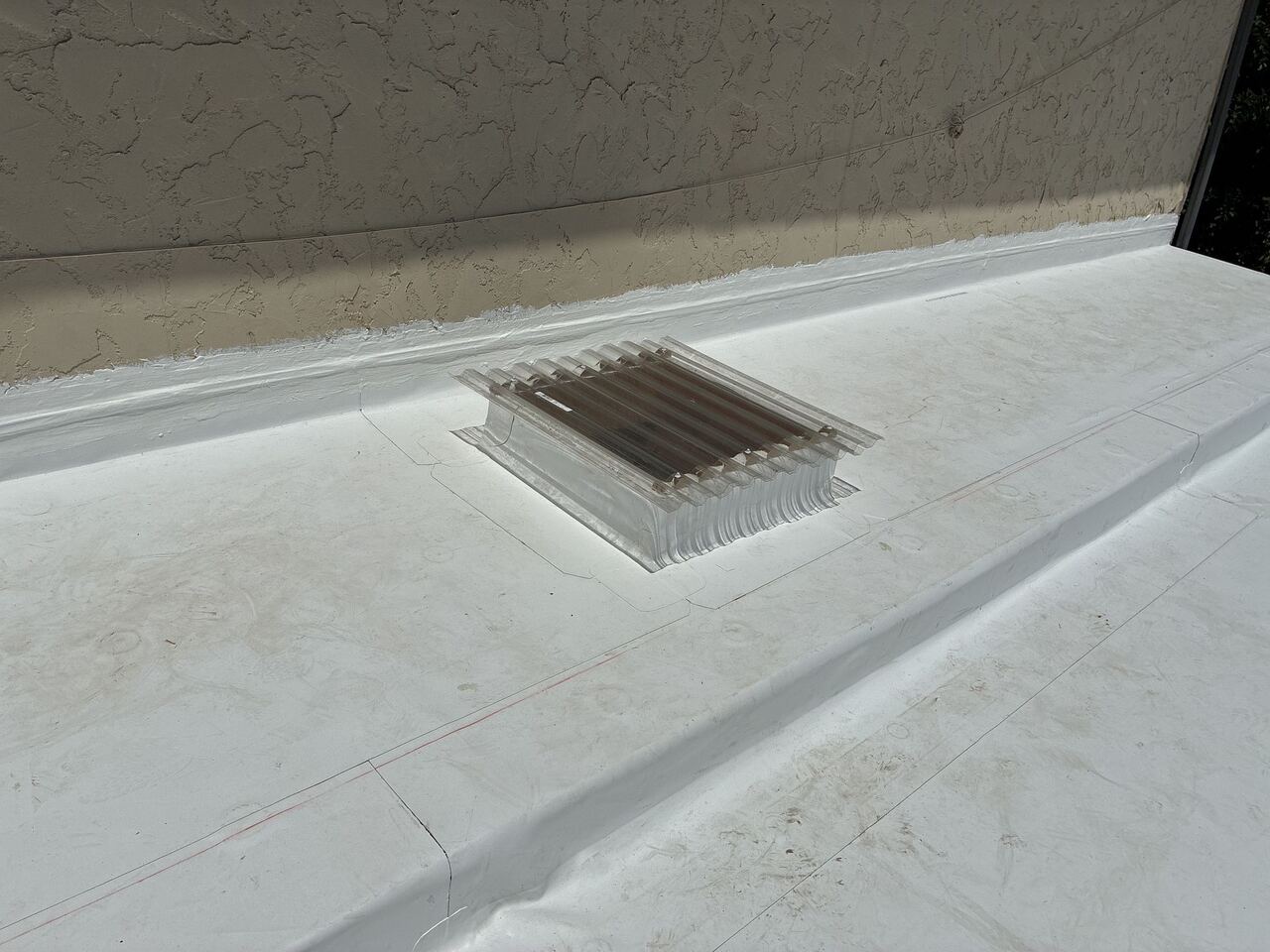
The most common San Francisco leak. Where a low-slope roof meets a parapet or a shared party wall, the flashing and counter-flashing take all the stress. Failures here account for a very large share of the leaks we diagnose in the city.
Blocked Internal Drains and Scuppers
These roofs drain internally rather than to eaves, and a blocked drain has nowhere else to send water. Ponding follows, and ponded water on a marginal seam is only a matter of time. Clearing drains is the highest-value maintenance in the city.
Persistent Moisture and Biological Growth
Constant fog and marine moisture mean these roofs rarely dry out fully. Moss, algae and organic growth accumulate, hold water against the membrane, and block drainage paths — a far bigger factor than anywhere else in the Bay Area.
Access Through Dense Attached Construction
Attached buildings, no side yards, narrow streets and shared walls make staging, material handling and disposal genuinely difficult. It has to be planned, and it is a real component of the cost rather than an afterthought.
Low-Slope Membrane Roofing for a City of Flat Roofs
Why This Works Here
San Francisco does not need a shingle contractor; it needs someone who understands membranes, drainage and parapet detailing. Low-slope work has been a core part of our business since 1952 — commercial, industrial and residential — and the failure patterns on a Sunset District roof are recognizably the same physics as on a warehouse, just at a different scale.
Technical Installation Approach
Torch-applied modified bitumen remains extremely common in the city and for good reason: it is tough, walkable, highly repairable, and its granulated cap sheet handles the weathering and UV that reach these roofs. On repairs and partial replacements to existing mod-bit roofs, matching the existing system is usually the right approach.
Single-ply TPO and PVC are increasingly specified on full replacement. Heat-welded seams are strong and inspectable, and reflective surfaces help with Title 24 compliance. PVC in particular is the correct choice above restaurants and food service, where exhaust grease would degrade TPO — relevant across a great deal of the city's mixed-use stock.
Parapet and wall detailing is where these roofs live or die. Proper base flashing carried up the parapet to adequate height, secured termination bars, real counter-flashing or through-wall detailing rather than a bead of sealant, and correct treatment where the roof meets a shared party wall. We treat that detailing as the primary work rather than as trim around the field.
Drainage comes before membrane. Internal drains and scuppers cleared and correctly detailed, and where an old deck has sagged, tapered insulation added so water runs toward the drain again. And on any coating restoration we verify the substrate is dry first — in a city this damp, coating over saturated insulation is a very real risk.
Expected Longevity & Value
What to expect in the city: torch-down modified bitumen lasts 15–25 years, single-ply TPO or PVC and built-up roofing about 20–30 each, and a silicone coat can add 10–15 years to a roof that is still sound and dry beneath. On the minority of pitched roofs, architectural shingle 25–30 with algae resistance essentially mandatory given the moisture. Drainage maintenance moves these numbers more than material choice does.
San Francisco's Climate
and Your Roof
Cool, damp and windy: San Francisco weather is kind to membranes in one way and hard on them in several others.
Summer Heat & UV
San Francisco summers are cool and frequently foggy — often 60–70°F, with the west side cooler than the eastern neighborhoods. Thermal stress on roofing is the lowest in the Bay Area, which is genuinely good for membranes. UV still reaches exposed surfaces on clear days.
Winter Rainfall
Winters bring roughly 22–25 inches of rain in concentrated storm sequences, frequently with significant wind. Wind-driven rain against parapets and wall transitions is the condition that finds marginal flashing, and it is why those details matter so much here.
Fog, Moisture & Wind
The defining San Francisco conditions. Persistent fog and marine moisture mean roofs rarely dry out fully, driving moss, algae and organic growth that holds water against the membrane and blocks drainage. Wind exposure — especially on the west side and on exposed parapets — drives rain horizontally into details designed for vertical water.
Practical Implications
Keep internal drains and scuppers genuinely clear, treat parapet and wall flashing as the primary detail, remove biological growth before it blocks drainage, verify substrate dryness before any coating, and plan access and staging realistically in dense attached construction.
Where We Work
in San Francisco
Sunset & Parkside
Dense attached homes with low-slope roofs behind false fronts, heavy fog exposure and constant moisture.
Richmond District
Similar attached low-slope stock with strong wind and fog exposure on the western side.
Noe Valley & Castro
Victorian and Edwardian homes with low-slope roofs, some pitched sections, mansards and turrets.
Mission & Bernal Heights
Mixed residential and commercial with substantial low-slope inventory and mixed-use buildings.
SoMa & Potrero
Commercial, industrial and loft buildings with large low-slope roof areas.
Bayview & Southeast
Industrial and warehouse buildings with very large flat roof areas.
How We Handle Roofing
in San Francisco
Permits Through DBI
San Francisco is one city and one county, so the question is not who issues the permit but which kind. Re-roofing goes through the Department of Building Inspection, where a like-for-like job can usually be filed as a no-plan reroofing permit on the PermitSF portal. We file it and meet the inspector.
Drains, Seams and Parapets First
On the roof we test drains and scuppers, probe the seams, and look closely at every parapet and party-wall flashing. Inside, we trace water stains back toward the likely entry point, which is often a long way from where the drip shows up.
Repair or Replace, in Writing
If a targeted repair will do, the written proposal says so. If the membrane is done, it lists the new system, the parapet work and how any wet or rotted deck will be handled, all under one firm price.
Access and Staging Planned Realistically
Attached buildings, no side yards and narrow streets make material handling and disposal genuinely difficult in the city. We plan access, staging and debris removal up front — including coordination with neighbors where it is required — rather than improvising it on the first morning.
Why San Francisco Property Owners
Choose Us
Low-Slope Is Our Core Competency, Not a Sideline
San Francisco is a membrane city. Torch-down, built-up and single-ply work has been central to our business since 1952, and the failure patterns on a Sunset roof are the same physics we deal with on commercial roofs every week.
Parapet and Wall Detailing Done Properly
The great majority of leaks we diagnose in the city are at parapets, party walls and penetrations rather than in the open field. We treat that detailing as the main event, not as trim.
Drainage Solved Before Membrane Goes Down
These roofs drain internally and a blocked drain has nowhere to send water. We clear and correct drainage, and build positive slope where the deck has deflected, before anything goes on top of it.
Credentials You Can Verify
California license #1118418, BBB A+ Accreditation and full insurance, held by a family business that has been roofing since 1952. Building owners in the city get a written scope and a set price before we start.
What We Do
for San Francisco Homes & Businesses
Recent Keith Roofing
Projects