Here is what the current rules actually require, which parts of a re-roof they reach, and how to find out where your own parcel stands before you start collecting bids.
Why the Roof Is the Part of the House Fire Code Cares About Most
Houses in a wildfire are usually not lost to a wall of advancing flame. They are lost to embers — burning fragments carried on the wind, well ahead of the fire itself, that land on whatever surface is available and wait for something to catch. Your roof is the largest, flattest, most exposed surface on the building, and it is also the one that collects a season's worth of pine needles, oak leaves and bark in its valleys and gutters.
That is the whole logic of California's wildfire construction rules. They are not really about surviving direct flame contact. They are about denying an ember somewhere to land, something to burn, and a gap to get through.
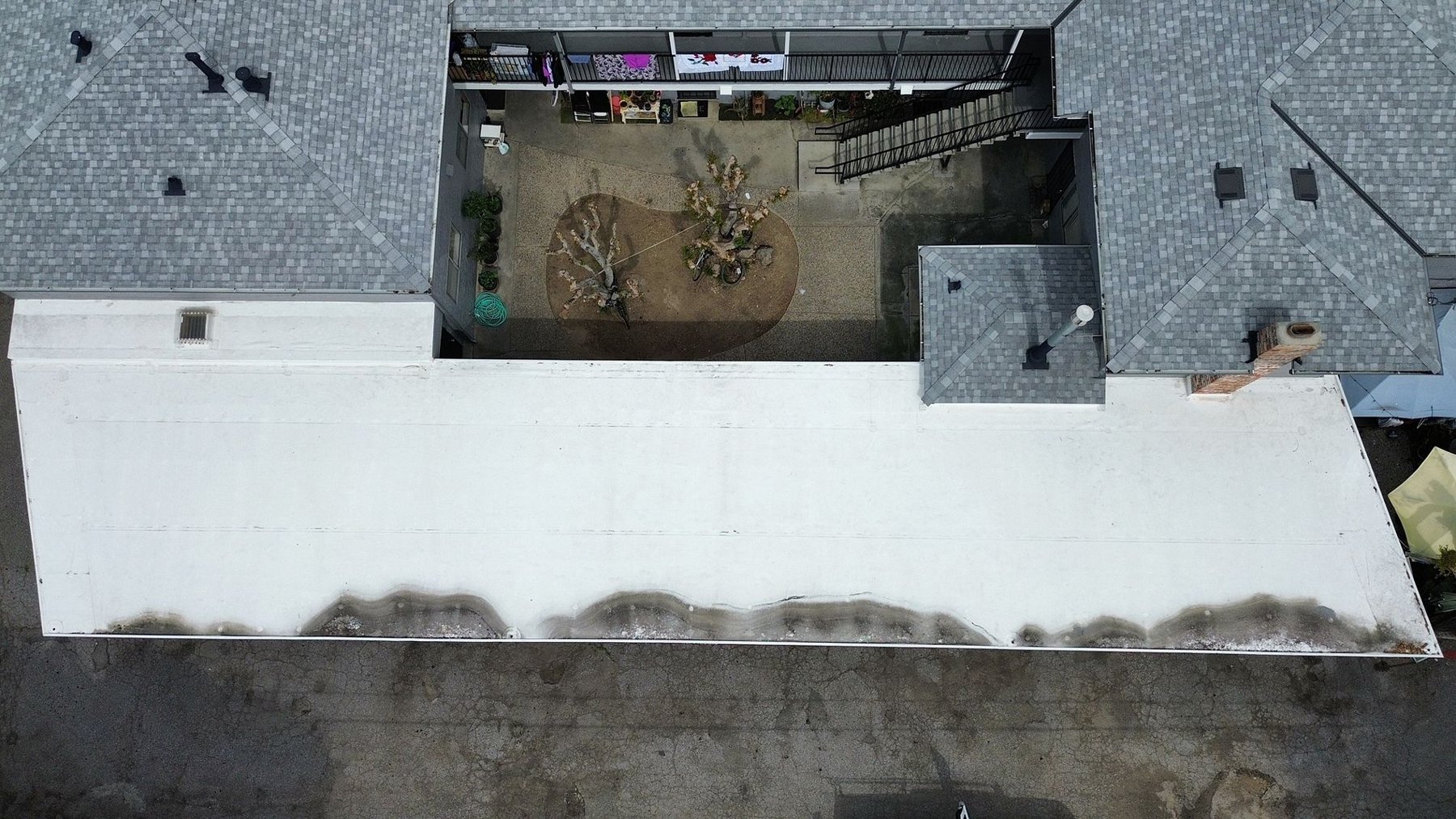
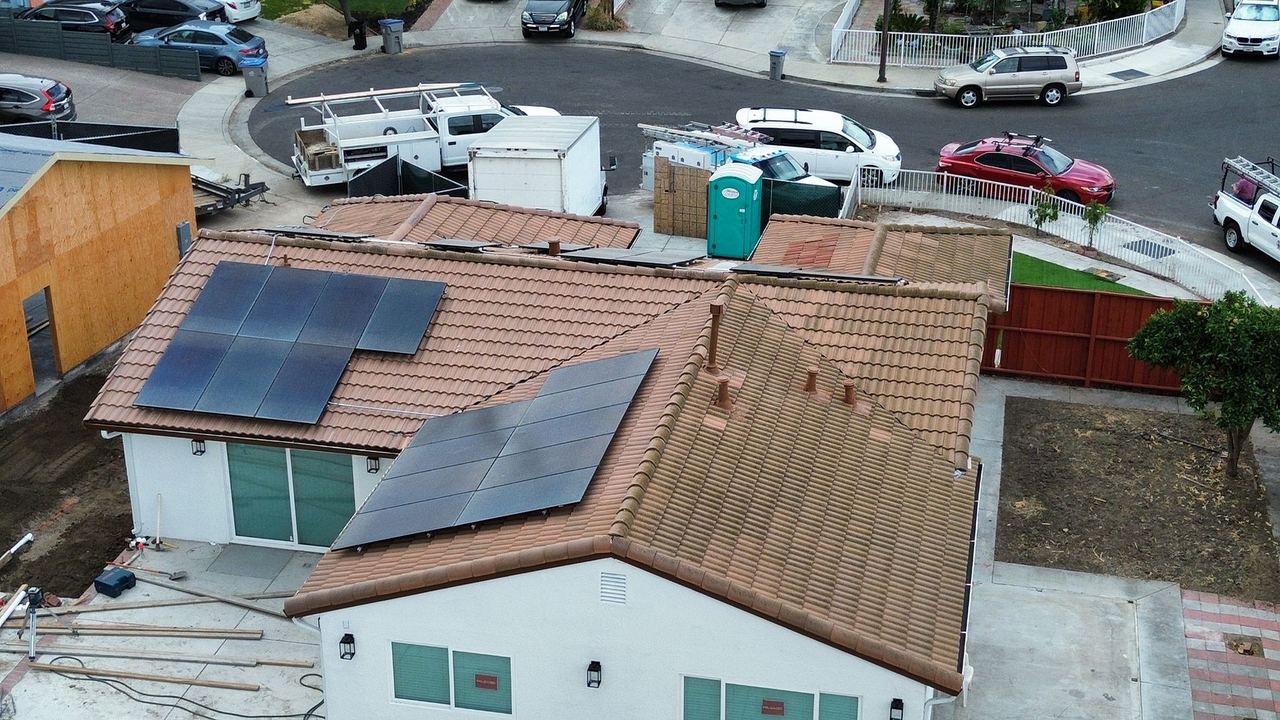
And a fire does not have to reach your property to damage your roof. Last year we repaired a concrete tile roof in Evergreen after a fire at the neighboring house: nothing on this home ever burned, but radiant heat across the property line cracked and melted tiles along the shared side of the roof and compromised the waterproofing beneath them. That Evergreen tile fire damage repair is a good illustration of why dense foothill neighborhoods across San Jose are treated the way they are in the code.
The 2025 Maps Redrew Who This Applies To
Every one of these requirements hangs off a map. If your parcel is inside a mapped Fire Hazard Severity Zone, a set of construction standards attaches to it. If it is not, they do not.
Those maps were redrawn recently. CAL FIRE released updated Fire Hazard Severity Zone maps for Local Responsibility Area land — the land where a city or local fire district, rather than the state, carries wildfire protection responsibility — on February 24, 2025, and jurisdictions were required to make them publicly available and take public comment by June 24, 2025. Santa Clara County adopted its own 2025 maps on that schedule, and the cities inside it did the same.
What actually changed
The significant change is that the Local Responsibility Area maps now carry three classifications — Moderate, High and Very High. Previously, only Very High zones were adopted inside city limits. That means a lot of South Bay parcels picked up a designation in 2025 that they had never carried before.
A second detail worth knowing: a city may expand or increase a zone if it believes local conditions warrant it, but state law does not permit it to shrink one. So the map your building department works from is at least as strict as CAL FIRE's, never less.
Do not assume what a designation triggers
This is where it pays to ask rather than guess. A zone designation can carry building standards, defensible space obligations, seller disclosure requirements, or some combination — and which of those applies depends on the zone class and on whether the parcel sits in State Responsibility Area or Local Responsibility Area land. Construction standards have historically attached to all zone classes in State Responsibility Area land and to Very High zones inside city limits, and that boundary has been under active revision alongside the new maps.
The reliable move is to look your parcel up on the Fire Hazard Severity Zone map published by your city or by the County of Santa Clara, and then ask the building division that will issue your re-roof permit what that designation means for your specific job. That is a phone call, and it settles the question in a way that no article can.
What Changed on January 1, 2026
Until recently, California's wildfire construction rules lived in three places at once: Chapter 7A of the California Building Code, Section R337 of the California Residential Code, and Chapter 49 of the California Fire Code. Contractors quoted whichever one they had learned first, and homeowners trying to read up got three overlapping answers.
The 2025 Title 24 cycle fixed that. Those provisions were consolidated into a single new code — the California Wildland-Urban Interface Code, Title 24, Part 7 — which took effect for building permit applications submitted on or after January 1, 2026. Applications filed before that date are still reviewed under the previous cycle.
The technical requirements carried across largely unchanged. This was a reorganization, not a rewrite, and a roof that would have complied in 2024 almost certainly still complies. What changed is the citation. San José has adopted its own amended edition of the code, so if a bid you are reading cites "Chapter 7A," it is citing a chapter that no longer exists — which is not automatically a red flag, but it is worth a question. Our guide to hiring a roofing contractor in San Jose covers the rest of the verification checklist.
Class A Is a Test Result, Not a Material
The core requirement is one sentence. Section 504.2 of the code: "Roofs shall have a roof assembly that complies with a Class A fire classification when tested in accordance with ASTM E108 or UL 790."
Read that carefully, because the important word is assembly. ASTM E108 and UL 790 do not test a shingle or a tile in isolation. They test the whole stack — covering, underlayment, deck, and anything in between — as an installed system, and the rating belongs to that combination. Swap the underlayment for something cheaper and you may no longer have the listed assembly you were told you were buying.
What this means by material
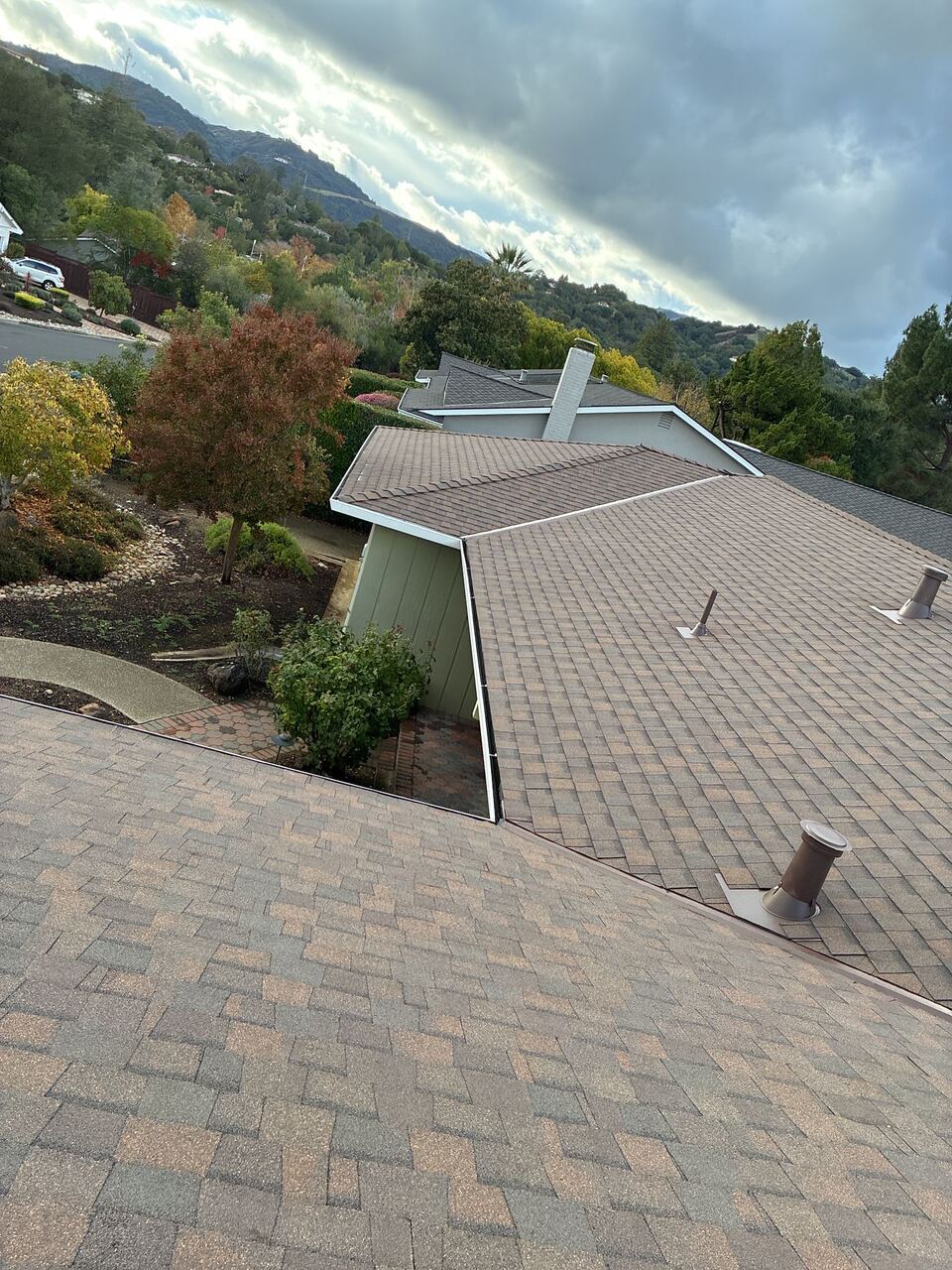
In practice, most fiberglass-mat architectural asphalt shingles sold in California are marketed as part of listed Class A assemblies, and the manufacturer publishes exactly which underlayments and decks the listing covers. Our shingle roofing page walks through the systems we install.
Concrete and clay tile are noncombustible, which is genuinely an advantage — but "the tile does not burn" is not the same statement as "the assembly is Class A." The code has specific things to say about what goes under and around tile, which is the subject of the next two sections, and it says them precisely because the tile itself was never the weak point. If you are weighing materials generally, our comparison of asphalt shingle and concrete tile covers the rest of the trade-offs, and the tile roofing page covers how we handle tile specifically.
The practical instruction for a homeowner is short: ask a bidder to name the listed assembly and the underlayment that goes with it, in writing. A contractor who works in these zones will have that answer immediately.
The Trigger Most Homeowners Miss
Nobody expects a code that governs new construction to reach an existing house. This one does, through Section 507.1, and it does so in two separate ways.
First, the 50 percent rule. When 50 percent or more of a roof covering is replaced within any 12-month period on an existing building, the new materials must meet current standards. Not the standards in force when the house was built — the standards in force now.
Second, and more surprising: the alteration clause. Section 507.1 also provides that all portions of a roof covering applied during an addition, alteration or repair to an existing structure shall meet at least a Class A fire classification. In a covered area, in other words, there is a floor under even a partial job. You cannot patch a mapped-zone roof back down to something lesser.
One consequence is worth planning around. Splitting a re-roof into two halves eleven months apart does not avoid the 50 percent threshold — the code measures a rolling 12-month window, and the alteration clause applies to each half regardless. If the roof needs replacing, our roof replacement page describes how the job actually runs; if it needs a targeted fix, roof repair is usually the cheaper and entirely legitimate answer. What does not work is treating the code as something you can schedule your way around.
Tile Roofs: Where the Details Actually Live
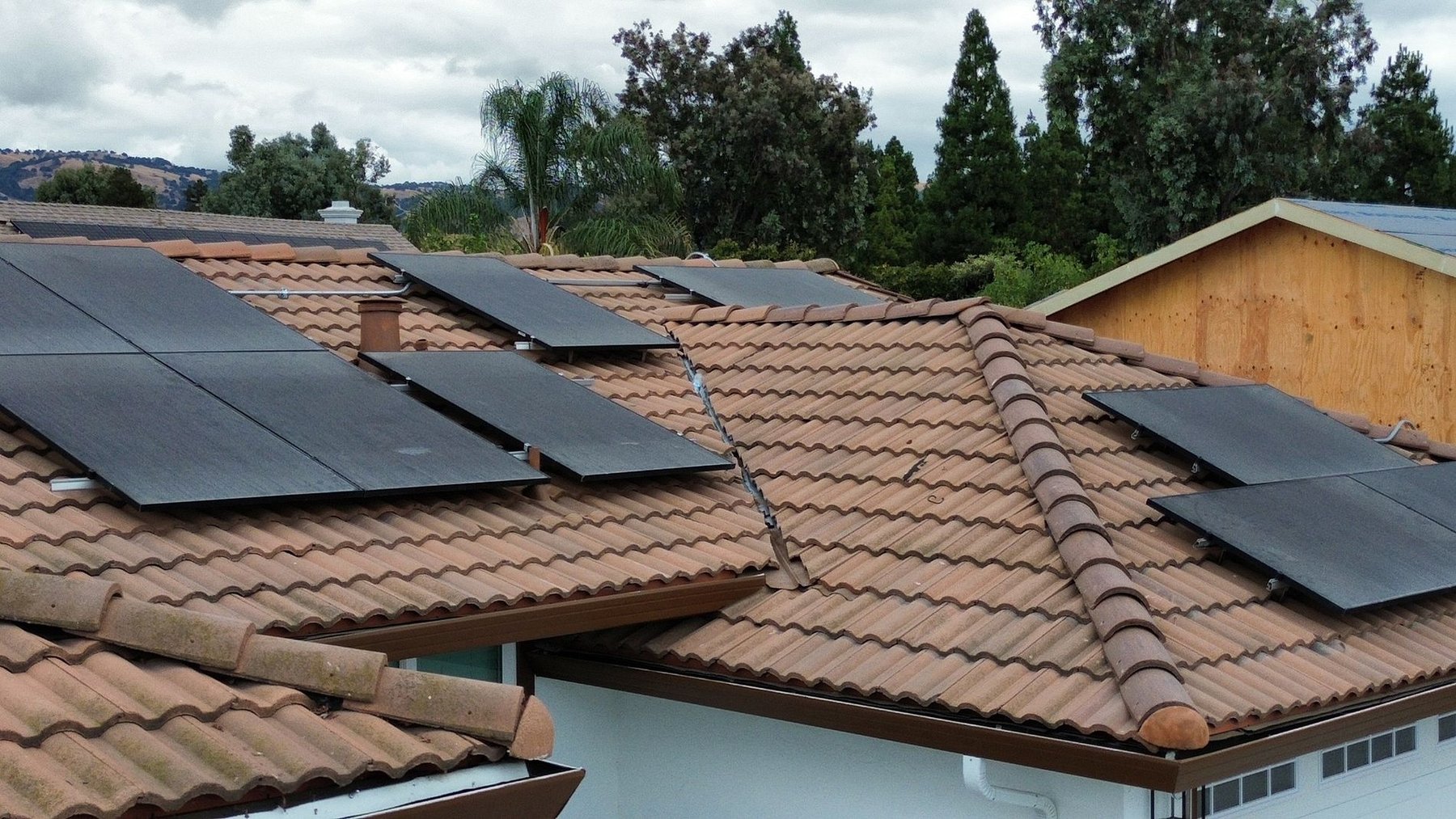
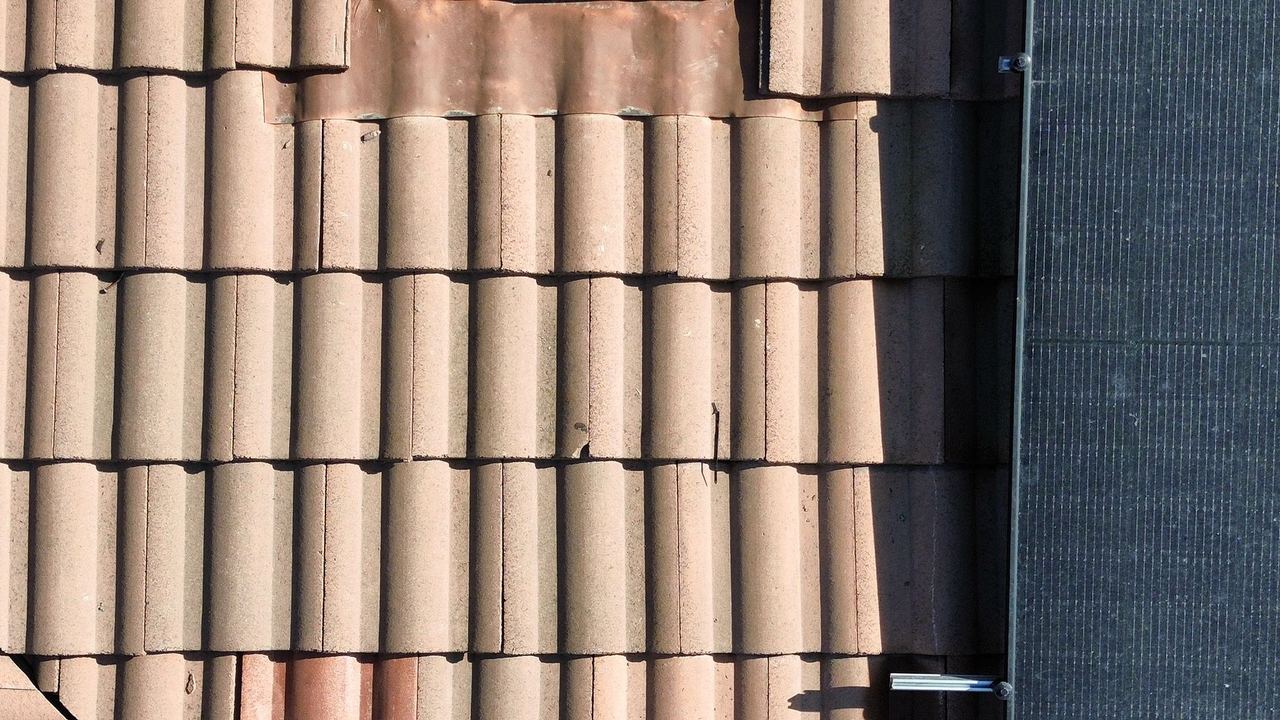
Profiled tile — barrel, S-tile, Mission — is everywhere in the South Bay, and it creates an open cavity at every eave and along every hip and ridge line. Left alone, that cavity is a covered, ventilated space full of dry debris with a direct path to the deck. The code addresses it directly.
Where an airspace exists under the roofing material over a combustible deck, Section 504.2.1.1 requires a 72-pound cap sheet complying with ASTM D3909 beneath the tile; it requires that "bird stops shall be used at the eaves where the profile fits, to prevent the entry of debris at the eave"; and it requires that "hip and ridge caps shall be mudded in to prevent intrusion of fire or embers."
Why a lift-and-relay is the moment to get this right
None of those three items is expensive while the tile is off the roof. All three are expensive afterwards. That makes a lift-and-relay — where the original tile is removed, inventoried, and relaid over new underlayment and flashings — the natural point to bring an older tile assembly up to current standards, because the work is already open.
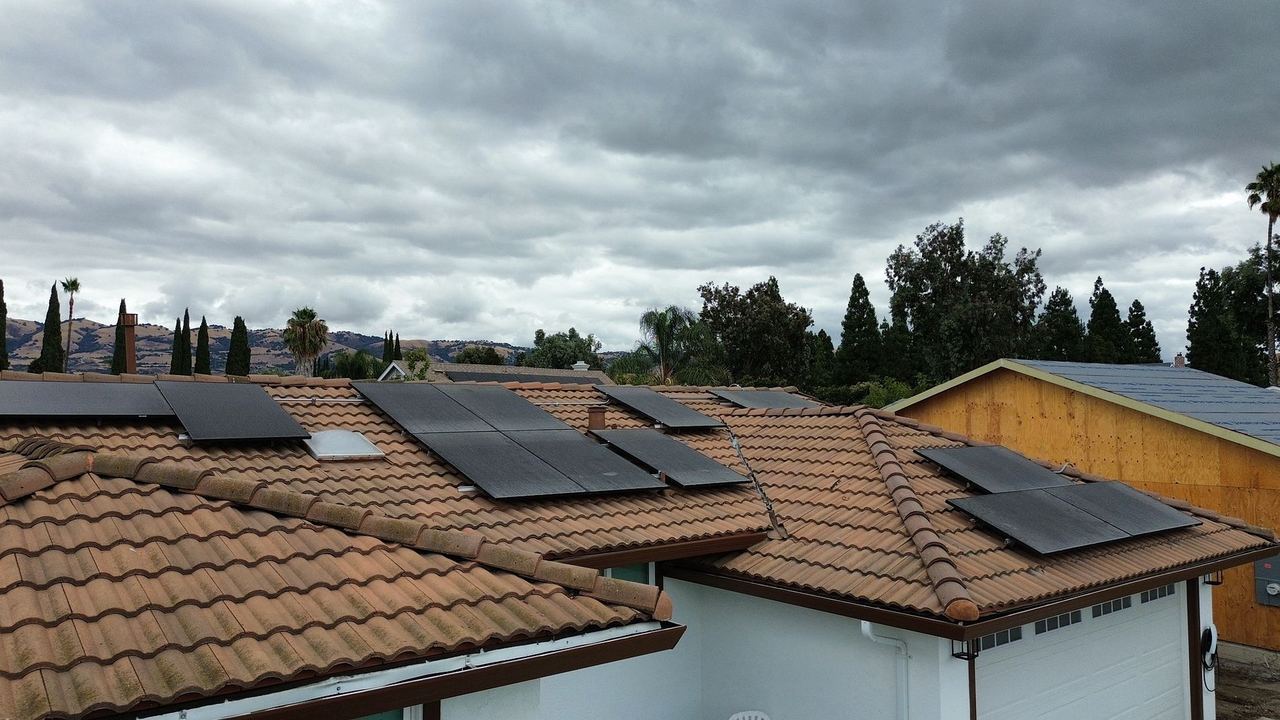
We did exactly that job on a 1982 hillside home in Almaden Valley: the Monier Lifetile was still structurally sound at 42 years old, but the underlayment beneath it had aged well past its design life. The Almaden lift-and-relay project preserved the original tile and replaced everything under it — which is both the cheaper outcome and, in a mapped zone, the compliant one.
Valleys Collect Whatever the Wind Brings
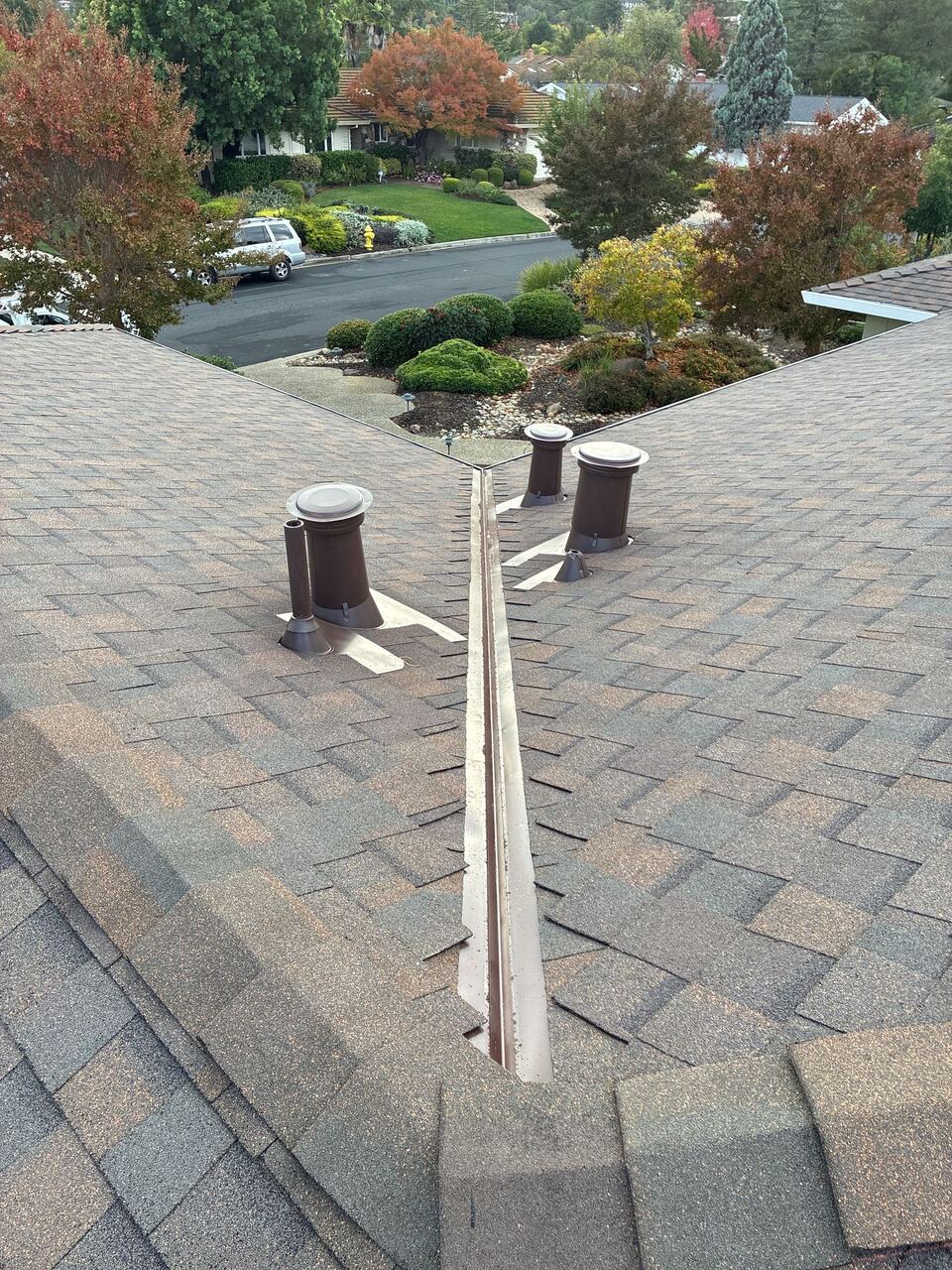
A valley is the low seam where two roof planes meet, and it is where every needle, leaf and piece of bark that lands on the roof eventually ends up. Under oaks in the Almaden foothills or pines above Saratoga, a valley can hold a surprising volume of tinder by the end of a dry summer.
Section 504.2.2 sets the standard: valley flashings of at least 0.019-inch corrosion-resistant metal, installed over a 36-inch-wide underlayment consisting of a 72-pound mineral-surfaced cap sheet complying with ASTM D3909, running the complete length of the valley.
That is worth knowing before you read bids, because an open metal valley over a heavy cap sheet costs more in labor and material than a woven or closed-cut valley made from the field shingles. If one bid is meaningfully cheaper than another on a mapped-zone roof, the valley detail is one of the first places to look for the difference.
Gutters Are Part of the Fire Code Now
Most homeowners think of gutters as a drainage question. In a mapped zone they are a fire question too. Section 504.4 requires that gutters and downspouts be constructed of noncombustible material, and that gutters be provided with an approved means to prevent the accumulation of leaves and debris.
Two practical consequences. Vinyl gutters do not qualify — aluminum, steel and copper do, which is what we install anyway. And gutter guards move from a convenience item to a code item, which changes the arithmetic on whether they are worth it.
Guards reduce debris; they do not eliminate it, and a guarded gutter still needs looking at. Restoring a neglected drainage system was part of the scope on our Saratoga fire damage repair, alongside the shingle tie-in itself. If your gutters are original, undersized, or plastic, our seamless gutter page covers the options, and an annual clean-out is the cheapest line item in roof maintenance by a wide margin. Homes across Saratoga and Los Gatos sit under enough tree canopy that this is not optional maintenance.
Outside the Mapped Zones, It Is Still Not "Anything Goes"
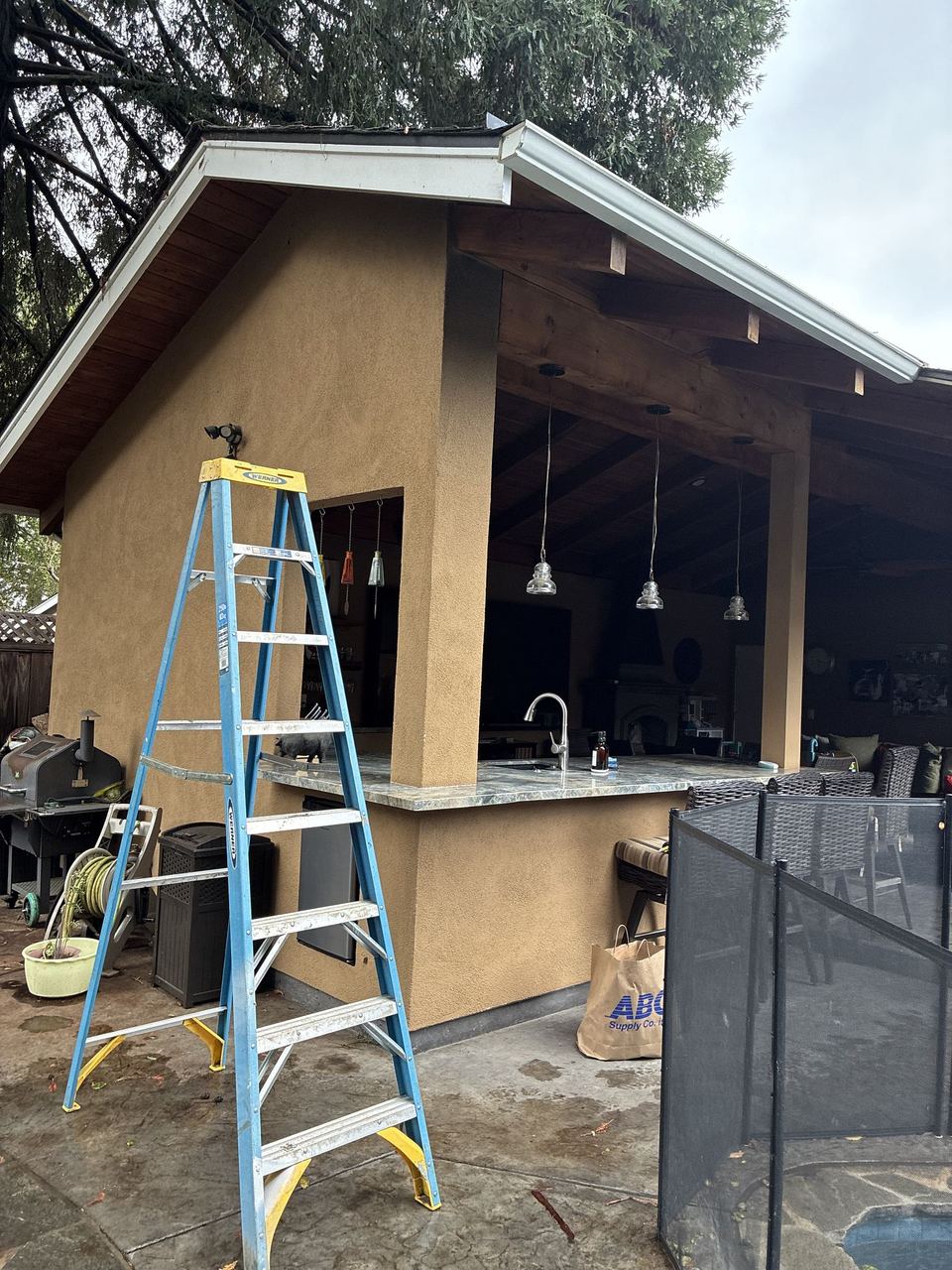
If your parcel carries no Fire Hazard Severity Zone designation, the wildfire code does not apply to you. A statewide minimum still does.
Section R902.1.2 of the California Residential Code requires that every new structure — and every existing structure where more than 50 percent of the total roof area is replaced within any one-year period — carry a roof covering of at least Class C fire classification. In practice essentially everything sold for a Bay Area house clears that bar, so this rarely constrains a material choice. The point worth carrying away is that the 50-percent-in-12-months trigger exists statewide, not only in the hills.
And keep the two Title 24 conversations separate in your head. Part 7 is the wildfire code discussed here. Part 6 is the energy code, which is where cool-roof reflectance requirements live, and it has its own triggers and its own exemptions. A San Jose re-roof can easily engage both, neither, or one and not the other. Our guide to California Title 24 cool-roof requirements covers that half of the picture.
Repairs, Lift-and-Relays and Partial Jobs
Three scenarios come up constantly on South Bay foothill homes, and they land differently under the code.
A targeted repair
Failed flashing at a chimney, a cracked pipe boot, a handful of broken tiles. Small, local, and usually the right answer. Just remember that in a covered area, whatever covering goes back on has a Class A floor under Section 507.1 — a repair is not a code holiday.
A lift-and-relay
The original tile comes off and goes back down over a new underlayment and new flashings. Because the covering is being reapplied, this is the moment the eave, hip, ridge and valley details described above get addressed, and the moment they are cheapest to address.
A partial tie-in after damage
Fire, a fallen limb, a neighbor's fire radiating across a property line. The work has to meet the standard and it has to disappear visually into the surrounding roof, which is a harder combination than it sounds — weathered tile and weathered shingle do not match fresh stock without deliberate effort. Both our Evergreen and Saratoga fire repairs were exactly this problem.
In all three cases the useful first step is the same: find out what you have. A roof inspection with photographs and a written assessment tells you what condition the assembly is in and what a compliant scope would involve — and it is the same document your insurer is increasingly likely to ask for, which we covered in our guide to roof age and home insurance in San Jose.
What About Zone 0?
You have probably read about Zone 0 — the "ember-resistant zone," the first five feet measured out from the walls, decks and attachments of a house, kept clear of anything that can catch. It has had a lot of coverage, and it is worth being precise about its status.
As of mid-2026, the statewide Zone 0 rule is still a draft. The Board of Forestry and Fire Protection has circulated successive versions, most recently in spring 2026, with a phased, education-first approach — but it has not been adopted as a statewide requirement. Some California cities have adopted their own local ordinances ahead of the state, so it is worth checking locally rather than assuming either way.
For roofing purposes the distinction matters less than it looks. Zone 0 is about the ground and the base of the wall, not the roof covering. The two places it touches your roof are the ones already worth attending to: debris in the gutters, and what is stored underneath the eaves. Neither needs a regulation to justify it.
How to Find Out Where You Stand
Four steps, in order, before you sign anything:
1. Look up your parcel on the Fire Hazard Severity Zone map published by your city or by the County of Santa Clara. Santa Clara County Fire Department publishes the Local Responsibility Area maps for the cities it serves, and the San José Fire Department publishes the city's.
2. Call the building division that will issue the permit and ask what your designation triggers for a re-roof specifically. This is the answer that actually governs your job.
3. Ask every bidder to name the listed Class A assembly and the underlayment it depends on, in writing, on the proposal.
4. If the roof is tile, get the details in writing too — birdstops at the eaves, mudded hip and ridge caps, the cap sheet, and the valley construction. These are the items that separate a compliant roof from one that merely looks finished.
Keith Roofing Company has been roofing the South Bay since 1952, and a great deal of that work has been on the foothill edges of San Jose — Almaden, Evergreen, and up into Saratoga and Los Gatos — where these rules actually bite. If you are trying to work out what a compliant re-roof looks like on your house, schedule a free estimate or call (408) 295-8616, and if the timing is the hard part we can walk you through financing options as well.
Frequently Asked Questions
Need professional help with your roof? Keith Roofing Company has been serving San Jose and the South Bay since 1952. We offer free estimates, honest recommendations, and work that's backed by BBB A+ Accreditation and CSLB License #1118418. Schedule a free estimate or call (408) 295-8616.