We work on both sides of that line. Sometimes our client is an HOA board replacing every roof in a complex. Sometimes it is one owner with a stain spreading across a bedroom ceiling who can't get a straight answer about who is responsible. This guide is for the second person. It covers what California law says by default, why condos and townhomes often come out differently, what to do in the first two days of a leak, and how to get it fixed without waiting until the next board meeting while the drywall soaks. It is general information, not legal advice. Your governing documents control, and a dispute over them is a question for an HOA attorney.
First Question: Whose Roof Is It?
Every common interest development divides the property into pieces, and the roof belongs to one of them. Whose job the repair is depends on which piece the roof falls into, and on what the development's recorded declaration (the CC&Rs) says about maintaining it. There are three categories that matter:
Your separate interest. The part you own outright. In a condominium that is usually the airspace of your unit and not much of the structure around it. In many planned developments it is the lot and the building standing on it, roof included.
Common area. Everything owned in common or by the association. In most condo projects this includes the roofs, exterior walls and structure.
Exclusive use common area. Common area set aside for one owner's use, such as a balcony, a patio or a carport space. Some roof components fall into this category.
Before you call anyone, find out which of these your roof is. The answer decides who hires the roofer, who pays for the work, and who has to approve it.
What California Law Says by Default
California's Davis-Stirling Common Interest Development Act sets default maintenance rules in Civil Code section 4775. Every one of them begins with "unless otherwise provided in the declaration," so your CC&Rs can and often do change them. The defaults are:
The association repairs, replaces and maintains the common area. If your roof is common area and your CC&Rs don't say otherwise, the roof is the HOA's job.
Each owner repairs, replaces and maintains their own separate interest. If the roof is part of what you own, it is yours to look after.
Exclusive use common area is split. The owner maintains it, and the association repairs and replaces it.
The same section contains a provision owners tend not to expect: the cost of temporary relocation while the association repairs an area it is responsible for is borne by the owner of the affected unit. On most roof jobs nobody has to move out. But if a leak has made your unit unlivable and the HOA's fix will take a while, know from the start that a hotel stay is not automatically the association's bill.
Condo vs. Townhome: Why the Answer Often Flips
"Condo" and "townhome" describe a building's shape, not its legal structure. A two-storey attached home with its own front door can legally be a condominium. A detached house on a small lot can be part of a planned development with an HOA. What decides roof responsibility is the legal structure, and your title documents and CC&Rs tell you which you have.
In a condominium project, owners usually own their units and a share of everything else. The roof is usually common area. Unless the CC&Rs move it onto owners, a roof leak over your unit is typically the association's to fix and the association's to pay for, as part of the shared budget.
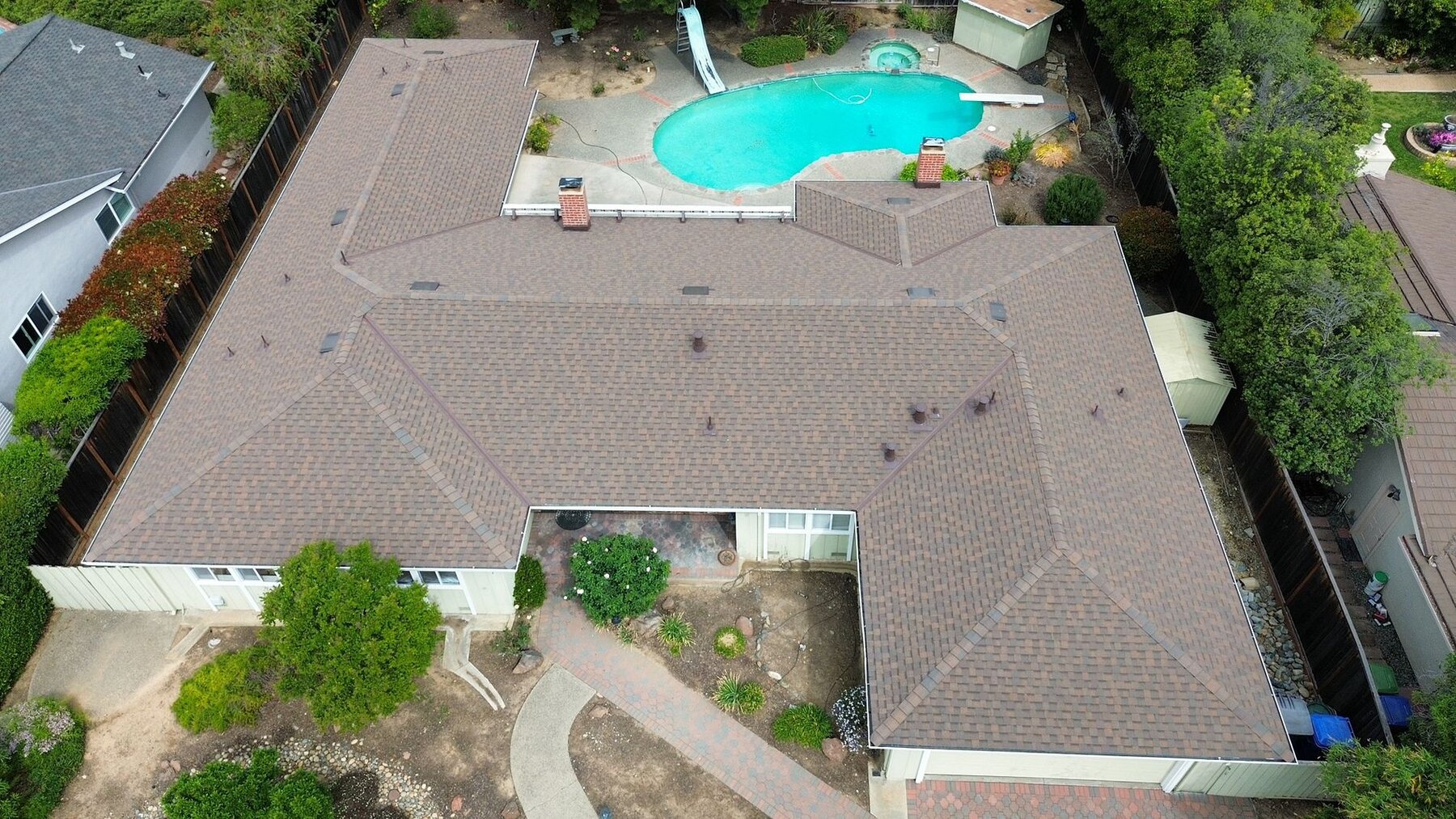
In a planned development, which is how many South Bay townhome rows and small-lot communities are set up, owners usually own their own lot and the structure on it, so the roof over your section can be your separate interest. Two things are common. In some communities the owner does look after their own roof. In others the CC&Rs have the association take on exterior maintenance, roofs included, to keep the whole complex consistent and on one replacement cycle. Both arrangements are normal, and the only way to know which you have is to read the documents.
That is why neighbours in two otherwise identical-looking complexes on the same street can get completely different answers to the same question.
Reading Your CC&Rs for the Roof
You don't need to read the whole declaration. Look for these sections, and when a provision is unclear, ask your property manager to show you the answer in writing:
The definitions section. How "unit," "lot," "common area" and "exclusive use common area" are defined, and whether the roof, the roof deck and the rafters are named in any of them.
The maintenance section, often laid out as a table. Many newer declarations include a responsibility chart listing components (roof covering, gutters, skylights, chimneys, rooftop equipment) and who handles each. When one exists, it is the fastest answer you will get.
Anything on skylights, solar and rooftop equipment. Even where the roof is common area, items an owner added are often the owner's responsibility, and so is the damage their installation causes.
The architectural review section. This tells you what needs approval before work can start, and how to apply for it.
If your community has a management company, it should be able to tell you quickly which way your documents read. If it can't, or the answer it gives doesn't match the text, that is worth raising with the board in writing.
When It Leaks: The First 48 Hours
Whatever the documents say, the first steps are the same, and doing them well makes everything after easier.
Protect the inside of your unit. Buckets, towels, moving furniture and electronics, and a small hole in a bulging ceiling to let water drain in a controlled way. These are interior steps inside your own home, and nothing about the HOA stops you taking them. Our guide to what to do when your roof is leaking walks through them in order.
Report it to the association in writing, the same day. Email the property manager or the board, with photos and the time it started. A phone call helps, but the email is the record. If you later need to show the association knew about the leak and when, that message is it.
Document before anything is disturbed. Photograph the ceiling, the walls, the flooring and anything damaged, with something in the frame for scale. Take more photos as it changes.
Don't send a roofer onto a common-area roof without permission. This is where owners get into trouble with the best intentions. If the roof belongs to the association, work you commission on it can breach your CC&Rs, may not be reimbursed, and can complicate any warranty on the existing roof. Ask the association to authorize emergency work, or to send its own roofer, and put the request in writing. Most boards and managers will move quickly on an active leak. When one doesn't, your written request and its date matter.
If the roof is your own, as in many planned developments, you can call a roofer the same way any homeowner would. Our roof leak repair team can get the leak stopped first and then work out the permanent fix.
The Roof vs. the Damage Inside
Owners tend to treat "who fixes the roof" and "who pays for my ceiling" as the same question. They are two questions, and they often have different answers.
The roof repair follows the maintenance rules above. Damage inside the unit, such as drywall, paint, flooring, cabinets and belongings, is usually decided by the CC&Rs together with two insurance policies: the association's master policy and your own unit-owner policy. Some declarations say how interior damage from a common-area failure is handled. Many leave it to the insurance.
A roofer can't tell you who pays for the inside. What we can do is give you and the association an accurate written account of what failed, where the water got in, and how long it has probably been happening. That document is what adjusters, managers and boards need to sort out the rest, and it is worth asking for whoever ends up hiring the roofer. We write about how insurers look at roofs in our guide to roof age and home insurance in San Jose.
Shared Roofs Leak at the Seams Between Owners
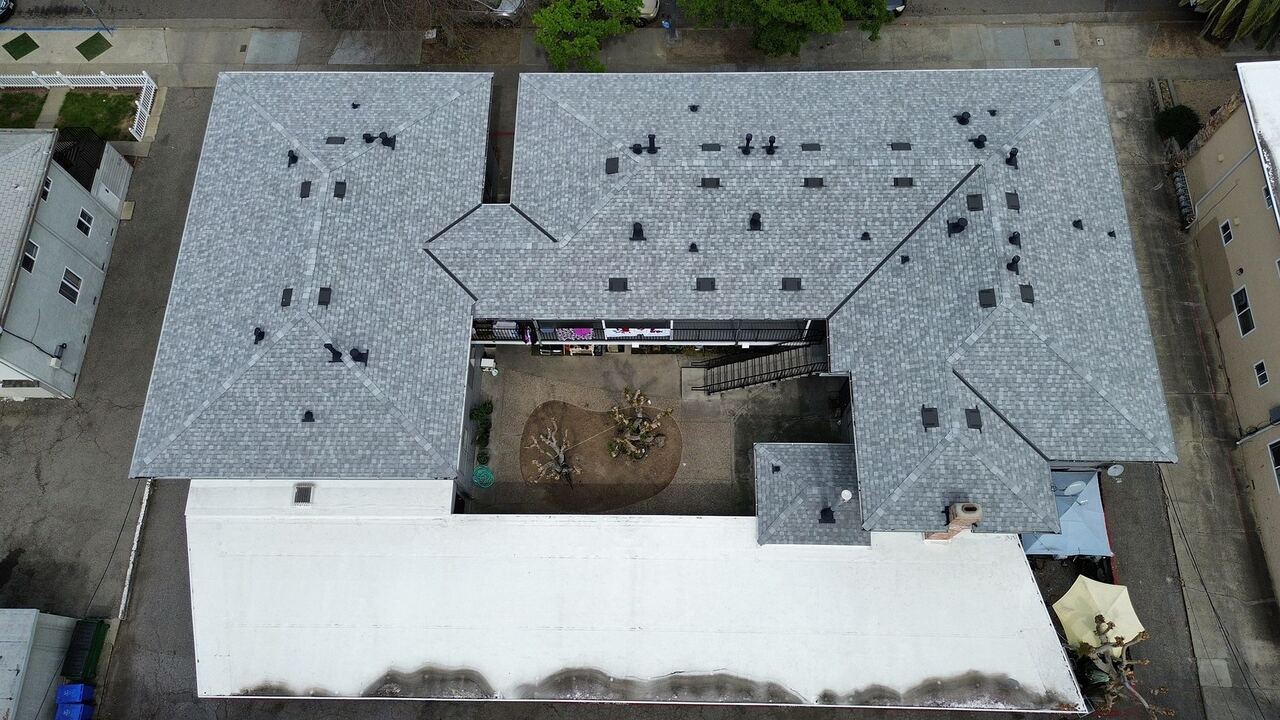
In a row of townhomes or a condo building, roofs rarely stop neatly at the property line. One continuous roof plane may cover three units. A valley between two buildings may drain across a third. Gutters run the full length of a building and discharge at one end. Water that enters over one unit often travels along a rafter or a party wall and shows up in the unit next door.
That has two practical consequences. First, the stain in your ceiling may not be coming from the roof directly above you, so a diagnosis has to trace the water path rather than assume it. Second, a repair at the boundary between two sections has to be tied into both sides properly, which is hard to do when only one owner has authorized the work.
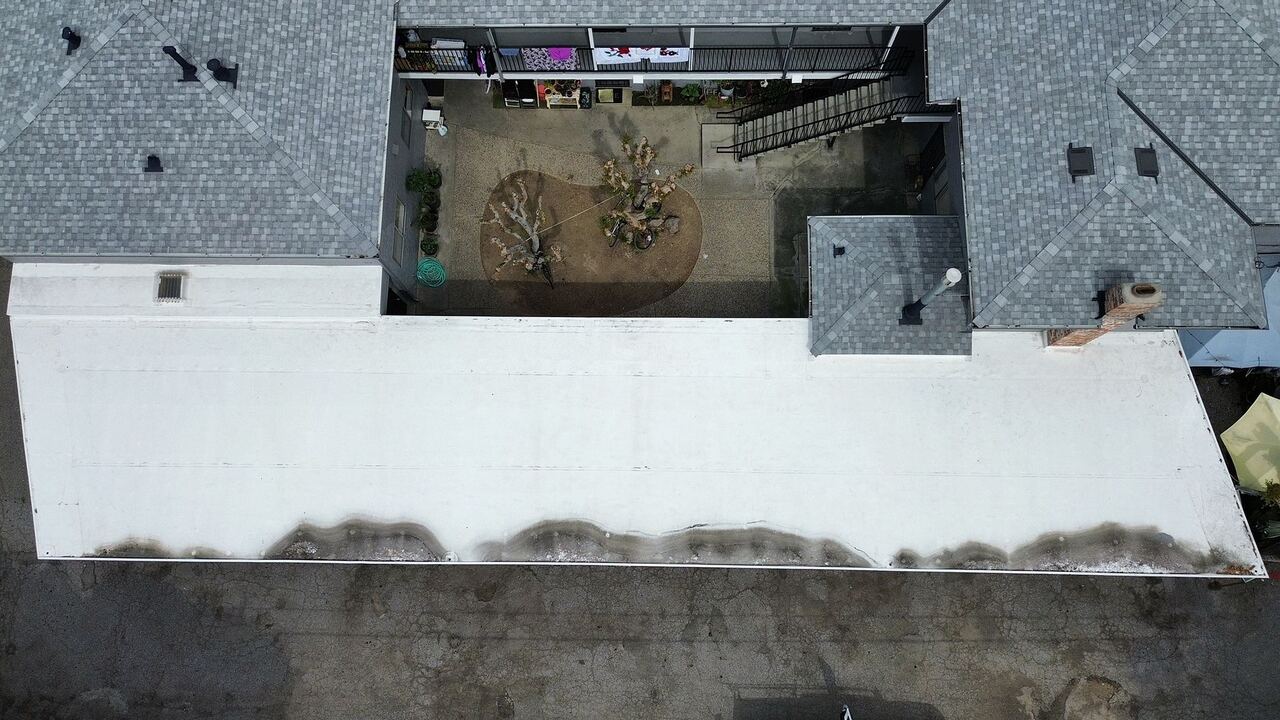
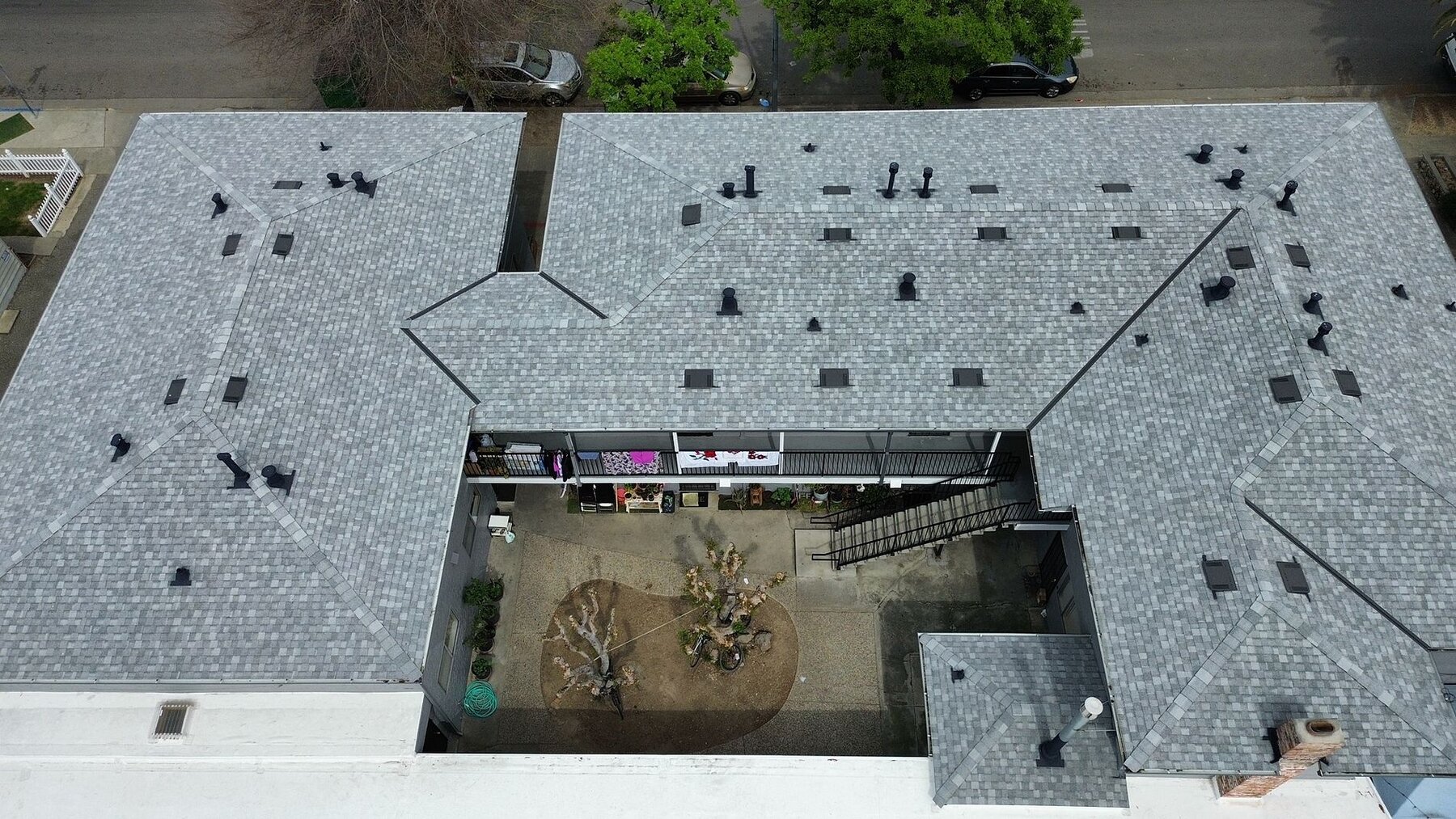
The San Jose apartment building re-roof is a good example of how multi-unit roofs hide water. The building had an inlaid gutter built into the fascia, a common detail on that era of South Bay multi-family construction. Water had been leaking into the fascia cavity for years, and the dry rot was extensive by the time the roof was opened. The fix was to eliminate the inlaid gutter entirely and replace it with a new external seamless gutter system. If your complex has those built-in gutters and ceilings are staining along the exterior walls, they are a likely suspect.
Replacing Your Own Section in a Townhome Row
In communities where each owner is responsible for their own roof, sections get replaced at different times, and the result can look like a patchwork. Several things make it go better:
Get architectural approval first. Most CC&Rs require approval for exterior changes, and roofing material and colour are almost always on the list. California law (Civil Code section 4765) requires the association's review process to be fair, reasonable and prompt, and requires the decision to be made in good faith and in writing. If the application is turned down, the written decision has to explain why and describe how to ask the board to reconsider. Build the approval time into your schedule, and have your roofer supply the product data sheets and colour samples the committee will ask for.
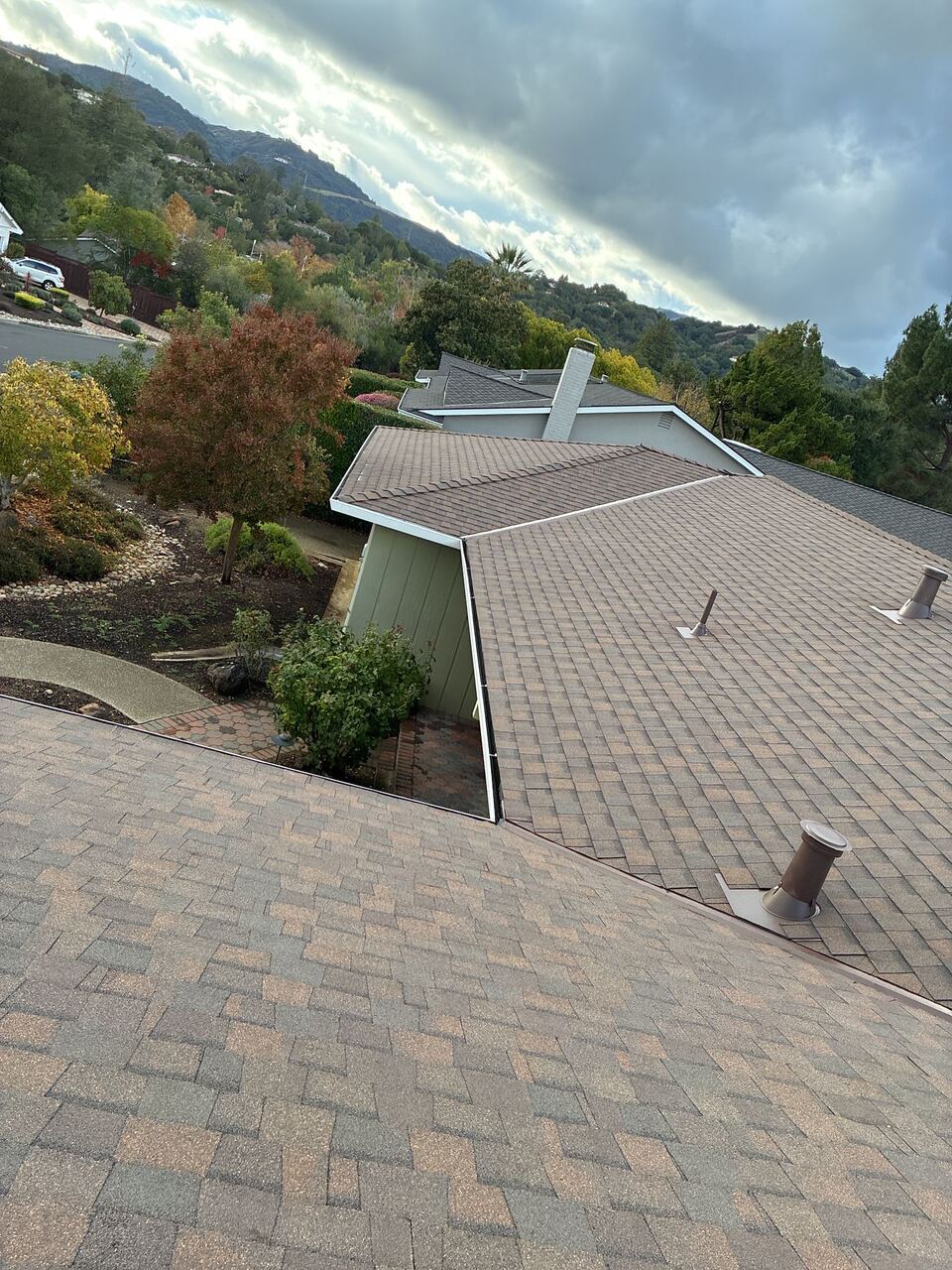
Match what is there, or what the association has adopted. Many communities choose an approved shingle line and colour so that sections replaced over a decade still look like one building. Ask whether yours has one before you pick a product.
Plan the tie-in with your neighbours' roofs. The line where your new roof meets a neighbour's old one needs flashing and underlayment laps that protect both sides. A good roofer will tell you how that joint will be built and what condition the neighbouring roof is in at the edge. Telling your neighbours what you're doing, and when, heads off most of the friction.
Mind the permit and the energy code. A re-roof in San Jose is permitted work whether it covers one unit or twelve, and California's energy code applies to re-roofing. Your roofer should handle both. Our guide to hiring a roofing contractor in San Jose covers what to check before you sign.
Reserve Studies and When the HOA Re-Roofs
If the roofs are the association's responsibility, when they get replaced is driven largely by the reserve study. Under Civil Code section 5550, if an association is responsible for major components, its board must have a visual inspection of those components carried out at least once every three years as part of a reserve study, and must review the study every year. The study lists each component with a remaining useful life under 30 years, estimates what it has left and what it will cost, and sets out a funding plan.
For an owner, that has two uses. The reserve study, which owners can generally request, tells you roughly when the association expects to replace the roofs and whether the money is there. And if your roof is clearly failing well ahead of the study's estimate, that is useful evidence to bring to the board. Service-life estimates are averages. A roof under a big oak, on a hot south-facing slope, or with poor attic ventilation can fall well short of them. Our San Jose roof lifespan guide explains what shortens a roof's life in this climate.
A roofer's written condition assessment can help a board decide whether a leaking building needs a repair now, a phased replacement or a bump up the reserve schedule. We prepare that kind of documentation routinely as part of our multi-family and HOA reroof service, and a roof inspection is where it starts.
Working With the Board, Not Against It
Most HOA roof disputes we see aren't really about the law. They start with a leak that nobody wrote down, a roofer who went up without authorization, or a board that couldn't tell whether a problem was one unit's or the whole building's. A few habits prevent most of that:
Put everything in writing, from the first report to the final sign-off.
Ask for the roofer's findings in writing too, with photos, whoever hired them.
Distinguish an active leak from a long-term problem. Boards can usually approve an emergency repair quickly. Replacement decisions take a meeting, a bid process and sometimes a vote on money.
Offer information, not demands. A board handed a clear, documented condition report tends to act faster than one handed a complaint.
Keith Roofing Company has worked on San Jose roofs since 1952, including single townhome sections, full condo complexes and multi-building apartment properties. Whether you're an owner trying to find out what is causing a leak or a board planning a re-roof, schedule a free estimate or call (408) 295-8616.
Frequently Asked Questions
Need professional help with your roof? Keith Roofing Company has been serving San Jose and the South Bay since 1952. We offer free estimates, honest recommendations, and work that's backed by BBB A+ Accreditation and CSLB License #1118418. Schedule a free estimate or call (408) 295-8616.