The good news is that the list of things worth doing before then is short, mostly cheap, and largely predictable — we have been running the same list on San Jose roofs since 1952. Here is what to clear, what to check yourself, what genuinely needs a roofer, and the order to do it in.
The Roof Work That Should Happen Before October
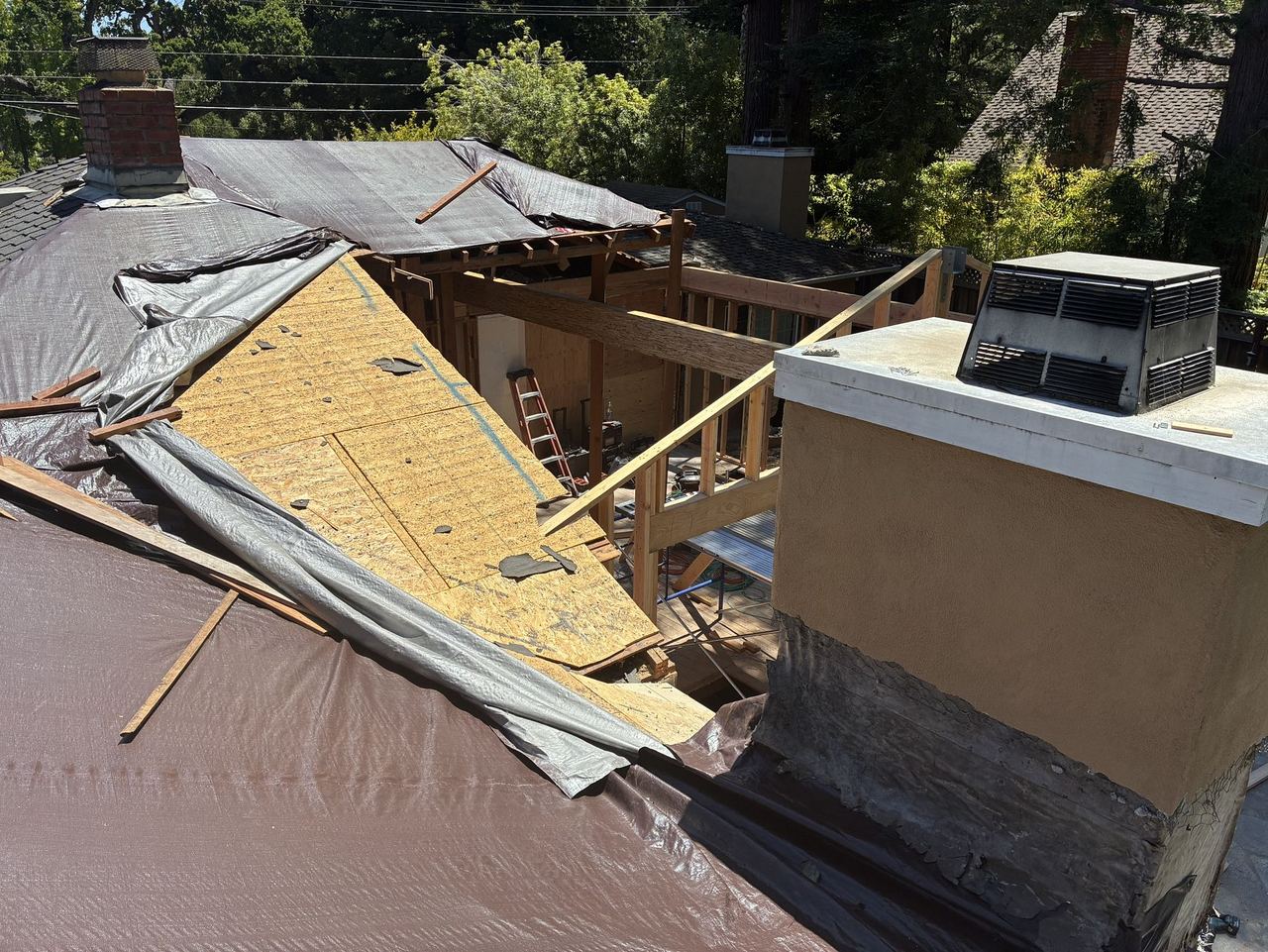
There is a rhythm to roofing in the South Bay that never changes. The phone is quiet through August. Then the first real storm rolls through, and for the next three weeks it does not stop ringing — ceiling stains in Willow Glen, a wet spot on a garage wall in Cambrian, water tracking down the inside of a chimney chase in Almaden. Almost none of those roofs failed during that storm. They failed sometime in July or August, quietly, and the storm was simply the first thing to test them.
That is the single most useful idea in this article: in this climate, roofs break in the dry season and reveal it in the wet one. The gap between those two events is your entire opportunity. Right now, in September, that gap is still open. By the time the roof tells you something is wrong, you are fixing it in the rain, in a queue, on a wet surface, with a ceiling already stained.
Nothing in this guide is exotic. It is the same short list we work through on a roof maintenance visit, written out so you can do the parts that are safe to do yourself and know what to ask for on the parts that are not.
What a South Bay Summer Actually Breaks
Our climate is hard on roofs in a way that is easy to underestimate, because the damage is seasonal rather than dramatic. San Jose gets a long, hot, effectively rainless summer — months of intense ultraviolet exposure with nothing to wash or cool the roof surface — followed by a concentrated wet season in which most of the year's rain arrives in a handful of atmospheric-river events.
The dry half of the year bakes the flexible components. The wet half tests every one of them at once. Specifically, here is what the summer works on:
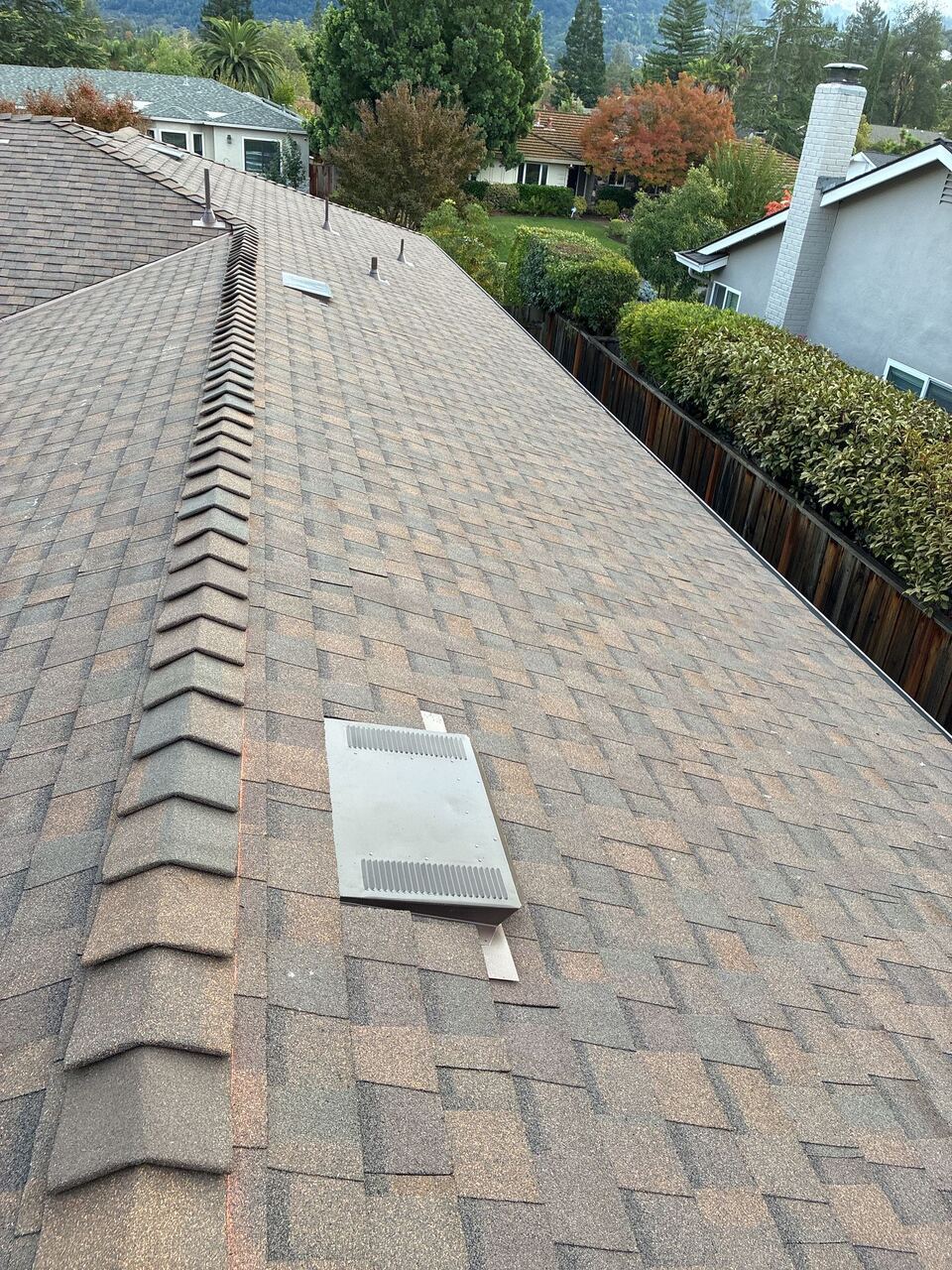
Pipe-boot gaskets. The neoprene collar around a plumbing vent is the single most common residential leak source we see, and it is a consumable. Ultraviolet light hardens it, then it splits, usually on the uphill side where you cannot see it from the ground.
Exposed sealant. Any sealant that is visible to the sky — at flashing terminations, at counter-flashing reglets, around a satellite mount someone screwed straight through the shingles — is on a clock. It shrinks, pulls away from one edge, and opens a seam.
Plastic vent housings. Cheap plastic turbine and box-vent housings go brittle and crack. The crack is on top, so gravity does not help you.
Underlayment on tile roofs. Heat is what ages the felt or synthetic layer under concrete or clay tile, and that layer is the actual waterproofing. On the Almaden Valley tile project the tile itself was in excellent shape at forty-two years old, and the underlayment beneath it had aged well past its 25-to-30-year design life. The roof looked fine from the street the whole time.
Debris load. Oak, redwood and eucalyptus drop steadily through the dry months. By September the valleys and gutters of a tree-covered lot in Saratoga or Los Gatos are carrying a full season of litter that has had no rain to move it along.
What the Forecast Says About This Winter
Seasonal outlooks are probabilities, not promises, and we will not pretend otherwise. But they are worth knowing when you are deciding whether this is the year to get ahead of the weather.
As of this fall, NOAA's Climate Prediction Center has El Niño conditions in place and forecasts a very strong event through the winter — potentially among the strongest in a record that goes back to 1950. Its seasonal outlook currently tilts California toward a wetter-than-average winter, with the strongest signal in the core and late winter months rather than the early ones.
What that does not mean is that every South Bay storm this year will be severe, or that a dry January is off the table. El Niño loads the dice; it does not call the roll. What it does mean is straightforward: the cost of skipping the pre-season work is higher than usual this year, and the value of the cheap preventive items — a clear gutter, a new pipe boot, a resealed flashing — goes up with every extra inch of rain the season delivers.
Treat it as a reason to move the job from your someday list to your September list, not as a reason to panic.
The Walk Around the House
Start on the ground, because a surprising amount of what matters is visible from there and none of it requires a ladder.
Walk the perimeter of the house slowly and look up at the roof edge. You are looking for gutters that sag or have pulled away from the fascia, which usually means failed hangers or rot in the wood behind them. Look for a gutter line that is no longer straight — a dip in the middle of a run is where water will now sit.
Then look at the roof itself. From the ground you can usually see slipped or missing tiles, shingles that have lifted at a corner or curled at the edges, a ridge line that dips, and debris piled in a valley. On a tile roof, look along the eave course from the side; a tile that has slid down even an inch has opened the course above it.
Look at the walls, too. Staining on siding under a gutter joint is a gutter that overflowed last winter and will do it again. Peeling paint or soft trim at a fascia corner is water that has been getting behind the gutter. And look at the ground itself: a trench eroded under a gutter line, or a persistent damp patch against the foundation after the last storm of spring, tells you where water has been landing.
Write down what you find. Two or three items on this list is normal on an older house. Ten items is a roof that needs a proper look rather than a checklist.
Twenty Minutes in the Attic Is Worth an Hour on the Roof
The attic is the most underused diagnostic tool a homeowner has, and it is the safest place to look. Go up on a bright, dry day with a strong flashlight and no lights on, and give your eyes a minute to adjust.
Look for daylight. Pinholes of light through the sheathing are exactly what they appear to be. Note where they are relative to the roof above.
Look for staining on the underside of the deck. Dark rings or streaks around a nail, a rafter, or the base of a vent stack are old water. A stain that is still soft or dark is recent; a chalky, dry-edged stain may be years old and already repaired. Either way, mark it.
Look at the insulation. Compressed, discoloured or matted batts almost always sit under a leak. Insulation is a very good moisture detector because it holds the evidence long after the deck has dried.
Look at the ventilation. Blocked soffit vents — usually blocked by insulation pushed into the eave — are the most common ventilation defect we find, and they cause winter condensation on the underside of the sheathing that behaves exactly like a slow leak. We wrote about why the intake side matters more than the exhaust side in our guide to attic ventilation and your San Jose roof.
Anything you find in the attic is worth photographing with a note about where it is in the house. It shortens a diagnostic visit considerably, and it means the roofer is looking for something specific rather than starting from scratch.
Gutters: The Cheapest Roof Work Anyone Ever Buys
If you do exactly one thing on this list, do this one. A roof sends water somewhere, and gutters decide where.
A gutter full of packed needles and leaf litter does not simply overflow at the front edge, which would be tidy. It backs water up, under the first course of shingles or tile at the eave, into the fascia and the edge of the deck. That is why so much of the rot we cut out during a tear-off is concentrated in a band along the eaves — the exact place the gutters have been overflowing every winter for a decade. It is the same pattern described in our guide to dry rot and roof deck repair, and it is almost entirely preventable.
What a proper clearing involves is more than scooping. The debris comes out, the run gets flushed with water, and someone confirms the water actually reaches the downspout and exits at the bottom. A gutter can be visually clean and still hold standing water because the pitch has gone or a hanger has dropped; gutters should fall toward the downspout at roughly a quarter of an inch per ten feet of run. Standing water in a "clean" gutter is a pitch problem, not a debris problem, and no amount of scooping fixes it.
Two other things worth checking while someone is up there. Downspout capacity: a 5-inch K-style gutter is standard on most homes, but a large or steep roof area may need 6-inch gutters and more downspouts than it has — if a run overflows in heavy rain when it is demonstrably clear, undersizing is the usual answer. Hanger type: hidden hangers fastened to sound fascia hold; old spike-and-ferrule hangers work loose, and a gutter that has been re-spiked into the same soft hole will drop again.
Gutter work is a real part of what we do rather than an afterthought — on the Saratoga repair project the job included new gutter installation and a full cleaning of the existing system alongside the roof work. If your gutters are past cleaning, our seamless gutter and downspout page walks through the aluminum and copper options and what each is actually good for.
Where the Water Goes After It Leaves the Downspout
This is the part nearly everyone skips, and it is the part that produces the phone calls about wet garages and damp crawl spaces.
A downspout that discharges at the base of the wall has moved the problem four feet, not solved it. In heavy rain a single downspout can deliver a startling volume of water to one square foot of soil directly against your foundation. What you want is that water carried clear of the house — an extension, a splash block onto a graded surface, or a buried drain line running to daylight or a proper drainage point.
Three quick checks before the rain:
Every downspout has somewhere to go. Walk each one. Extensions get knocked off by gardeners and never replaced, and the missing one is usually the one closest to the side gate.
Buried lines actually flow. If your downspouts drop into the ground, run a hose into the top and confirm water comes out where it is supposed to. Underground lines clog with the same debris the gutters carry, and a blocked one turns the downspout into a fountain at the base of the wall.
The grade runs away from the house. Years of mulch, new planting beds and settled soil quietly build the ground up against a foundation until it slopes the wrong way. Water that leaves a downspout correctly and then runs back toward the house has not been helped.
None of this is roofing in the strict sense. All of it decides whether your roof drainage protects the building or aims a hose at it.
Valleys, Chimneys and the Debris You Cannot See
Gutters are the debris problem everyone knows about. The ones that cause more expensive damage are the ones out of sight from the ground.
Valleys are where two roof planes meet and where the largest volume of water on the whole roof is concentrated into the narrowest channel. They are also where needles and leaves naturally collect. A valley that is dammed at the bottom holds water against the roof surface for hours after a storm, and on a tile roof that dam is often invisible because it forms under the tile edges.
Behind chimneys. The uphill side of any chimney is a natural debris trap, and it is the side with the cricket or saddle flashing that has to shed water around the obstruction. Debris packed against that flashing keeps it permanently wet and eventually gets water behind the counter-flashing.
Roof-to-wall intersections. Where a lower roof runs into a two-storey wall, litter piles into the corner and sits against the step flashing and the wall covering. It is one of the most reliable places to find a slow, chronic leak on an older house.
Low-slope sections and drains. Any flat or nearly flat section — a porch roof, an addition, a garage — has no gravity assist. Water sits there until it finds a drain or a seam. On commercial and low-slope work this is the first thing we clear, because ponding is behind a large share of flat-roof failures and most ponding is a blocked drain rather than a structural problem. The same logic applies to the small flat section over your back bedroom. Our commercial roof maintenance project in San Jose is essentially this work at scale.
Pipe Boots, Flashing and Sealant
Everything above is clearing. This section is repair, and it is where the pre-season visit earns its keep, because these are the items that are cheap now and expensive in February.
Plumbing vent boots. Check every one. A cracked or hardened collar is an inexpensive part and a straightforward replacement on a dry roof. It is the most common residential leak source we deal with, and it is almost never worth deferring.
Flue and exhaust terminations. Furnace and water-heater flues, bath fans, and kitchen exhausts all penetrate the roof, and each one has a storm collar or flashing that can lift.
Chimney and sidewall flashing. Counter-flashing that has pulled out of its reglet, step flashing that has slipped, or a mortar joint that has opened all admit water at the exact place it is most concentrated.
Exposed fasteners. Any screw or nail head visible to the sky should be sealed, and any that is already weeping rust needs attention now.
Skylight perimeters. Skylights themselves rarely leak. Their flashing kits and the sealant at the top corners do.
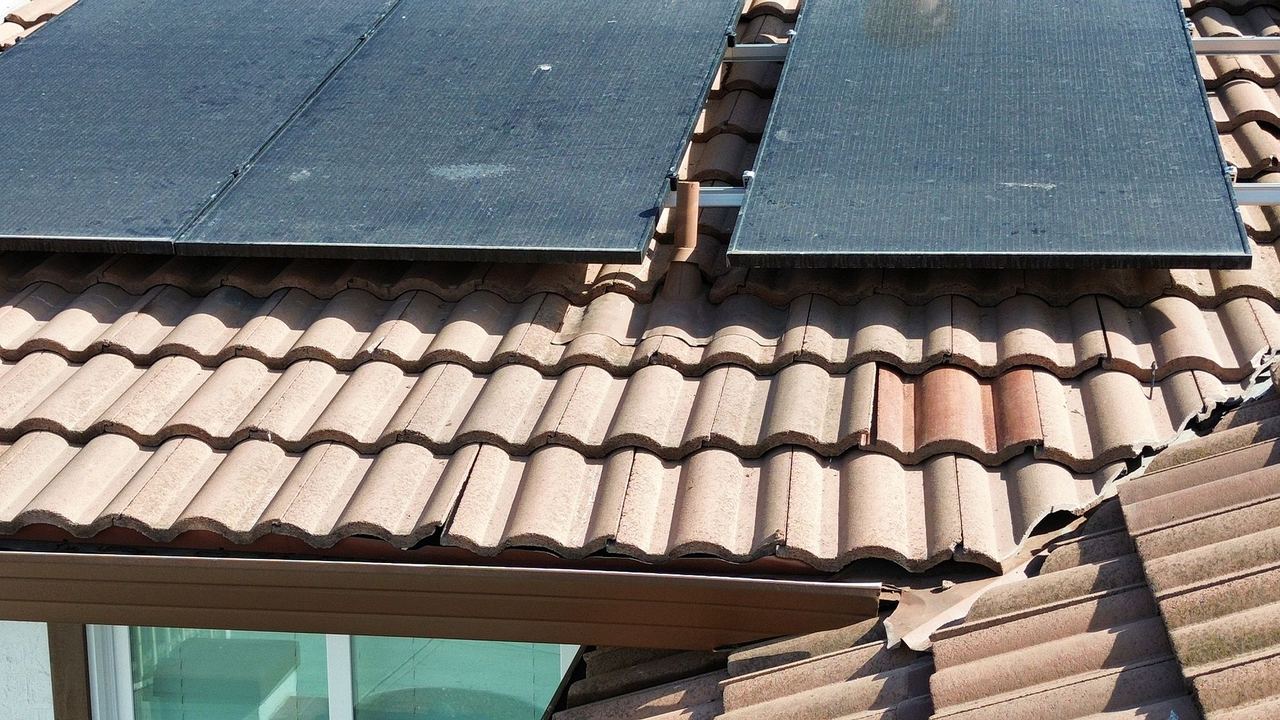
Solar mounts. Every stanchion is a hole through your roof. If your array was installed by someone other than a roofer — which is common — the mounts are worth inspecting before the rain, not after. We cover the sequencing question in whether you need a new roof before solar panels.
This is the portion of the list that genuinely needs someone on the roof who knows what a failed detail looks like. A roof inspection covers the roof and the attic beneath it and gives you a written list of what needs doing now versus what to budget for next year.
If You Have a Tile Roof, Stay Off It
Concrete and clay tile are everywhere in the South Bay, and tile changes the rules for a homeowner in one important way: you cannot inspect it by walking on it.
Tile carries foot traffic only when you know where the battens and the supported points are. Step in the wrong place and the tile cracks — sometimes visibly, sometimes as a hairline you will never notice from the ground. Either way it is now a hole in the roof covering, and since the actual waterproofing on a tile roof is the underlayment beneath, the damage is not always immediate. It shows up two winters later as a stain.
What a homeowner can safely do on a tile roof is look, from a ladder at the eave or from the ground with binoculars: slipped tiles, cracked tiles, tiles that have shifted out of course, and debris visible in the valleys. What a homeowner should not do is go up there to clear that debris personally.
The other thing to understand about tile is that a tile roof in perfect visual condition can be at the end of its serviceable life, because the tile outlasts the underlayment beneath it by decades. If your tile roof is past thirty years old and has never had the underlayment addressed, the pre-season conversation to have is not about debris — it is about whether a lift-and-relay is coming, which our tile roofing page walks through.
Trim the Trees Now, Not in January
Tree work belongs on the pre-season list for two reasons, and only one of them is debris.
The obvious one: branches overhanging a roof drop litter directly into valleys and gutters all winter, and a branch resting on the roof surface abrades granules off shingles every time the wind blows. Clearance of a few feet above the roof plane changes the debris load dramatically, and on a heavily wooded Los Gatos or Saratoga lot it can be the difference between clearing gutters three or four times a year and clearing them once.
The less obvious one: limbs come down in the first big wind-driven storm of the season, not the fifth. A limb that has been dead all summer is still up there because nothing has pushed it. The first atmospheric river of the year, arriving with wind, is what pushes it — and the roof is what catches it.
If you are considering gutter guards to reduce the cleaning burden, they are worth a conversation on a tree-covered lot. Fine-mesh stainless guards typically take a home with significant overhead cover from three or four cleanings a year down to one or two every two or three years. On a home without meaningful tree cover, they are usually not worth the cost, and we will tell you so.
If Anything Leaked Last Winter, It Will Leak Again
A leak that stopped in April did not repair itself. It stopped because the rain stopped.
This is the single most common deferred-maintenance item we encounter: a stain that appeared in one storm, did not get worse, dried out over the summer and got mentally filed as handled. It is not handled. The path the water took is still there, and every winter it runs, it feeds the deck and the framing around it. Three seasons of that is the difference between replacing a boot and replacing sheathing.
It is also much easier to diagnose a known leak on a dry roof than to chase an active one in a storm. With a stain to work back from, we can test the suspected entry points, open what needs opening, and fix the cause rather than the symptom. Roof leak repair is largely a detective problem — water travels along rafters and sheathing before it appears, so where it shows inside is frequently nowhere near where it entered.
If a leak does show up mid-storm this winter, our guide on what to do when your roof is leaking covers the first hour, the first day and the first week. The point of the work in this article is to keep you from needing it.
A Calendar That Actually Works
Here is the whole thing on one page, in the order it should happen.
September. Do the ground walk and the attic check yourself. Book tree trimming, since arborists fill up at the same time roofers do. Schedule the roof visit — this is the month to do it, while the roof is dry, the days are long and the schedule is yours to pick.
October. The roof visit happens: clearing of valleys, roof-to-wall intersections and behind chimneys; gutters cleared, flushed and confirmed running; boots, flashings, sealant and fasteners inspected and serviced; anything failing repaired while the surface is dry. Downspout extensions and buried lines checked at the same time.
November. Walk the perimeter one more time after the first light rain of the season and watch where water actually goes. Light rain is a free, low-stakes test of everything you just did, and it is the ideal moment to notice a downspout that dumps against the wall.
December through March. After any significant storm, do the ground walk again and check the attic once. Catching a new stain in the week it appears is a different repair from finding it in April.
Keith Roofing Company has been working on South Bay roofs since 1952 — through the drought years and the wet ones — and the pattern has never really changed: the roofs that reach and beat their rated service life are the ones somebody walked once or twice a year. If you would like yours walked before this winter arrives, schedule a free estimate or call (408) 295-8616.
Frequently Asked Questions
Need professional help with your roof? Keith Roofing Company has been serving San Jose and the South Bay since 1952. We offer free estimates, honest recommendations, and work that's backed by BBB A+ Accreditation and CSLB License #1118418. Schedule a free estimate or call (408) 295-8616.