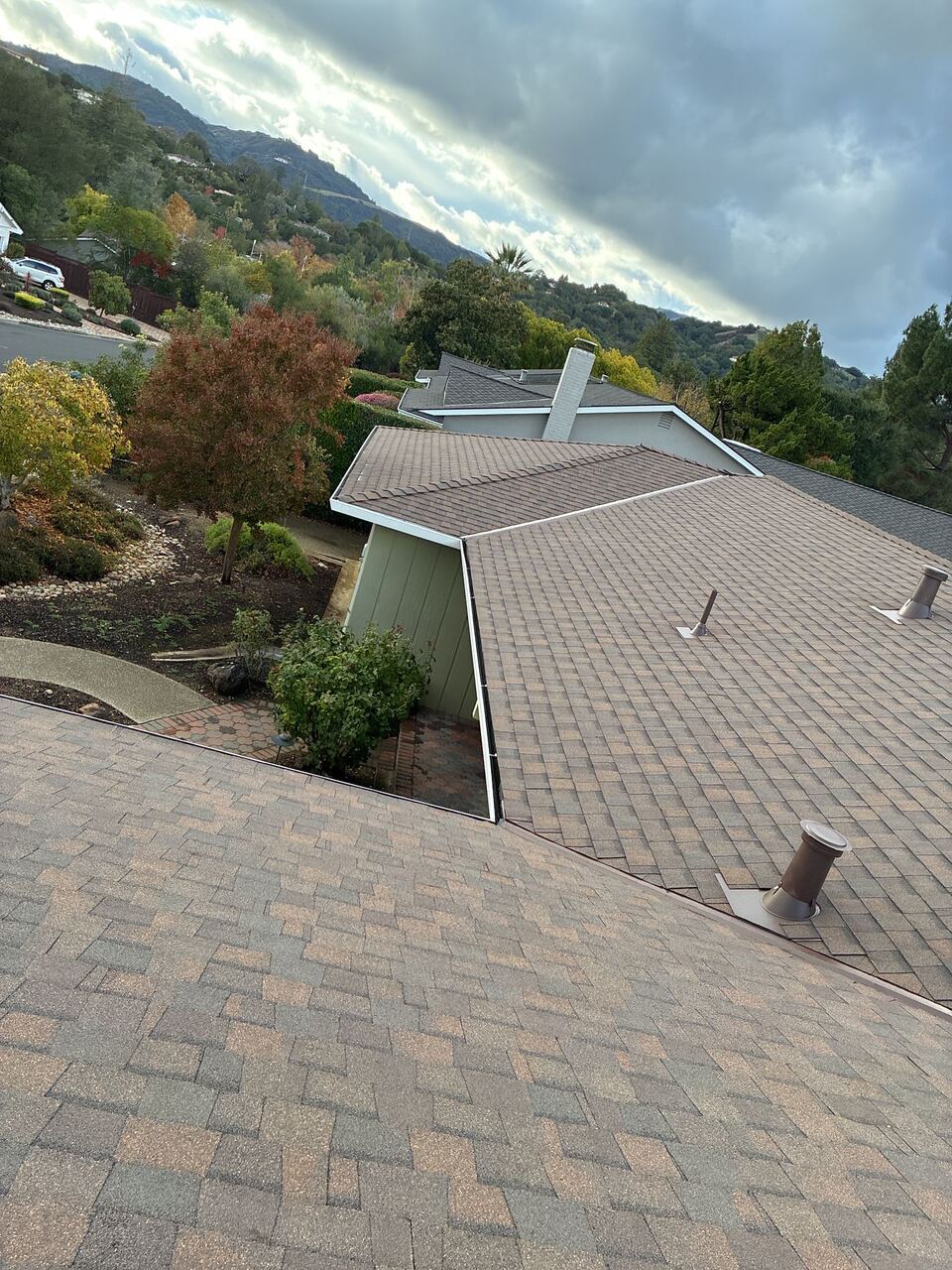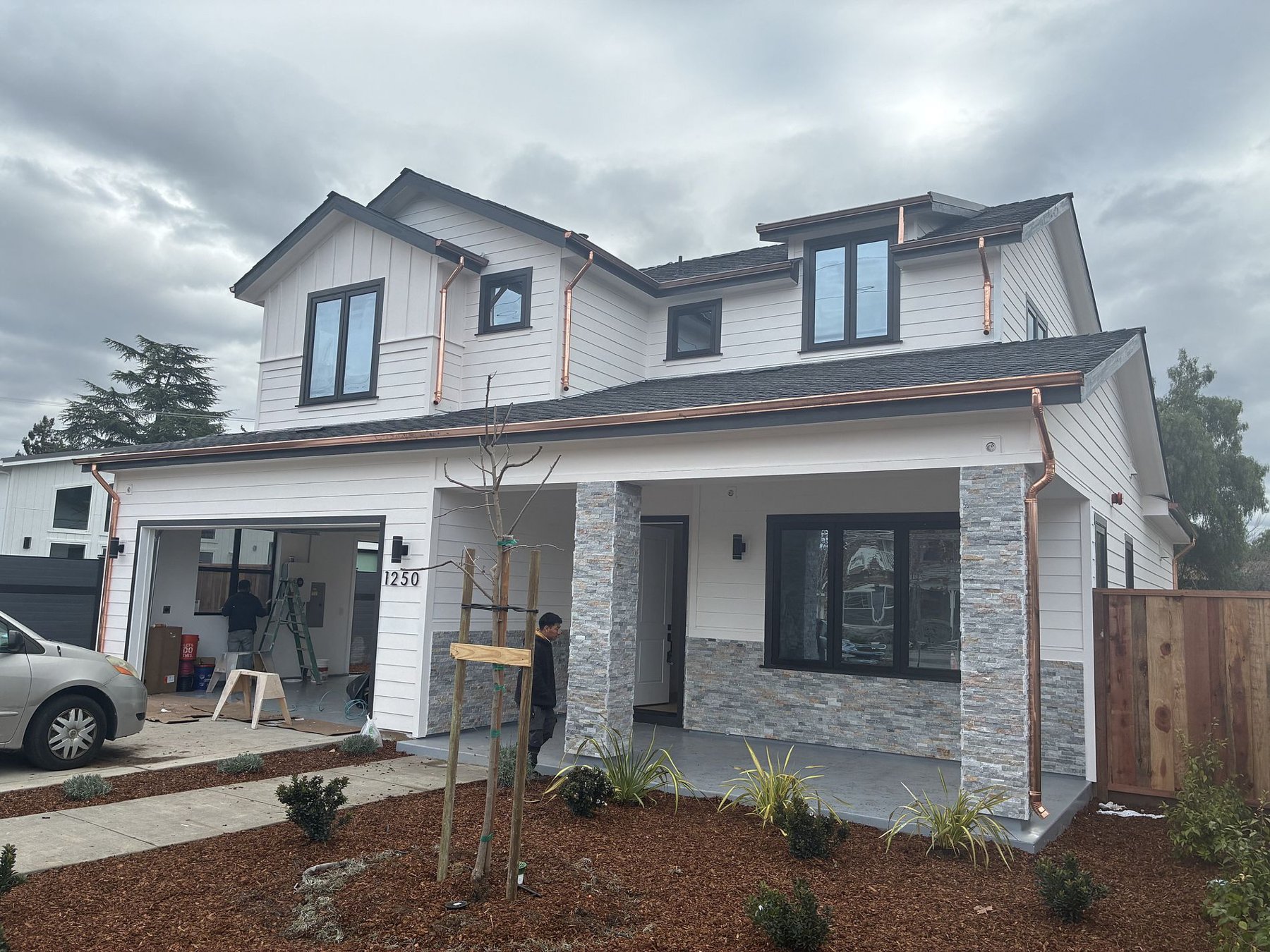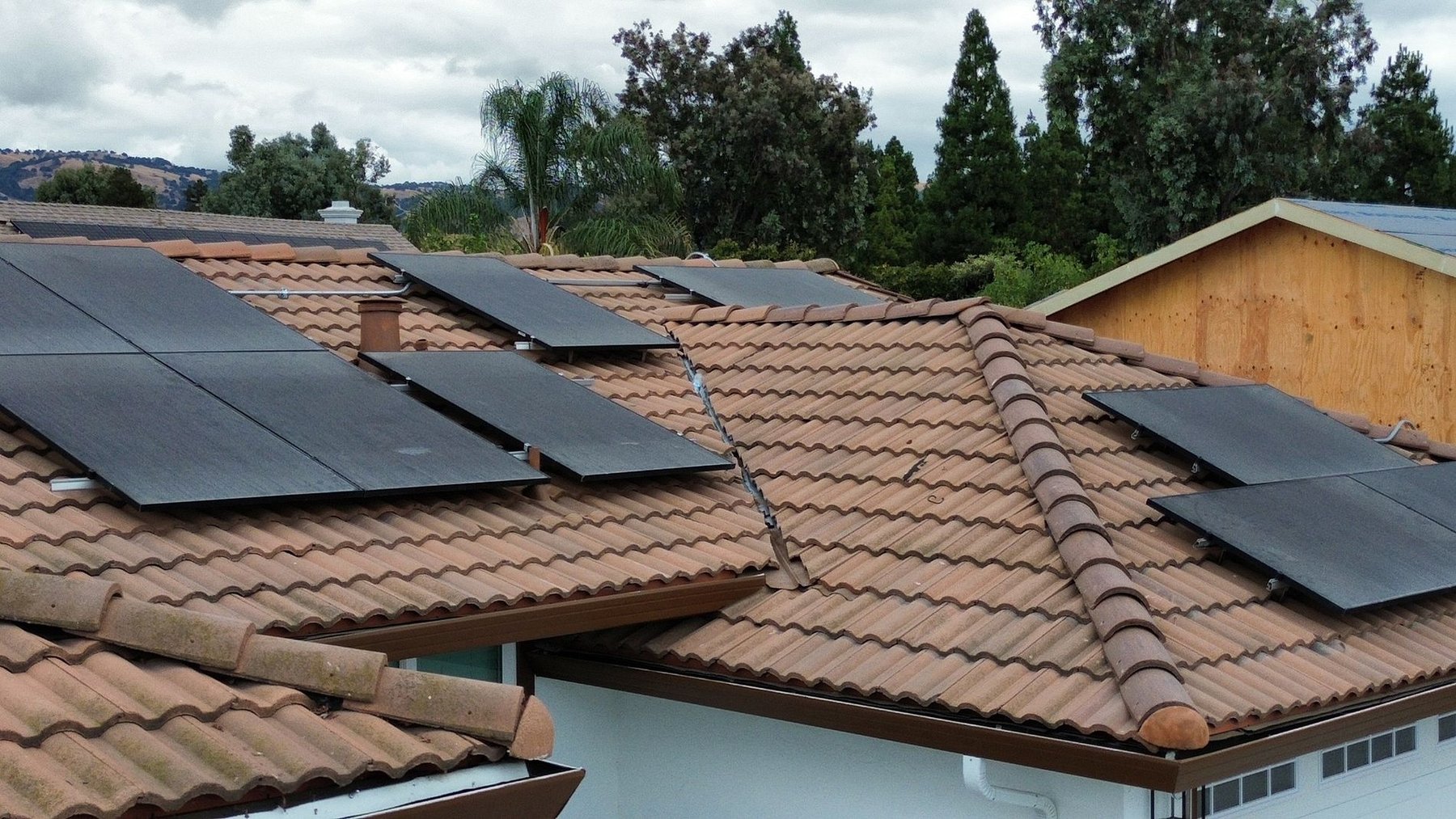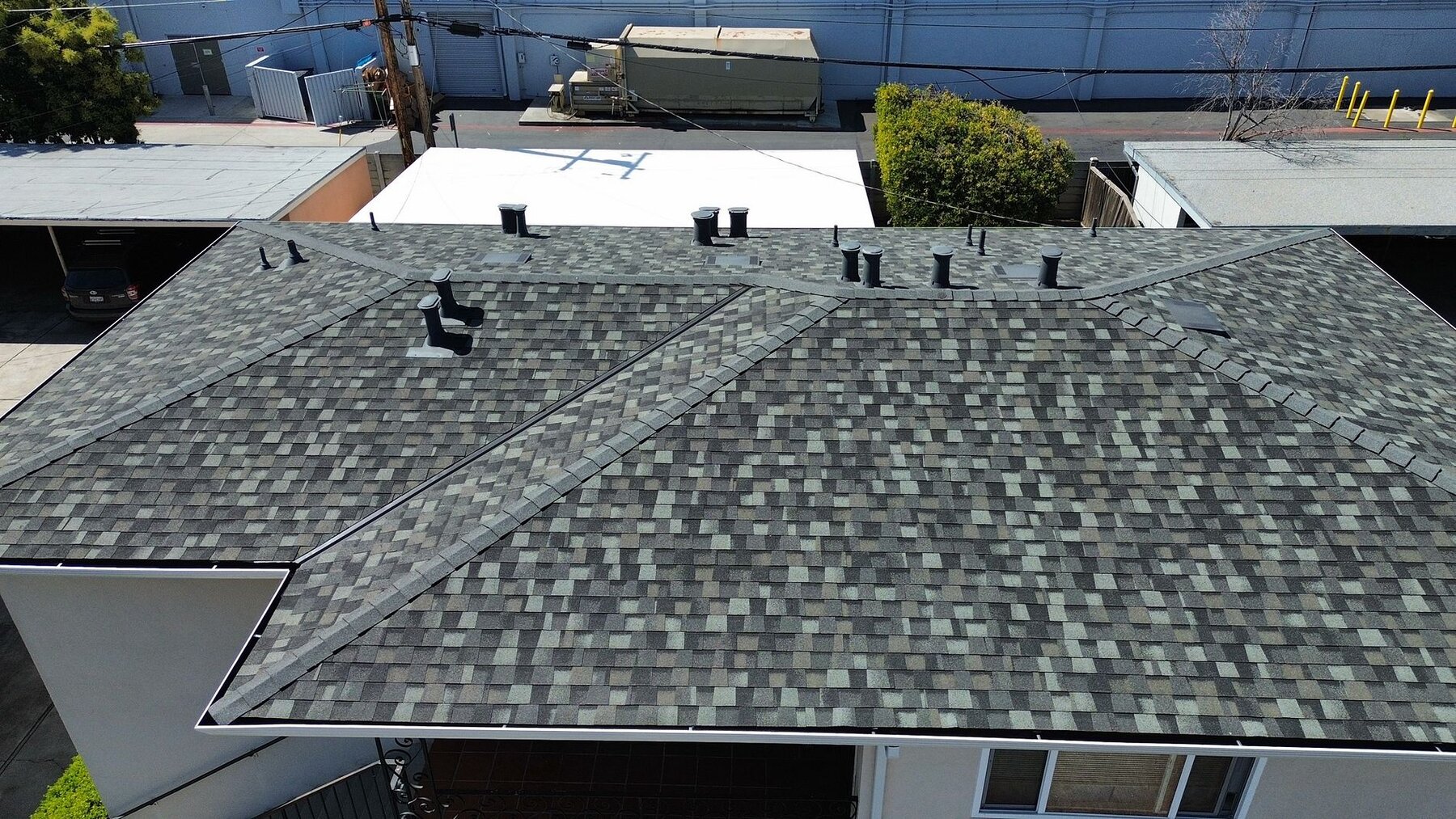
An array is a 25-to-30-year commitment fixed to a roof that may not have 25 years left. Here is how to decide which job goes first, what the wrong order actually costs, and what changes if your roof is tile, metal or flat.
The Question a Solar Quote Rarely Asks
Most solar proposals include some assessment of the roof. It is usually a line item, sometimes a satellite image, occasionally a photograph taken from the ground. What it almost never is, is a roof inspection.
Those are two different trades looking at two different things. A solar designer is asking whether the roof planes are big enough, oriented well enough and free enough of shade to hold the array they have priced. A roofer is asking how many winters the covering has left, whether the deck underneath is sound, and where water is already finding its way in. A roof can pass the first test comfortably and fail the second. Once panels go up they hide the deck for decades, so a roof decking inspection beforehand is when soft or rotted sheathing is cheapest to find and fix.
This matters more here than in most markets. A great deal of the South Bay's housing stock went up between the 1950s and the 1980s, which means a lot of homes in Willow Glen, Cambrian Park and Almaden Valley are on their second or third roof already. Solar is being quoted onto roofs that are quietly near the end of their run.
The Only Number That Really Matters
Strip away everything else and the decision comes down to one comparison: how long the panels are meant to last against how long the roof has left.
Residential solar modules are typically warranted for 25 to 30 years and are designed to run for at least that long. So the question is not “is my roof leaking today?” It is “will this roof still be doing its job in 2050?”
The common industry guidance is straightforward: if the roof has fewer than about 15 years of service life remaining, replace it before the array goes up. That is a rule of thumb rather than a law, and it deliberately errs toward re-roofing, because the cost of being wrong runs one direction only.
Working out where your own roof sits is not guesswork. Our guide to how long a roof actually lasts in San Jose breaks service life down by material for this climate, and the signs a roof is genuinely finished covers what is visible from the ground. For anything more definitive, a roof inspection gets you a written report with photographs and a remaining-service-life assessment — which is also the document a solar contractor should want to see.
The one-sentence version. If the roof will outlive the array, install solar. If the array will outlive the roof, re-roof first. Everything below is detail on how to tell which of those you are looking at.
What It Costs to Take Panels Down and Put Them Back
When a roof fails under an existing array, you cannot simply roof around it. The panels, rails and conduit have to come off before tear-off and go back on afterwards — work the roofing crew does not perform, because it is electrical work on a live system.
That job is called a detach-and-reset, and published industry estimates for California generally put it in the range of a few hundred dollars per panel, landing somewhere between the low thousands and several thousand dollars on a typical residential array. Those are market figures from consumer solar publishers rather than a Keith Roofing quote — your number depends on array size, the mounting system, and whether flashings, rails or fasteners have to be replaced rather than reused.
The dollar figure is not really the point. The point is that it is money spent twice, once each way, and it buys the homeowner absolutely nothing. It is the single most avoidable cost in a residential solar project, and it is avoided entirely by asking one question before the contract is signed.
There is a scheduling cost too. A detach-and-reset needs the solar contractor and the roofing contractor on site in a coordinated sequence, and in the middle of it your system is offline. Homeowners who discover this in January, with rain forecast, discover it in the worst possible month.
Why Doing Both at Once Is Cheaper
The flip side is that pairing the two projects is genuinely more efficient, not just tidier. NREL researchers, cited by the U.S. Department of Energy, have put the average saving from combining a roof replacement with a solar installation at roughly $4,000 versus doing them separately. That is a national average rather than a Bay Area figure, but the mechanism behind it holds anywhere.
The savings come from things that are obvious once you see the two jobs side by side:
• One mobilization instead of two — one set of staging, access and site protection
• Mount layout planned in advance, so the array is laid out around vents, valleys and hips rather than in spite of them
• Flashings integrated into the new roof as it is installed, rather than retrofitted through a finished one
• One permit window and one inspection sequence to coordinate rather than two, months apart
• No detach-and-reset in year twelve, which is the largest saving of the lot
The integration point deserves emphasis. A mount whose flashing is woven into the shingle course as the roof goes on is a fundamentally better detail than a mount bolted through afterwards and sealed. Same hardware, same location, very different odds of a leak in year eight.
What Solar Mounting Actually Does to a Roof
On a conventional pitched roof, an array is held down by feet lagged into the rafters. A typical residential system means dozens of those. Every one is a hole through the weather surface, and every one is a place a roof can eventually leak.
Done properly, that is a solved problem. The mount is set on a flashing that tucks under the course above it, so water sheds over the top of the flashing exactly as it sheds over a shingle. Sealant is a secondary defence, not the thing keeping water out.
Done badly — a lag bolt driven through the surface with a bead of mastic over the head — it works until the sealant ages. In our climate that clock runs fast: a long dry season bakes exposed sealant, then the winter rains find whatever the summer opened up. Those leaks tend to surface five to ten years later, well after everyone involved has moved on.
Two other consequences are worth knowing. An array makes the roof beneath it hard to inspect and harder to repair — you cannot see what is happening under a panel, and getting to it means taking panels off. And a roof under an array simply cannot be walked and maintained the way an open roof can. All of which is an argument for putting the array on a roof you are confident about.
Tile Roofs Are Their Own Problem in the South Bay
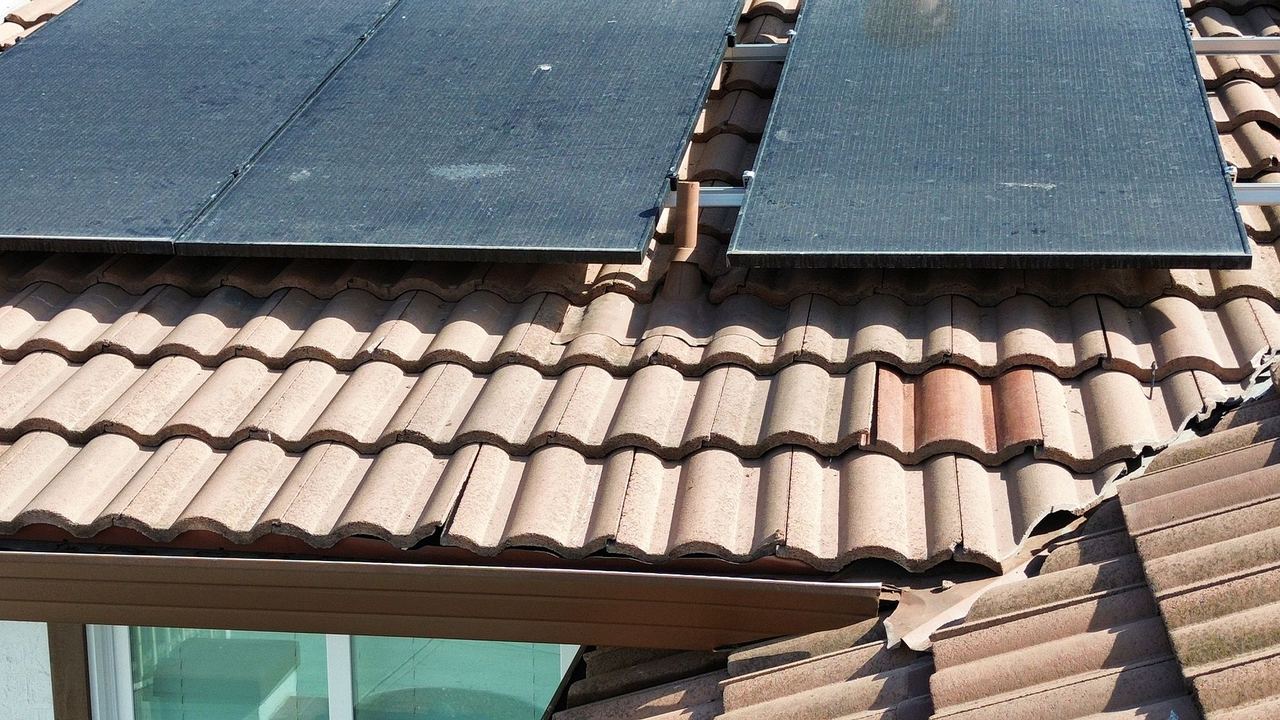
Concrete tile is everywhere in this market — Almaden Valley, Evergreen, Silver Creek, big stretches of Berryessa — and it changes the calculation in a way homeowners consistently miss.
A concrete tile roof has two service lives, not one. The tile itself routinely lasts 50 to 60 years or more. The underlayment beneath it, which is the layer actually keeping water out, lasts roughly 25 to 35. So a tile roof that looks immaculate from the street can be within a few years of needing a full lift-and-relay: tiles carefully removed, new underlayment and flashings installed, the original tile put back.
Now add an array. Mounting on tile means removing tiles where each foot lands, setting a flashed base or tile hook into the underlayment, and cutting or replacing tile around it. Some breakage is normal and priced in. But if the underlayment is at year 30 when the panels go up, you have committed to lifting an array off a roof that needs its underlayment replaced almost immediately.
The right sequence on an older tile roof is nearly always the lift-and-relay first, then solar. Our Almaden Valley tile lift-and-relay shows what that work involves, and the tile roofing page covers how we assess whether tile is a relay candidate or due for full replacement.
Standing Seam and the Zero-Penetration Option
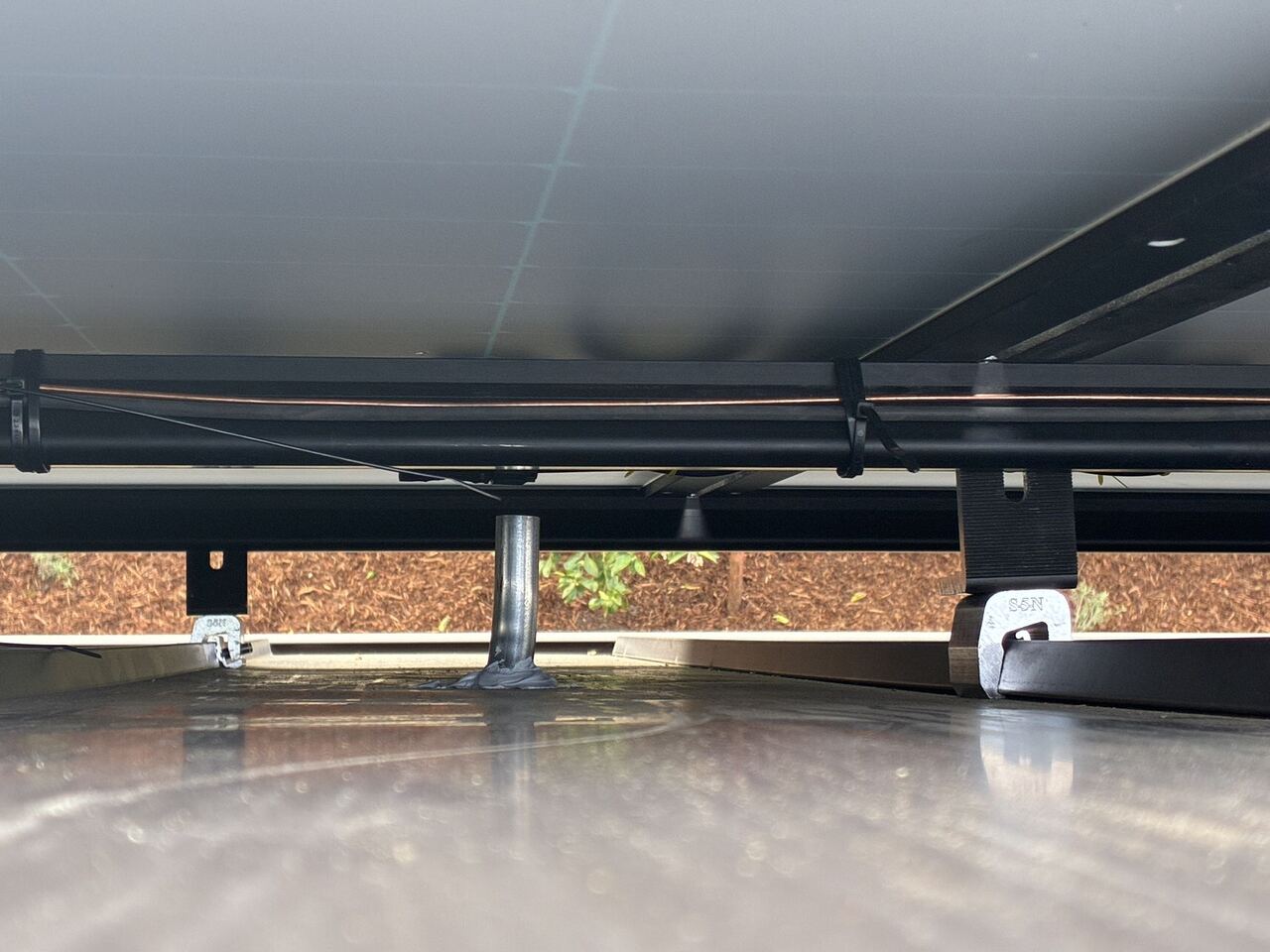
There is one roof type where the whole penetration question disappears. On a standing seam metal roof, clamp systems such as S-5! grip the raised seam itself, and the array attaches with no holes through the roof at all.
That is a real structural advantage rather than a marketing line. Nothing is lagged through the weather surface, so the watertight plane is left intact and the roof's warranty position is much simpler. It also means the array can be removed and reset later without touching the roofing.
Standing seam is a larger investment than shingle, and it is not right for every home or every architectural style. But on a home where solar is definitely happening and the owner intends to stay, a 40-to-70-year roof carrying a clamped array is about as settled as this decision gets. Our standing seam metal roof in Los Altos Hills used exactly that approach.
For homeowners who want solar without a visible racked array, integrated products are a third path — CertainTeed's solar roofing line replaces a section of the roof with solar shingles or tiles instead of mounting hardware on top of it, which by its nature means the roof and the solar go in together.
Flat and Low-Slope Roofs Play by Different Rules
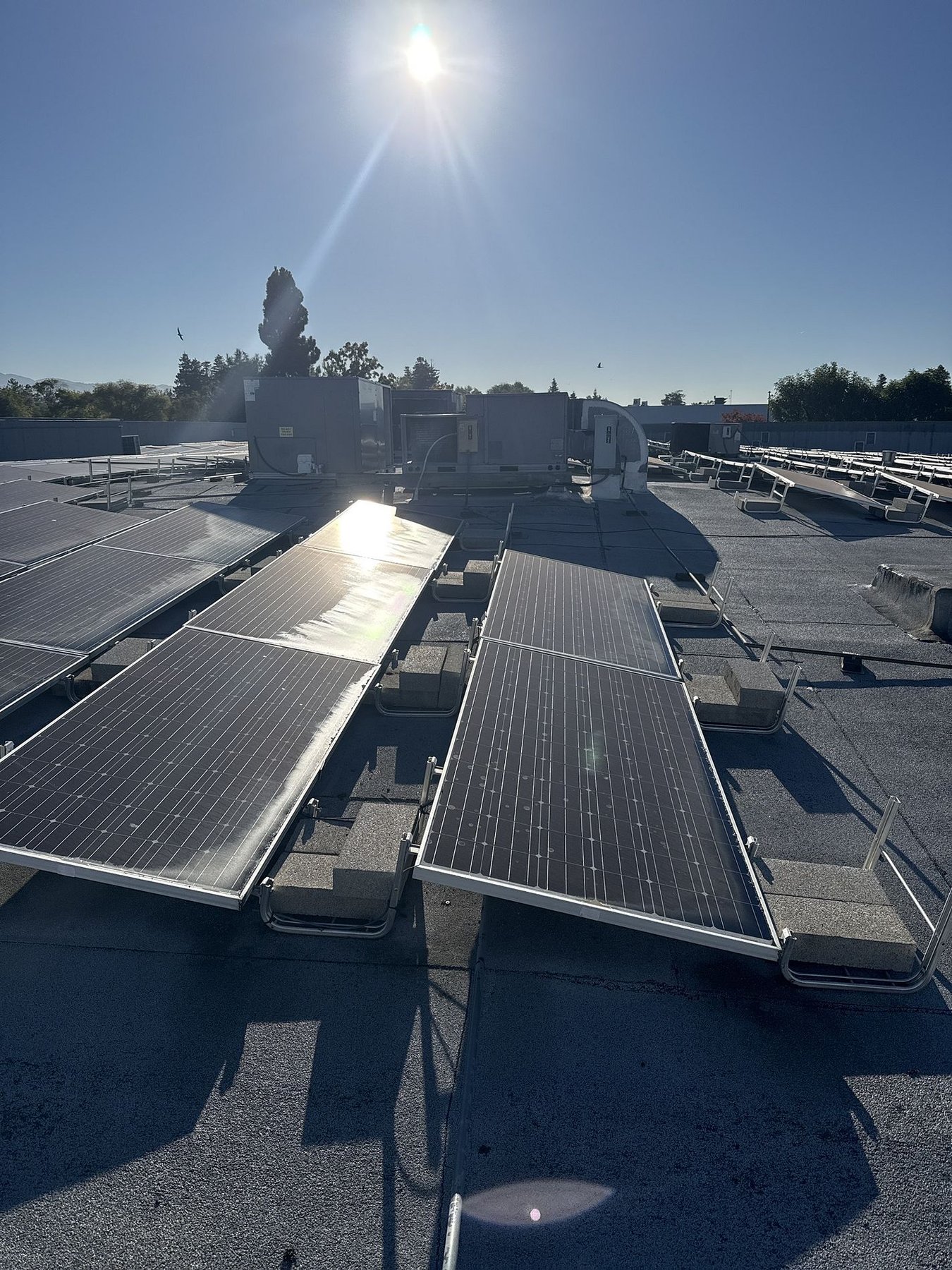
On a commercial building or a low-slope residential section, arrays are usually ballasted — held down by weight rather than bolts. That removes the penetration problem and replaces it with three others.
The first is load: ballast blocks add weight a structural engineer should sign off on. The second is drainage: an array laid across a low-slope roof must not interrupt the path to the drains, and ponding under panels is a slow, invisible way to kill a membrane. The third is access, which is where most of the regret lives — walk pads, seam inspection routes and clear space around drains and penetrations all have to be planned before the array is set, because retrofitting them afterwards means moving panels.
The membrane's age matters just as much here as a shingle roof's does. Coating or re-covering a single-ply roof that already has an array on it is dramatically harder and more expensive than doing it first. If a low-slope roof is inside a few years of needing attention, do the roofing work before the panels arrive — and take the opportunity to specify a compliant cool-roof membrane while the roof is open, which our Title 24 cool roof guide walks through.
We do this coordination regularly on commercial sites: our San Jose commercial roof maintenance work is on buildings carrying substantial rooftop solar, and the single-ply roofing page covers the systems involved.
What “Roof Ready” Should Mean in Writing
“The roof is fine” is a conversation, not a commitment. Before an array is ordered, four things are worth having on paper:
• A written roof inspection with photographs and an estimate of remaining service life — from a roofing contractor, not the solar designer
• A clear statement of who flashes the mounts and who warrants those penetrations, because on split-trade projects this is where responsibility goes missing
• Confirmation of whether the roof manufacturer's warranty survives third-party attachments, and under what conditions
• The mount and flashing specification itself — which product, installed how
The second one is the one that bites. When a leak appears at a mount four years later, a homeowner with no written answer to that question ends up between two contractors who each believe it is the other's problem. Five minutes of paperwork now settles it.
If you are still choosing contractors, our guide to hiring a roofing contractor in San Jose covers verifying a C-39 licence with the CSLB and what California law says about deposits — the same due diligence applies to whoever is putting holes in your roof.
Permits and the Order of Operations in San José
These are two separate permits, and they run on separate tracks. The City of San José requires a building permit when 25 percent or more of the roof is re-roofed in any 12-month period; below that threshold the work counts as a repair. A full re-roof is well past that line. A solar installation is its own permit, handled through the city's building and electrical review.
The practical sequence is not complicated, but it does need to be deliberate:
• Roof first, completely finished and inspected, before the solar crew arrives
• Do not book both crews in the same week. Tear-off runs into deck repair often enough that a hard handoff date is a bad bet
• Give the solar designer the new roof's details — material, layout, vent and flashing positions — so the array is planned around them
• Keep the permit records. A closed re-roof permit fixes the roof's age, which matters later for insurance underwriting as well as resale
That last point connects to a separate pressure homeowners in this market are already feeling: California carriers now underwrite on roof age, and we covered what that means in our guide to roof age and home insurance in San Jose.
If You Already Have Panels and the Roof Is Leaking
This happens, and it is fixable. A few things make it go better.
Get it diagnosed before anything is moved. Water travelling under an array does not necessarily enter where it appears inside, and a roof repair assessment will often locate the failure without a full detach.
If the roof genuinely needs replacing, replace all of it rather than the section under the panels. Once you are paying for the detach-and-reset, doing half the roof leaves you with two roofs of different ages and a seam between them — and a second detach in the future.
One item to check before anyone touches the system: if your solar is on an older net-metering tariff, confirm directly with PG&E how a removal and reinstallation is treated. Systems interconnected before 15 April 2023 sit on their prior net-metering arrangement for 20 years from the date they received permission to operate, but modifications to a system can prompt a review. This is a question to ask your utility and your solar contractor in writing before the panels come off — not one to assume the answer to, and not one your roofer can answer for you.
The Practical Sequence for a South Bay Homeowner
If solar is somewhere on your list, the order of operations is short:
1. Get a written roof inspection with a remaining-service-life estimate before you sign a solar contract.
2. If the roof has under about 15 years left, re-roof first — and get solar quotes at the same time so the two are planned together.
3. If the roof is new or near-new, proceed with solar and get the mount, flashing and warranty questions answered in writing.
4. If it is tile, find out how old the underlayment is, not how old the tile looks.
5. If it is low-slope, settle drainage, load and access before the array is laid out.
None of that requires spending money on a roof you do not need. It requires knowing which situation you are actually in before a 25-year array is fastened to a roof that might not make it that far. If the timing is the hard part rather than the decision, we outline financing options as well.
Keith Roofing Company has been roofing San Jose and the South Bay — including Cupertino, Campbell, Saratoga and the Almaden foothills — since 1952, and we coordinate with solar contractors on this regularly. If you have solar quotes in hand and want an honest read on the roof underneath them, schedule a free estimate or call (408) 295-8616. Common questions about the work itself are answered on our roof replacement page.
Frequently Asked Questions
Need professional help with your roof? Keith Roofing Company has been serving San Jose and the South Bay since 1952. We offer free estimates, honest recommendations, and work that's backed by BBB A+ Accreditation and CSLB License #1118418. Schedule a free estimate or call (408) 295-8616.